
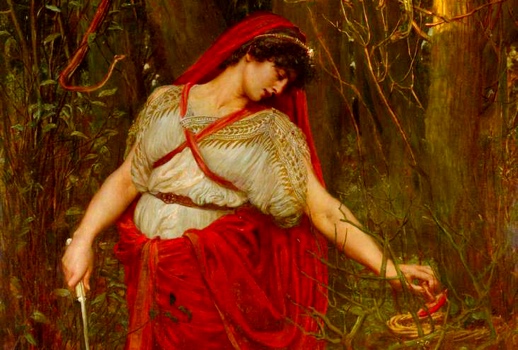
Season of the Witch
Trove Thursday offers a pair of live broadcasts of Médée featuring two compelling mid-20th century divas—Inge Borkh in German and Eileen Farrell in Italian.
5 pieces since 2011.
Trove Thursday offers a pair of live broadcasts of Médée featuring two compelling mid-20th century divas—Inge Borkh in German and Eileen Farrell in Italian.

Scheming Anne-Sofie von Otter offs her brother and sons before the opera even begins? You bet!

Notable purveyor of mayhem and infanticide Medea has lately been missing from the local operatic scene, but Sunday afternoon sections of the recently renovated Alice Tully Hall were singed by Canadian soprano Dominique Labelle’s blazing incarnation of the Greek sorceress.
Noticing how often she turns up lately, one might guess that the operatic “heroine” for the global economic crunch is Medea, the mythological Greek sorceress and filicide.
Despite baby-steps over the years, America’s musical scene, especially opera, remains decidedly un-HIP. (HIP: “historically-informed performance,” also called “period performance.”) While European opera houses turn increasingly to “original instrument” orchestras and specialist singers for seventeenth and eighteenth century works, this rarely occurs in the US.

The days are getting shorter, but you can keep the prattle going this fall’s Talk of the Town! You will, you can, you must join in the discussion about: Great mezzo soprano performances (October),
Gained in translation (November), Teleport me back to… (December).
Exclusive opera reviews, commentary, and top reads
delivered to your email weekly…ish.