Never sing louder than beautiful
Melanie Spector pays tribute to the great soprano — and her mentor — Martina Arroyo.
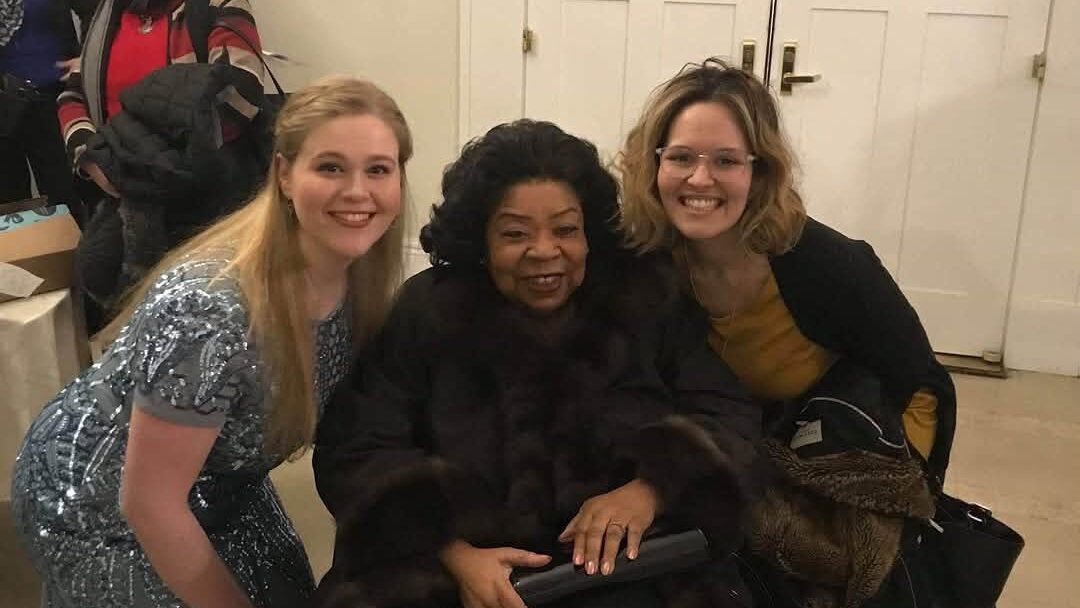
Melanie Spector, Martina Arroyo, and Maria Brea / Photo: Courtesy of Melanie Spector
This past Wednesday, 14 October, it was announced that Martina Arroyo passed away just shy of turning 90, and the world became a lesser place.
She was born and raised in Harlem by Demetrio Arroyo, a Brooklyn Navy Yard mechanical engineer hailing from Puerto Rico, and Lucille Washington, a stay-at-home mother and amateur musician. She studied Romance languages at Hunter College and New York University, which only helped launch the international operatic career that took her to the Met, La Scala, Covent Garden, the Wiener Staatsoper and beyond. She earned many accolades, including an OPERA NEWS Award in 2009 and a Kennedy Center Honor in 2013.
Given her background, Martina broke barriers in the opera industry and paved the way for new generations of Black, Latine, and Afro-Latine artists for years to come. Martina was constantly fighting the “Aren’t you Leontyne Price?” comparison — hence her famous response, “No, honey. I’m the other one.” But in her singing I found a honeyed warmth in her sound that I frankly did not hear in Leontyne’s. Leontyne is a great artist in her own right, but I have often found myself partial to Martina’s interpretations in the roles the two of them shared. I’ve found her interpretations more open, personable, and vulnerable, whereas Leontyne’s are cooler and more protected. Maybe it’s because I would come to know her as a dear friend and mentor, but I could always hear Martina’s sweet, unmistakable speaking voice — which always seemed to contain some degree of her infectious laugh — in each phrase she sang. It was that same sweet voice that accidentally called herself “Madame Butterball” on an intermission roundtable featuring herself, Joan Sutherland, and Marilyn Horne, cracking up her fellow panelists and the entire live audience, not to mention those listening at home. In addition to being a legendary soprano, a generous educator, as evidenced by her work with the Prelude to Performance series, she was one of the funniest people I’ve ever met.
I may have been born long after she retired from the stage, but thanks to my dad who saw her live many times, including at his very first Met performance in the title role of Aida, I fell in love with her through her recordings. But Martina took me personally under her wing as a mentor during the very early stages of my development as a singer. I was in the middle of my sophomore year at Manhattan School of Music, and having met her at a Metropolitan Opera Guild event the previous year, she immediately wanted to hear me once I told her I was studying voice. I distinctly remember standing in the middle of her gorgeous Central Park South apartment, quaking in my boots as I sang for her for the first time. I was 19, had not fully learned how to support my voice yet, and had a very fast vibrato.
I sang Rossini’s “L’Invito,” and once I finished, she said “Honey, you gotta get rid of that flutter. Some people like it, like Cesare Siepi. He LOVED a fast vibrato. But not everyone does.” From that point forward, she checked in with me periodically to see what the status of my flutter was until finally, with a few months of practice and growth, it was gone.
To Martina, giving back to young singers was not an aspiration, but simply a requirement given the experience she gathered during her career. After retiring from the stage, Martina began her tenure at Indiana University’s Jacobs School of Music in 1993, eventually earning the title of Distinguished Professor of Voice. In support of her mission to share her knowledge with the next generation, she founded the Martina Arroyo Foundation in 2003, creating a space for intensive learning, role preparation, and guidance through various intensive programs.
Starting at IU, she began what she called her “Role Class,” in which singers would choose one operatic role and explore their characteristics, attitudes, source material(s), inflections, and background — down to the tiniest details. She then expanded on her Role Class by creating Prelude to Performance, a six-week summer program at her alma mater of Hunter College where emerging artists would not only have the chance to take her Role Class, but to also perform or cover a role in a full production with an orchestra. Prelude also offered language classes, movement classes, and individual coachings to supplement the character work done in the rehearsal room.
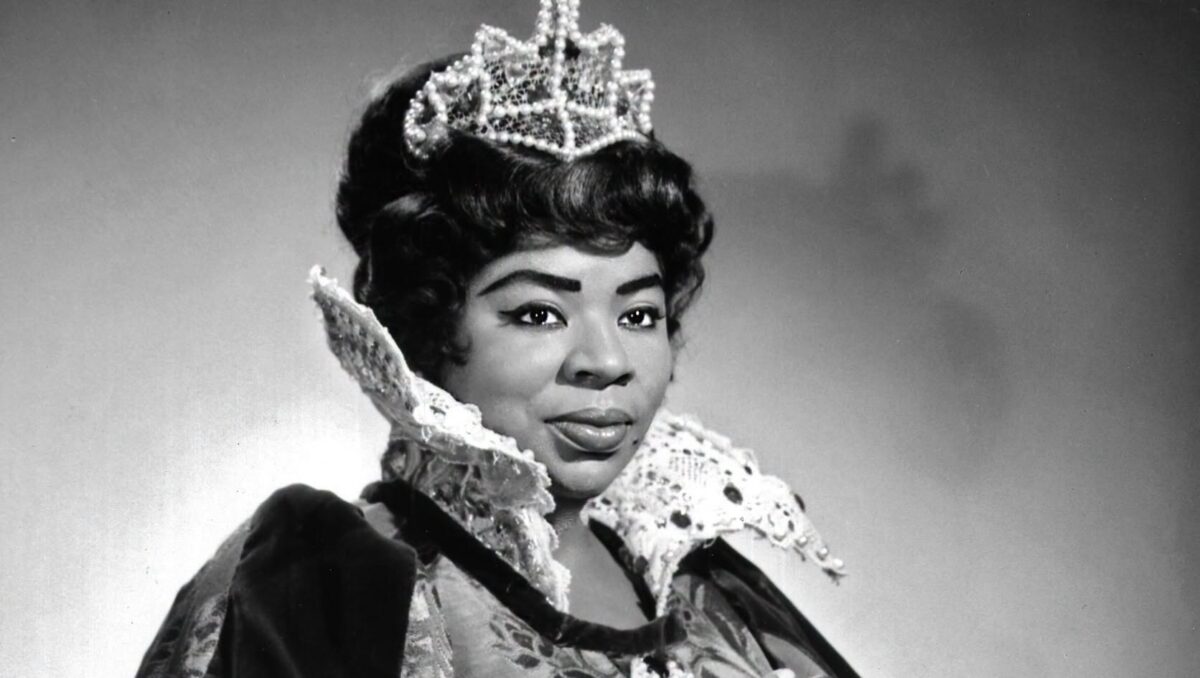
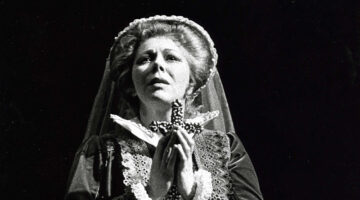
Martina Arroyo as Elisabetta di Valois in Verdi’s Don Carlo / Photo: Louis Mélançon / Met Opera
Martina invited me to be a part of her Prelude to Performance program in 2018, in which I covered Nannetta in Verdi’s Falstaff. The discussions we had as a group about each character and their motivations were fascinating. It wasn’t simply about what Nannetta was “feeling” in certain moments. It was, “What is her living situation? How old is she? What does her bedroom look like? How does she get along with Fenton? Her parents? Dr. Caius? Etc.” For Martina, if you didn’t have distinct answers for each of these questions regarding your character, you were not doing your character justice. She held us as accountable as she had held herself when she was actively singing.
After Prelude, Martina and I continued to stay in touch. She wanted to hear about how I was doing in my vocal studies at MSM and beyond. During my senior year, I mentioned to her that I would be having my degree recital but that I didn’t expect her to trek all the way up to Morningside Heights. But wheelchair and all, and with the help of my dear friend and fellow Prelude alumna Maria Brea, Martina rolled into Greenfield Hall at MSM, turning heads and making people whisper, “Is that who I think it is??” I’ll never forget my middle school choir director Laura Kosmich, who also attended my recital that day, posting on Facebook, “I’M SITTING BEHIND MARTINA F*****G ARROYO!!!!!” After the recital, she embraced me and told me my performance was the work of a “real artist,” and with that famous twinkle in her eye added, “Don’t let it get to your head.”
Once I graduated, she continued to check in on me. She was thrilled when I was accepted into the Resident Artist Program at Detroit Opera, having sung in productions at the previously named Michigan Opera Theatre. The last time I saw her was in 2022, at the last luncheon of the Met Opera Guild— yet another arts organization she actively supported.
Her memory was beginning to slip, but she never lost her bright smile, quick sense of humor, and those big eyes that always seemed to be dancing. To know Martina was to love her, and with her passing, I will now hold the many bits of advice she gave me even closer to my chest: “If you repeat a word, never sing it the same way twice. That doesn’t happen in real life;” “Whether you’re singing a role or an art song, always ask yourself who you are, where you are, when you are there, why you are there, and how you got to where you are;” “Always go back to the source material;” and, as another one of Martina’s mentees reminded me recently, “Never sing louder than beautiful.”
I join thousands of others throughout Martina’s life in feeling lucky to have been in her orbit. I will continue to cherish her mentorship, love, kindness, laughter, wit, and all of her hysterical one-liners. Safe home, Martina, and thank you for everything you did for me, for countless other young singers, and for the world of opera.

Melanie Spector
Born and raised in New York City, Melanie is a soprano, social media manager, and longtime opera enthusiast. Her love for opera began seeing Wagner’s Ring at the Metropolitan Opera at age six and subsequently joining the Met’s Children’s Chorus for seven seasons and 167 performances. She went on to study Classical Vocal Performance at Manhattan School of Music (BM, 2019; MM, 2021) and is also an alumna of the Detroit Opera Resident Artist Program and Aspen Music Festival (Fleming Artist). As a Social Media Manager, she works in conjunction with Lenny’s Studio, assisting top stars in the opera industry in keeping their online presence up to date.
Her expertise and enthusiasm for opera were given a platform for five consecutive seasons on the Toll Brothers Metropolitan Opera Quiz, on which she was a panelist during Saturday matinée international radio broadcasts.
This winter, she joins Sarasota Opera as a Studio Artist, where she sings Naiad and covers Zerbinetta in Strauss’s Ariadne auf Naxos.
-
People: Martina Arroyo