
Headshot of La Cieca

Cher Public

  • m. croche: This is by far the most interesting thing I have ever seen done with Delius. Good work, QPF. 1:58 AM
  • laddie: I think Ian is going to need another ciggie and go ’round after this major hijack. 12:55 AM
  • Quanto Painy Fakor: Unlike the MET: httpv://www.youtub e.com/watch?v=Omn4 SN6lAa8 12:30 AM
  • Quanto Painy Fakor: Rossini Carnaval of the Animals (watch the Lindoro Aria) httpv://www.youtub e.com/watch?v=b... 12:11 AM
  • Quanto Painy Fakor: KOANGA! httpv://www.youtub e.com/watch?v=4ty_ wCvgEMo httpv://www.youtub e.com/watch?v=T... 11:36 PM
  • Quanto Painy Fakor: httpv://www.youtub e.com/watch?v=Mo3h hQTAsC0 11:29 PM
  • Quanto Painy Fakor: httpv://www.youtub e.com/watch?v=DAEw aN_gMDU 10:10 PM
  • Quanto Painy Fakor: oops httpv://www.youtub e.com/watch?v=-197 sUl8g4U 10:08 PM

Cover up

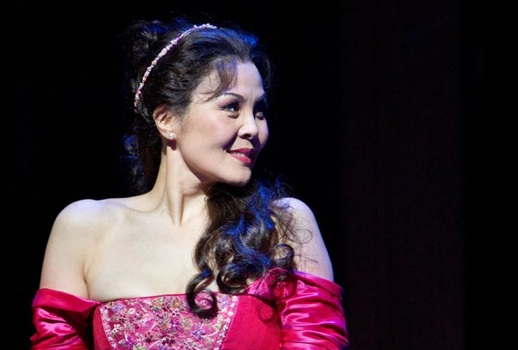
Says the Met’s press office: “Hei-Kyung Hong will sing the role of Violetta Valéry in Verdi’s La Traviata at tomorrow’s performance, replacing Natalie Dessay, who is ill.” (Photo: Marty Sohl)

159 comments

  • DonCarloFanatic says:

    A couple of people asked me how I liked the Manon HD yesterday, and I gave vague answers because I hadn’t figured it out yet. Now I know. What I liked best was the intermission feature where Anna Netrebko had a chocolate bunny in her bodice. This girl is a hoot.

    • mrmyster says:

      Just so DCF, more hoot than Manon I would say!

    • mrmyster says:

      Just so DCF, more hoot than Manon I would say!

    • Batty Masetto says:

      I enjoyed Netrebko immensely as Manon. I found her always engaging, often surprising, and usually persuasive – a stark contrast, for example, to Fleming’s emotionally inert, frigidly calculating Desperate Housewife. Teenager or not, it was easy to accept AN as a man-magnet. And such a stage animal! (Yes, the term is maybe used too much around here lately, but it applies.) Did anybody else notice the earring incident in the Hotel de Transylvanie? She handled it beautifully in character and without dropping so much as a fraction of a beat.

      Beczala did a lovely job too, and if I don’t comment more it’s only because everybody else has already said pretty much the same. I agree that Szot was heavy-handed, and that Pittsinger and Mortagne were excellent.

      There was a lot about the production that I liked. I liked the garret, its cramped quarters, with the landlady carrying supper upstairs. I liked the nightmarish Hotel de Transylvanie. I liked the idea of the bleak quay in Act V, though exaggerated perspective is a mistake if you’re planning to bring in characters from far upstage. And I especially liked the Cours-la-Reine. As useful as it is to the plot (our only chance to see Manon in her full glory), it’s always come off to me as more of an excuse to interpolate some tiresome soprano fireworks and an equally tiresome ballet, amidst a crowd of dutifully “colorful characters” who do nothing more than provide a lot of dull and superfluous stage dressing. Is it interesting to see Manon buy fake jewels from a fake vendor? Does it tell us anything that we don’t know already?

      Stripping it down to a set of functional ramps puts us as the audience in a situation that closely parallels what the characters are really there for: people-watching. It worked well as a snapshot implying a much larger space. It gave Pelly a really punchy way to set Manon apart from the other women, and to dramatize her hypnotic effect on the men. The awkward floor space pointed up the sheer extravagant stupidity of hiring a corps de ballet to perform impromptu in what would always be an inappropriate setting no matter what the production style. Why would Manon be interested in such a thing, when what she wanted was a private command performance at home? Why would any rational man expect her to be enchanted? I liked the molestation of one dancer, but the wholesale Rape of the Sabines at the end was another mistake.

      So was the bed in the nave of St. Sulpice. I didn’t object to the bed per se, but there must have been a more logical way to establish that a private space has been carved out of the public one.

      At the end I found myself wondering whether the sets might not work better on a smaller stage, where the exaggerated discord in perspective would be more obvious. Big people in small surroundings is an interesting concept and might well work. But the Met stage is so huge that the set dwarfs the characters no matter what you do. Maybe Pelly’s imagination is just geared to smaller European houses?

      • louannd says:

        Great questions Batty -- I just tried to sit back and enjoy it but that didn’t work.
        I forgot about the ballet. No wonder.

      • mrmyster says:

        “extravagant stupidity of hiring a corps de ballet. . .” pls. Miss Betty, don’t overlook that it was Guillot who hired the ballet to impress Manon, who turned her back on it. Nice touch. I don’t think we can blame Pelly for that one, but the bed in the church and Manon’s legs gripping Des Grieux as the curtain came down was a vulgarity that was very anti-Massenet. I left the theatre after that but listened on Sirius; MUCH better sound. No sex in church!
        I guess we are not in a good “french” period at the Met, just as Santa Fe
        seems to be coming into such with M. Chaslin as music director there.
        I do not think by artistic impulse Mme Netrebko is a Manon. Aside from
        Russian roles, I can’t think what would be ideal rep. for her just now.

        • Batty Masetto says:

          Mr. M., my point was exactly that -- Guillot is an idiot to think he’ll win Manon that way, and Pelly’s production makes that clear.

          • Batty Masetto says:

            Oh, PS Mr. M -- The vowel in my name is an A not an E, and it’s Mr. Batty. Given the recent misreadings maybe I need to start signing as bAAAAtty?

          • Clita del Toro says:

            Batty, LOL Mr.M can call me “Betty” if he wishes. A few have!

          • Donna Anna says:

            We’ll see the encore and by that time, parterrians will have moved on to the next great crisis.
            I like McVicar’s staging of the ballet, a sly setting of Artemis and Acteon.

        • armerjacquino says:

          “I can’t think what would be ideal rep. for her just now”

          Trov, Vespri, Luisa Miller, Butterfly, Don Carlo. I am impatient to hear her in ALL of the above.

          • Cocky Kurwenal says:

            I’d skip Vespri and Miller just because I don’t really enjoy her when she has little notes to take care of these days, but I’d add Salome, Rusalka, Jenufa, Desdemona, Amelia Grimaldi, Suor Angelica and Aida. More or less anything heavy lyric to spinto where the character is quite engaged.

          • armerjacquino says:

            Jenufa- GOD yes. Preferably in five or ten years from now once Mattila has moved into Kostelnicka-type rep.

          • Porgy Amor says:

            I believe she nixed Desdemona (plus Liu) in an interview within the last year or so, because she doesn’t like the character. Pity.

          • MontyNostry says:

            Perhaps she could perk up Desdemona by slotting a chocolate bunny between her boobs before she sings the Ave Maria.

          • Porgy Amor says:

            While she’s singing the conclusion of the Ave Maria, she takes the bunny out from between her breasts and begins to unwrap the foil. After the last quiet “Amen,” she bites the head off.

            There would have to be a way to work Verdi and Boito’s code name for the opera (“the chocolate project”) into the pro-Regie argument for this. Maybe that could even be the title of the explanatory note in the program.

          • louannd says:

            LOL You people.

      • brooklynpunk says:

        Batty

        Watching it from the Family Circle, on Saturday..I kept thinking…like just about EVERYTHING this past season(s) -that it had to look better , on a smaller screen..or stage..

      • Clita del Toro says:

        So, Batty, did you forget to write about the actual singing?? We know that many find Nebs to be a hot number.

        • Batty Masetto says:

          Clita, there’s no point my talking about the singing, everybody’s mind is already made up. For me Netrebko’s singing goes with the rest of the package, and I liked it. But the fact that I liked her and found her performance compelling (despite minor reservations) isn’t going to matter a whit to those who think she should still be scrubbing floors, or make her any more delightful to those who already like her. Same for the rest of the singers.

          But let me go on record as saying that I liked the singing.

          • Clita del Toro says:

            Thanks, Batty. You are right about people’s minds being made up. I want to change my mind about Trebs, but so far, I can’t. Perhaps it will happen one day when she sings Isolde. ;+) What?

          • oedipe says:

            Same for the rest of the singers.

            Amen to that. I would add: same for the rest of the singers out there, no matter what they might do.

          • louannd says:

            I find the sound quality so abysmal in the theater (you are right Mr. M. it’s better on the radio) that I wouldn’t comment anyway.

          • Batty Masetto says:

            Yes, louannd, it’s astonishing that the Met sends out such inferior sound to the movie theaters. If you’ve heard the singers either live or online you can fill in the blanks pretty readily, but it’s not a good medium for assessing really fine points. Even the string section sounds shallow at our venue. We’ve mentioned the poor sound to management but they tell us it’s sent pre-mixed and they have no way of influencing anything but the volume.

          • whatever says:

            i’ve only just spent my first winter as a “snowbird”, and therefore only had two occasions so far to try the HD, but the poor sound quality really shocked me both times. it seemed to me the problem starts well before the mixing; i.e., the microphones are not capturing enough of the sound in the first place.

            garbage-in-garbage-out, as the software geeks say.

        • operalover9001 says:

          I know Netrebko really should be singing Manon Lescaut instead of Manon at this point, but I really enjoyed her singing. My first recording of the opera was with Gruberova, who sang the first 3 acts with a suitably girlish tone and great coloratura, but I found her singing in act 4 and 5 rather boring. Netrebko is the opposite -- she turns the Hotel de Transylvanie scene into a REALLY exciting scene, both acting-wise and vocally.

          • Clita del Toro says:

            Operalover: There really must be someone in between the two extremes you cite. LOL

          • operalover9001 says:

            Clita: Of course, I think that Gruberova and Netrebko pretty much represent the extremes of the lightness/heaviness of Manon voices, and most sopranos fall in between the two. I just prefer a Manon with a voice that’s too heavy rather than a voice that’s too light. Incidentally, I think that Gheorghiu would make a great Manon.

  • oedipe says:

    A few thoughts about the Manon production (as seen in HD):

    By keeping some scenes that are cut in many productions and, on the contrary, by cutting other significant scenes, Pelly makes an important directorial choice, with mixed results: he emphasizes the character of Guillot de Morfontaine -to the detriment of Lescaut and the 3 courtisans- to such an extent that de Morfontaine becomes a very central element of the plot. Thus, Pelly has preserved the end of the first act (with de Morfontaine’s “vendetta” against Manon and Lescaut) and the scene of the ballet at Cours-la-Reine (where de Morfontaine’s anger is reinforced), whereas the Hotel de Transylvanie scene (very defining for the Lescaut character) is reduced to a minimum. This is one of the reasons why Lescaut has so little complexity and depth in this production (another reason is Szot’s stylistic cluelessness).

    The result of this directorial choice is that the opera becomes a rather simplistic story of revenge, and the personalities of other characters appear less clearly: the very intricate social and political aspects of the story, hinted at during the Hotel de Transylvanie scene, have been left out almost entirely. Maybe Pelly thought the libretto alluded too much to French history, and he decided to simplify it; if so, I think it’s the wrong approach, similar to “dumbing-down”. BTW, the ballet scene, -which I could have done without- was ripped off from McVicar’s Faust, anyway.

    Some people here have called the stylised sets and costumes “ugly”; I would like them to give me some examples of sets they consider “pretty”. At any rate, these sets are actually very carefully thought out. They are “models”, as it were, of actual places: the Amiens skyline in the first scene, the “forains” at Cours-la-Reine (complete with a montgolfière and a wheel), the Hotel de Transylvanie which reminds one of the famous nightclub “Chez Castel”, the highway in the last scene, uncannily resembling a rest area on the highway to Calais. It seems to me that, with these stylised models and colorful costumes, Pelly wanted to create the look and feel of a music hall such as Folies Bergère. I have no problem with that; but I would have prefered to see characters with more depth (not just Lescaut, but also Manon and Des Grieux) and less scenes that seem tacked on merely for effect, such as the ballet scene, the bed scene at St. Sulpice and the final, pointless beating of Manon by a bunch of men.

    • brooklynpunk says:

      Oedipe:

      Your descriptions and deciphering of the scenery was far more interesting to read and imagine, then how it looked -- to my eyes…

  • MrGuy1804 says:

    And there it is ladies and gentlemen. It’s a tricky thing, trying to weigh the importance of accessibility with artistic merit. Most of the HDs have SUCKED. It’s great that more people can see live performances from an A opera house, but are we dumbing down the artform in the process?

    Deborah Voigt’s horrible Fanciulla? Seriously?

    The HD productions seem to have not a damn thing to do with the quality of the performances, but more about the draw of the “star” singers and the hype that the powers that be can generate about a given production (like LePage’s dull ring.) These days more people can see MET performances, but it seems that in attempts to appease the masses they pick productions that look better on screen than in the house and they pick singers who look nice and sound ok at best on video, but are inaudible or wretched sounding in the theater.

    • armerjacquino says:

      It’s odd how often I find myself cast in the role of Voigt-defender on this site, since she’s not a singer I have any particular fondness for. But the idea that Voigt’s ‘horrible’ FANCIULLA represents a dumbing-down of opera as an art form is just ridiculous and hysterical.

      Voigt’s Minnie in the HD was a perfectly acceptably sung and acted performance. Yes, the middle’s gone a little wiry and the top is not what it was*, but to try to spin it into something which is actually harming the art of opera itself is unpardonably daft. And no, I didn’t see it in the house; but then, since we’re talking about the quality of the HD transmissions, that doesn’t matter.

      (*On a semi-related note: is there another aria in a major opera which has been as badly sung over the years as ‘Laggiu nel Soledad’? I’ve literally never heard a good one)

      • rapt says:

        Just to indicate that you’re not alone, aj, I’ll note that I, too--having seen only the HD Fanciulla--thought Voigt did okay there; I was touched. Like you, I’ve never been a big fan. And perhaps unlike anyone, I’ve actually thought her more interesting in her late career form--voice less beautiful, more effortful, but what seemed to me much greater attention to conveying the drama, the meaning of what she’s singing. I even thought her Chicago Tosca (only heard over the airwaves) not beneath contempt. I suspect that the size and ease of her earlier voice, appreciated in-house, must have been very impressive; perhaps regret for the loss of those early qualities enhances the venom directed at her late-career form. (While I’m maundering on, I’ll also note that as late-career forms go, aren’t vocal diminutions like hers rather characteristic, even among those who haven’t undergone major surgeries? There seems something odd or hard to explain about the slack cut for other late-career singers but not for Voigt. But--and here the non-fan in me speaks again--I suppose the explanation for that might be that those more easily forgiven singers were, alas, greater artists to begin with.)

        • Clita del Toro says:

          Rapt, I was never a fan either, even when she had a gorgeous voice. I saw her in FroSch at LOC and liked her about as much as the “fabulous” Brewer, but really, they were both okay, not “fabulous”.

          She was never much in the Kunst department anyway, but now seems to be trying harder, with a bit of success. But still, I would not go to see her Brunnies.

      • grimoaldo says:

        Well I only heard the broadcast of the first night (quite enough, thank you!) and I thought she was horrible, and I thought Giordani (shudder shudder, spit on floor, cross myself hurriedly) was even worse. The whole thing, basically, sucked.
        Although I agree it is silly to talk about that showing that opera as an art form is being deliberately dumbed down.

      • Cocky Kurwenal says:

        Laggiu nel Soledad is a badly written aria, but I have heard a couple of good ones- Andrea Gruber at the ROH, which I suppose everybody is going to express doubt over but truly she was sensational all night long across the whole role, and just this evening on YouTube by coincidence I happened across Meagan Miller’s, which was extremely impressive. Westbroek did fine on the most recent ROH revival, but wasn’t especially interesting and didn’t really transcend it to make it seem like something wonderful the way Gruber did.

        I have a live Jones one from a Puccini concert she did with Gruberova, Benackova and Marton (what a night that would have been!) which must be a contender for roughest out there….

      • brooklynpunk says:

        …I actually found watching the televised “Fancciulla” quite an enjoyable experience, visually and audibly, as well..warts and all…

      • Bianca Castafiore says:

        amberjack says:

        Voigt’s Minnie in the HD was a perfectly acceptably sung and acted performance.

        Funny, I was there for her Minnie, and also for her Walküre last season, and she was horrible. Lower register pretty much gone and instead, we get some ugly croaking. On top of that, the blandest acting around. That’s acceptable to you? Oh my…

        I saw Voigt a few times over the years. In 2003, she was still ok as Amelia in Ballo. By 2005 or so, her Helenas and Giocondas were showing signs of trouble, but by now, her Minnie and Brünnhildes are really not acceptable for a house like the Met. I regret I never caught fat Debbie, who could sing.

        • Porgy Amor says:

          I have to agree with Bianca Castafiore on Voigt’s recent Met stuff, and more generally on the career trajectory (though I only really got all the fuss about her *very* early on, like the Chrysothemis with Behrens’s Elektra). The Minnie was acceptable only in the sense that she made it through to the end, allowing the opera to go on. While it’s a challenging role, I can’t set the bar that low. Even if one can live with that hollow, shriveled middle register (and hit-or-miss top), she didn’t make much of the words, and inflection and attitude count for much in this piece. The HD performance has received a puzzling DVD release (another case in which a specific Met production was already better-represented on video); I would put Voigt’s Minnie below every other one that can be seen that way in a complete performance.

  • Ruxxy says:

    Sorry but most of the HD broadcasts have NOT sucked at all. They may suck to someone who is demanding a level of perfection in all things- in which case they are never going to make the grade regardless. To more realistic and appreciative opera lovers who have no chance of ever attending the big houses the HD broadcasts are little short of wonderful. The reason is simple enough- many of us go to appreciate the wonderful moments and overlook the bits we don’t like. That makes us very appreciative of the fact that if the opera companies didn’t do broadcasts until they achieved perfection we would never see anything.
    Thankfully HD broadcasts aren’t compulsory- if you’ve been to two of them and don’t like them -- why bother?

    • louannd says:

      I have no chance whatsoever of attending “big houses” and I do agree that the HD productions sometimes SUCK! Don Giovanni is my vote so far (and one of my all time favorite operas). I have seen quite a few on DVD (and saw the Robert Carsen production in the theater from La Sca) there are not many who live down to the standard put forth by the Met this past season (Mariusz please forgive me, because you are a talented man).

    • brooklynpunk says:

      no… they haven’t ALL “sucked”—as HD productions, per-se…

      Where they have ALL SUCKED--IMHO- is, up close and LIVE.. I know it ain’t an original thought…but I feel the new productions at the MET are all staged and thought of, primarally as to how they are gonna look on the screen…and not in the theater, itself…. which is fine for those who can’t make it to the House.. but a real dis-service to the live audience, in the Operahouse….

      • La Cieca says:

        You feel that, do you? On what basis?

        • brooklynpunk says:

          On the basis that productions that I really though looked horrible on the stage of MET.. “Sonnambula”, “Don Giovanni”, “Comte Ory” , “Faust”..and even some of the “Ring” operas-- just for starters-- look so much more bearable- TO ME— with creative camera-work, on a smaller screen…

          I can only base my opinion on what I have seen in the House, vs how it then came across, on either a movie screen/tv/or ‘puter…..

          • armerjacquino says:

            The problem with conspiracy theories is that they tend to require people to behave in an absurd and illogical manner.

            The idea that McAnuff and Brill sat down after their first production meeting at ENO, looked at the ground plan of the Coliseum, and said ‘Now, of course the important thing is to get a set that will look good in close up when the Met does an HD relay in two years’ time’ may seem credible to you, but it’s really not the way these things happen.

            And doesn’t the DON GIOVANNI set -- a horrid aberration by the usually wonderful Chris Oram- make the opposite point, anyway? It looked TERRIBLE in close-up; surely it can’t have looked that bad in-house?

          • brooklynpunk says:

            AJ:

            With all due respects, I don’t recall saying anything.. or even implying anything abput “conspiracy theories”-- so making my own opinions concerning what I feel to be the utter lack of an interesting imagination (IMHO….) on the part of the stage directors designs , painted with that “crazy brush” seems a little unfair, on your part..

            For productions that were “borrowed” , or “co-produced” with other Houses..I can fully imagine that the production MIGHT HAVE WORKED “better” in a theater smaller then the barn of size of the MET

            I also DO NOT THINK that directors in question conspire in that they wonder what will look terrible in the house, but ok on television, per-se… but I can not help wonder if the way something will appear on the smaller screen-which will be seen by a much larger audience, does not enter into the concepts finally chosen.. to the dettrement of the in-house audience

          • armerjacquino says:

            BP, with all due respects, “the new productions at the MET are all staged and thought of, primarally as to how they are gonna look on the screen” IS a conspiracy theory, whether or not you used the phrase.

            And if you’re prepared to concede that this may not apply to co-productions then I am confused as to why you should have specifically mentioned FAUST.

          • brooklynpunk says:

            AJ:

            I used the “Faust” as an example pretty much for the reason that I saw it in the House… thought it sucked, in person-- BUT , found it not as horrible, visually, watching it on televison

            I still don’t consider myself much of a conspiracy theorist, but perhaps i am.. i sometimes wonder if there is a conspircy to “dumb-down” productions, to make them easier to understand for the larger televison/ cinema audience…

          • armerjacquino says:

            BP- this isn’t aimed just at you, but I am getting very, very tired with all the anti-HD paranoia.

            Newsflash: NOT EVERYONE LIVES IN NEW YORK. The Met’s HD transmissions are unequivocally, unquestionably a Good Thing. They make the work of the house available to opera-lovers worldwide in a way which replicates the experience and excitement of live performance. They provide a large and valuable revenue stream at a time of global recession. And yes, they make opera available to potential new audiences.

            But all people can do is fucking moan about it. ‘Oh, they only cast pretty/slim singers’- yes, slim shimmering sexpots like Violeta Urmana, Stephanie Blythe and Ramon Vargas. ‘Oh, they talk to the singers at the interval’- as if suspension of disbelief were so fragile that we’d never get moved by an opera if we remembered that THEY’RE JUST PRETENDING.

            Now we’re being told that designers are tailoring their sets to a cinema screen rather than the house. I can’t think of one designer I’ve ever met who would be happy to place a set on stage that he or she knew or even SUSPECTED was unsuitable for the space. In another thread, we’re told that broadcasting a production of FANCIULLA represents ‘dumbing down opera’ because the poster didn’t like the performance of the soprano.

            BASTA. I’m delighted for you that you live in Brooklyn so Lincoln Center is just a subway ride away. The fact that the Met’s output is available to those of us who don’t is a brilliant, brilliant thing, and I’m sick of people pissing and moaning about it.

          • A. Poggia Turra says:

            One factor that might come into play (that didn’t in the past) is CGI. It’s not too hard to imagine that, during the early design phases, the designers and TV directors could call up a 3-D image of the proposed set, then “view it” from the prospective from what an HD camera will “see”.

            Some opera houses employ somewhat similar technology on their ticket purchasing sites -- they allow you to “see” the stage perspective from a seat location that you are considering buying.

          • Edward George says:

            AJ, to add one more point, the MET HDs seem to have been pretty influential in encouraging other opera houses to try the same. Not only do we have live cinema screenings but also now live internet video streams and watch again facilities. Maybe this would all have happened without the MET HD, but I don’t think the impact of the HD can be underestimated.

            I attended the Ring HD with a friend. She had never seen the Ring before; nor a Wagner opera. In fact, she had only seen one opera live. HD is an affordable way for many people to try something new. What a pity I had to tell her that she wasn’t supposed to enjoy it.

            (No doubt folks would have enjoyed Ernani more if it weren’t for a 30 year old production clearly designed to be seen in the theatre more than on camera; Angela Meade would have been more credible if she were more svelte and camera friendly.)

          • DonCarloFanatic says:

            Don’t know where this will land, so replying to BP, the HD camerawork clearly has been iffy. They’re still doing super close-ups of the wrong person as a line is sung. They seldom give us a sense of what the entire set looks like. And usually, as with this Manon, we have no idea what the set is supposed to represent. A quay? Really?

            To reply to EG, Angela Meade doesn’t have to lose weight to be a more credible performer. She has to learn how to act more convincingly.

          • brooklynpunk says:

            No… not everyone lives in New York..SO…?

            I am more then THRILLED--AND I MEAN THAT SERIOUSLY…. that many more people can get to see LIVE performances, then ever before.. no matter how far ftom an actual Operahouse they might be.. AND.. I would NEVER PRESUME to tell another person what to like or not to like-- or whether a production that I like or hate is the only way, or not the way, to do it..I can only speak for myself.. using the not inconsequential amount of performances I have seen , through-out the years.. and make up MY OWN mind, based on that

            I find kvetching about this as annoying as you do, AJ.. It gives me very very little satisfaction to moan and groan about something I can not change, anyhow… so… enuff on that subject, from me, fer now….

    • Batty Masetto says:

      Ruxxy, I completely agree. I can count on one hand the opera productions I’ve seen -- live or HD or DVD -- that felt really perfect, or close enough not to matter. After that, it’s a question of how many demerits you can tolerate, and in what areas, without the experience falling apart on you.

  • sterlingkay says:

    I’m really not following you….they sucked “up close and live”— well, you can’t get more “up close” than the HDs.

    Another point: if you have an ugly set, it’s hard to not look at it when you’re watching a production in the theater…but the HD directors can just focus on the singers and avoid shots of the ugly set. Any production can be “improved” through judicious camer-work. This DOES NOT mean that a production was designed for HD…rather that the HD director does the best he can to minimize the weaknesses of the production and maximize the strengths.

    • sterlingkay says:

      And another thing— one wonders how these HD transmissions have become so profitable for the MET if they have all “sucked”. Clearly someone seems to be getting some enjoyment out of them. One does wonder about some of the ridiculous statements made on PARTERRE sometimes. Just seems like a one bitter, angry old queen after another…

      You know what, if you hate everything so much just stay home and listen to your ancient records and leave the rest of us alone.

      • brooklynpunk says:

        Sorry…I don’t have any ” ancient records” to listen to..and always hope for the best when going to see a productionis the House.. whether it actually works fer me, is another matter…

        • Clita del Toro says:

          I am sure the HD’s are good for opera in general (whatever that means?). As I have written her before, I don’t especially enjoy the HD experience in the theater itself. And it’s not because they choose “pretty singers” or because the productions are ugly or beautiful or that the camera work is used to disguise an uninteresting production. It’s because to me (and it’s a very personal thing) the HD’s seem in a way very artificial and disorienting. The big screen and the camera work produce floaty, “unnatural” feeling that I don’t like. Furthermore (and more important) I don’t trust the sound in the theaters--to me the sound becomes kinda “homogenized” and less true than the real thing or the radio. I hope this make some sense.

          • La Cieca says:

            I am sure the HD’s are good for opera in general (whatever that means?).

            One very important thing that means is that the HDs vastly increase the opera house’s “reach.” The eight performances of Traviata at the Met this season can be expected to play to around 25,000 -- 30.000 total audience members, whereas the expected worldwide HD viewing of the Saturday afternoon performance is at least 500% of that figure. In other words, that one production has increased its audience (reach) fivefold.

            An additional benefit is that the HDs deliver opera to a large group who don’t have access to the Met’s live performances: they live too far away, they have limited mobility, they can’t afford to buy tickets to live performances.

            And all this at no cost to the Met; in fact, at a negative cost since the HD telecasts generate a small net profit. And that’s before the content is further packaged for PBS telecast (again reaching an underserved audience) and the various formats of home video release including the Met Player, all of which both increase reach and provide income streams for the Met.

            And yet another benefit of the HD is that it provided enormous worldwide publicity for the featured artists; therefore, the perk of an HD telecast is very attractive to a singer who is trying to decide whether to sing for dollars at the Met vs. Euros in Zurich or Vienna. I honestly don’t think the Met would have access to the A-list stars it’s attracting right now if it weren’t for the HDs.

            And what exactly is the down side?