

Headshot of La Cieca

Cher Public

  • Feldmarschallin: The new Siegfried which opens on Pfinstsonntag at BSO. Funny that Lance Ryan sounds Eastern... 2:56 AM
  • MontyNostry: … and does Stemme’s voice really have a “bright sheen”? Oh, I’d... 2:55 AM
  • MrGuy1804: You are right on the money. I was not terribly impressed with any of the singing. There were a few... 12:29 AM
  • Camille: That was fun, thanks! I had completely forgotten Eastern Airlines, the Wings of Man. With a name like... 12:22 AM
  • Henry Holland: Thanks! Too bad they didn’t do Der Zwerg instead of the (wonderful) Puccini. The LA Opera... 12:09 AM
  • Camille: Thanks Blue, for the review. Lord, what are “earthy colorings”? 12:06 AM
  • Gualtier M: Here is Carmelita Pope in the actual 70′s era Pam commercial at 2:36 in: httpv://www.you... 12:03 AM
  • CruzSF: kashania, please tell us more about these performances. Who? How presented? And don’t neglect the... 12:03 AM

Boathouse Betty

La Cieca just glimpsed this “save the date” from NYCO’s development department:

New York City Opera’s Spring Gala: An Evening with Deborah Voigt. Celebrated as one of today’s greatest interpreters of the operas of Wagner, Strauss, Verdi, and Puccini, Ms. Voigt is also acclaimed for her winning forays as a performer of Broadway tunes, jazz standards, and popular songs. The historic Central Park Boathouse will set the stage for an unforgettable evening featuring a performance by the magnificent Ms. Voigt – joined at the piano by Tony Award winner Ted Sperling – cocktails, gondola rides on The Lake, a formal dinner, and dancing to the music of Vince Giordano and the Nighthawks.

72 comments

  • Bianca Castafiore says:

    Re: the upcoming Macbeths, does anyone know who the cover for the lady is?

    • Camille says:

      Does it matter? So long as there IS one.

      Wish Urmana had sung that instead.

      • kashania says:

        So true, Camille. At least Urmana can sing Lady M’s music. And it’s probably vocally a better fit for her than Aida.

        • Bianca Castafiore says:

          As long as we don’t get Guleghina.

          • Camille says:

            Yes, she surely can (could). I admired her Eboli, as well.

            To be fair to Guleghina, I did hear her sing Lady MacBeth quite well, must have been well a dozen years ago @ Carnegie with Collegiate or OONY. She did everything well with only a slightest problem with the notorious final D flat, which is only human.

            Just saying that they have done these well at other times.

  • steveac10 says:

    According to her website, her cover is Elizabeth Blanke-Biggs, who also did the honors for Guleghina the last time around.

    • peter says:

      We’d be super fortunate to hear Blanke-Biggs. She stepped in for Dessi in Tosca at the last minute a couple of years ago and she was quite good.

    • oedipe says:

      The movie business is beginning to look eerily like the opera business: “They don’t make them like they used to any more…”

    • Camille says:

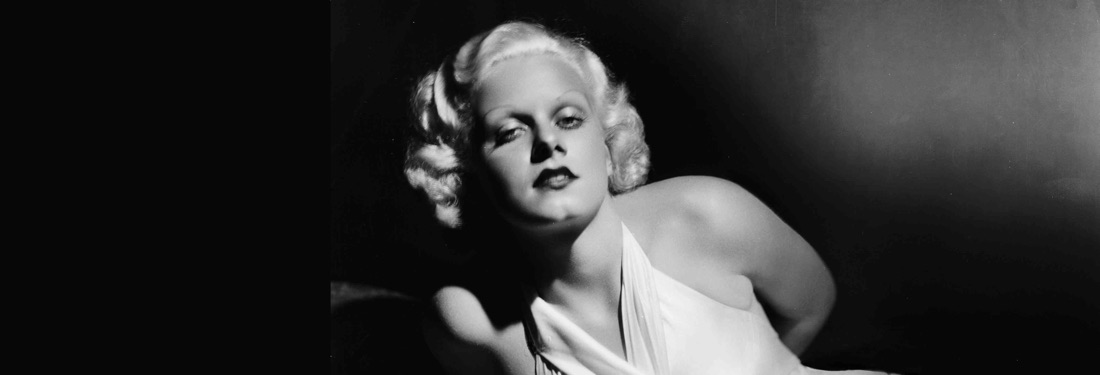
      Thanks to Mme. Pomegranate for posting, and mrmyster as well, for the suggestion of this article.

      According to friends of mine who were in L.A. Before WWII, it was so lovely and did have that small town feel to it–now, long time gone.

      I think what Mrs. Wald has to say about Joan is important as it is unclouded with any sense of personal rivalry or competition. There were likely many jealous of her success.

      Very interesting, and an increasingly rare, these days, keyhole view of the fabulous Hollywood days of yore.

  • oedipe says:

    Slightly changing the subject, but I thought Parterrians might have an interest in a recent interview Gérard Mortier gave to the Forum Opéra (a French opera blog). In this interview, he says that one of the (two) biggest regrets of his career has been the failure to carry out his project for NYCO. From the beginning he felt that there was poor planning and the funding would be problematic.

    Here are some other salient bits:

    -His model for opera: Greek theatre (which is at the origin of opera), the role of which was to discuss/analyze the problems of contemporary society through a blend of ideas and emotions. 19th century opera functioned on the same principle. Today’s state subsidized opera houses should continue this tradition, and not view opera as entertainment.

    -Opera as an institution has to adapt to the cultural environment/situation where it operates, not to the public.

    -It is preferable to revive legendary productions (e.g. Chéreau’s Ring), than to create new ones that are poor quality.

    -Asked about reputedly disliking ‘stars’, he says he prefers great singers who comply with his rules and do not behave like ‘stars’. Then he names names: for instance F. Lott is a good ‘star’ in his book, whereas Fleming is not. He considers himself a maker of ‘stars’, e.g. Behrens, S. Graham, JDD.

    -The Parisian opera world is a world of rumors and ‘cliques’ fighting one another permanently. But he admits having been flattered by his appointment at the Paris Opera, which he compares to climbing Mount Everest. He doesn’t lose sleep over being ‘hated’ by the Parisian public and part of the press.

    -After the ‘Revolution’ often comes the ‘Restauration’. The opera audience is conservative, sometimes reactionary, so it favors the ‘Restauration’. That’s what is happening these days at the Salzburg Festival and at the Paris Opera: just like in 1830…

    -He has formed many of the younger opera managers currently in important positions.

    -Best opera houses of today: Lyon, Amsterdam, Madrid. If people want to hear ‘stars’, they can go to the Met.

    -He did not want to work in Britain, because the English think that going to the opera is first and foremost a picnic.

    -The Teatro Real audience (unlike that of the Liceu, which has a long tradition) is a ‘nouveau riche’ audience. Before his arrival, Teatro Real was buying expensive, tacky opera sets and expensive ‘stars’. He functions now with a reduced budget, but the Spanish government is giving him enough freedom and is not forcing him to stage ‘populist stuff’, so he is happy with his job.