









Topper
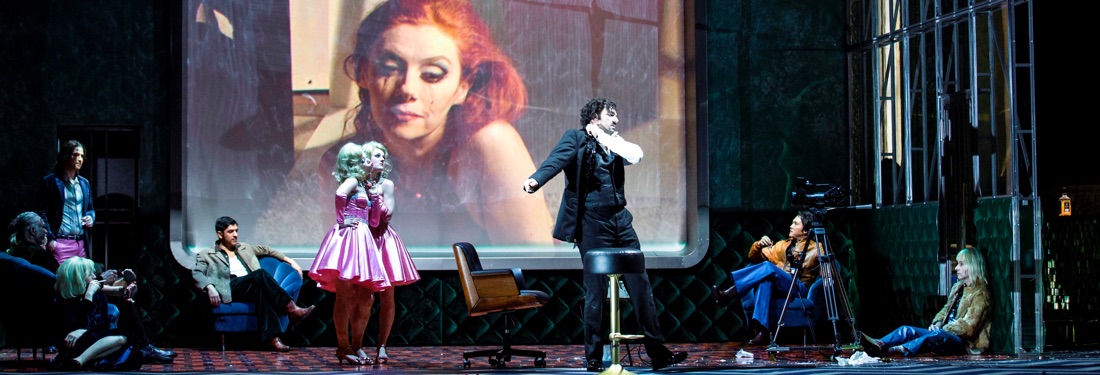
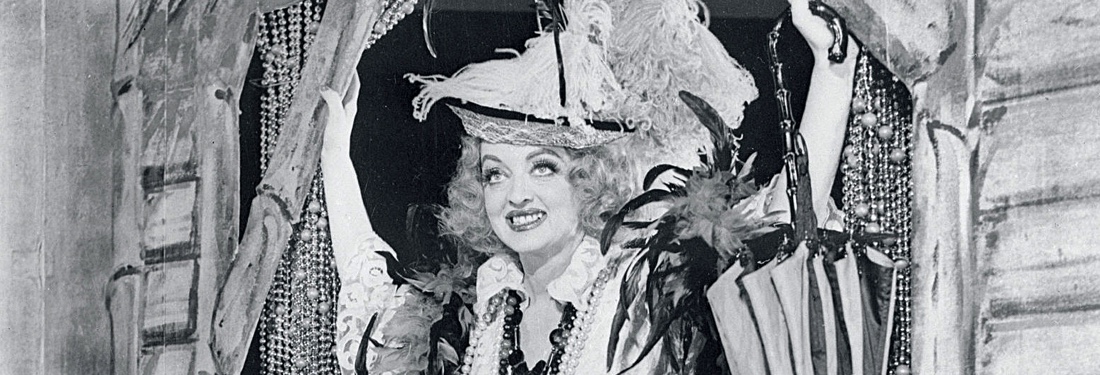
“…to a certain degree, good critics are no longer necessary to find. The phrase ‘Everybody’s a critic’ has taken on a universal cast. The internet encourages people to share their opinions with the world. In the theatre, the buzz created by chatroom chatters has become increasingly important to a show’s reputation before it opens. There are thousands of critics tapping away their opinions to whoever will listen – so who needs a paid pontificator to tell you what your opinion should be?” Stephen Sondheim rebuts Michael Kaiser and ponders the utility of Sanskrit to the librettist in excerpts from his new book Look, I Made a Hat: Collected Lyrics (1981-2011) with Attendant Comments, Amplifications, Dogmas, Harangues, Digressions, Anecdotes and Miscellany. (Photo: Getty Images)
I love when one of these silly critics whines about “journalism” and Internet blogs. They somehow think they are more worthy — or worthwhile — because they get a weekly check from one of the Sulzburgers.
Poop on that.
Did any of the people who have taken this post as an opportunity relaunch their anti-criticism hate campaign from the ashes of Saboteur Domingo-date actually *read* Stephen Sondheim’s article? First, its a lesson to creative types on the impossibility of escaping criticism and the futlity of criticizing it in and of itself. As he pointed out there is a tremendous market for arts criticism, even if that demand has sought out more democratic forms to satisfy their interest. His criticism is reserved for “bad writing” not overly harsh or critical assessments of people’s work. In other words, there is no doubt he would have agreed with Ann and found the witch-hunt against her discomfiting and disquieting. But don’t allow paying attention to stop the agenda.
Saboteud Domingo-gate
I don’t recall a witch-hunt. I recall some people saying that Domingo had every right to object to the word ‘sabotage’ if he wanted to. How Sondheim’s excellent article in any way negates that view is beyond me.
“… weekly check from one of the Sulzburgers.”
I’M SORRY-- I DO NOT recall any staff-reviewer from any of the New York Times owned publications complaining , or “whining” about internet blogs --DO YOU…????
Jeez. You can’t be serious?
Jeez. I AM-SERIOUS…
prove yer ” point” if ya CAN..or leave the Sulzbergers out of the argument…
It has always baffled me that there are so few outlets for “pay-check” arts criticism in the US, especially in New York which is one of the great arts cities of the world. That has been the case since long before the democratizing influence of the internet, bloggers and contributors to sites such as this one. But I have never read arts critics whingeing in print about the internet and bloggers -- I imagine few have time to read the internet that extensively, and let’s face it, bloggers and parterre contributors are as variable in the quality of their writing, knowledge, passion as professional critics. It’s all very well to take pops at Tommassini who has the unenviable role of music critic at the NYT. People make the same complaints about the current generation of UK critics, ie that they are not as good as their predecessors, but they have to cope with much-reduced space and the fact that pop music was barely considered worthy of the quality-prints attention thirty years ago. Tommassini may not be an opera specialist, but his writing on pianists, in particular, has world-wide admirers. I think Ann Midgette is a very fine critic, knowledgeable, entertaining and often witty, but clearly not everyone agrees. Anyone who reads German can hardly fail to appreciate Manuel Brug in Die Welt. Not only does he travel more extensively than any other mainstream writer, he has a breadth of knowledge, encompassing film, theatre, dance, as well as his specialisms of opera and concert music, that should be the envy of any writer. You don’t have to agree with all of his opinions -- he is way to lenient on the fashionable regie directors for my liking -- but he remains essential reading for the German music public. He’s witty and can be quite bitchy, too, like a lot of Parterriani. Of course, there’s a lot of dross, in print and online, and some critics are clearly more knowledgable about certain aspects of the repertoire than others, but no-one is a walking Grove Dictionary (correct me if I am wrong). And even the most knowledgeable of academics can be stultifying writers. I imagine a lot of “amateur” critics aspire to be professionals and the best will succeed. This site is full of people who think they can do a better job casting for the Met than “Fiend” and “Billingsgate” as well. Instead of sniping and moaning perhaps a few should put themselves up for these jobs when they become vacant. There are several young British bloggers who are now writing for the mainstream press -- we have far more newspapers in the UK, so I suppose there are more opportunities. Luckily it’s a free world and you no more have to read them than you do some of the more inane bloggers and chatroom contributors. Interestingly, The Opera Critic website -- which prints mainly, though not exclusively “pay-check” criticism -- is celebrating its 10th anniversary, so clearly there are still people prepared to pay an annual subscription to read this stuff and for the website to cover its costs, so I don’t think it’s curtains for the professionals just yet. But I may be wrong…
Regina, you have some good questions. I think the reason there are so few outlets for paid arts criticism in the United States has to do with the nature of the American newspaper business, which on the one hand has been more interested than the European press in cultivating “objective” journalism and an above-it-all point of view, and on the other hand has been more subject to local and national monopolies than the European press. Neither makes for the kind of climate that encourages good journalistic criticism. One ends up relying on the good graces of the alternative press, which is generally very pop-culture and lifestyle-journalism oriented.
Does anyone know how to prevent Google from flashing these disgusting and constant ads from the Florida-opposite-of-Grand-Opera? It floats in the rectangle here to the left, right above the word colleagues. I’m sick of being confronted with their crap about Luisa Fernanda and other productons in which I have absolutely no interest.
If it brings La Cieca income for Parterre then that’s fine.
Lucky you, QPF. I’m seeing Madison-30, Brittny-22, Amanda-25 and Jenny-23 offering themselves out for dates. On a gay opera site. I think the technology involved needs a few tweaks.
The ads are user-defined, Henry- la cieca opens up the space and then ads appear based on previous searches, location etc. I’m seeing ads for UK businesses, for example.
Anything you want to tell us?
Yikes, amerjacquino, to say I’m not sexually or romantically interested in women is a vast understatement, maybe it’s because I go to sites like Fark that are hornets nests of tit-based advertising.
C’mon, ALL of you are lucky! I am getting date offers with Asian, Afro and Ukrainian girls (never married Ukrainian girls!).
haha I never noticed the ads before, I have the ability to just tune them out, but a few minutes ago it was “meet women in your area” then it switched to an ad for Downy and now it is showing meet MEN in your area.
I didn’t know there ever had been any married Ukrainian girls. The unmarried ones certainly enjoy a great reputation Downunder for being great cleaners. You screw them on your bed and they clean out your bank accounts.
I have no control over the ads except how strong a level of sexual content they may contain. As I understand it, the ads displayed are selected by an algorithm taking into account which ads have been purchased and are awaiting display, the content of the site and (this one kind of surprised me) the browsing history of your own computer. In other words, the ads are somewhat tailored to what the algorithm thinks your interests are.
Of course, while waiting for the next Parterre critique of Satyagraha, or of some regie Parsifal, I’ve been killing time perusing Ukrainian single women’s nudes…
Huh!
My space is empty and always has been.
Does that mean I have no interests at all?
I sort of like Ukranian girls.
and cheese,
(but not together, so please don’t send me any ads for cheese-covered Ukranian girls.)
Oh, and spiders.
OK Betsy, the next time I get an ad for Ukrainian spiders I’ll immediately forward it to you!
How about Ukrainian spider men?
http://video.i.ua/user/771952/6378/85156/
M. Croche: only because of my long-standing respect and (dare I say it) affection for you will I summon up the patience to point out that while there are four arms and four legs visible in the picture, they are on TWO SEPARATE BODIES ! ! I am regretfully reminded of the young biologist at the University of South Carolina who grafted together one and 1/3 ants and tried to gain tenure by presenting it as a new specie of arachnid.
“BOBOLINK IS NOT MOCKED,” M. Croche! “Bobolink is NOT mocked.” (Hexekiah, 18:12.)
Bobolinshchina…
Isn’t there a passage in Hexeziah declaring that the two bodies were indeed of one substance? This is irredespufutably proof of a benevolent Deity, at least after said Deity has had His/Her/Their morning coffee.
For a brief exciting moment I thought you were talking about Berberian, and I was about to get all Sequenza up everyone’s shizzle.
Wake me up again when the Moldovans adapt Stripsody as their national anthem.
ianw, I AM SO SORRY!
Perhaps, as Berberian is an Armenian surname, the proud little nation of Armenia will adopt this as their national anthem:
[I want her WIG!]
Sincerely,
Your Secret Admirer
Thank you Camille, I ‘effin love her. I’m not one of the divasexuals of Parterre, but I come pretty close for Berberian.
Can you not see, say, Dessay doing a Berberian covers album? I can’t think of many other sopranos who would have the a) publicity capital to spend on it or b) the sense of adventure and intelligence to do it.
ianw,
Who DOESN’T love Berberian? She was one of those exceedingly rare animals: a charismatic diva capable of making contemporary music cool and exciting.
I wish I had controversial ads. All I get on the left-hand side is an ad from Memorial University (wherever that may be) encouraging me to study Folklore (OK…?) and a banner ad at the top telling me that I should want to see James Morris and Kyle Ketelson in Rossini`s Moise et Pharaon. Am I (or is my browsing history) really that boring?
Don’t feel so bad, kashania cheri, as you are not as bad off as I--cozy German flannel sheets showed up in that same panel, shortly after I had been shopping around for same.
Old people need their flannel.
Things have improved somewhat. I now have an ad for beautiful Moldovan women.
Moldavian women will keep you a lot warmer than German flannel, I think, so you lucked out!
I feel I must make a stand against the barbarity of flannel sheets, especially for a sophisticated blonde like Camille. Sheets should be linen, preferably embroidered, and preferably from Loretta Caponi in Florence.
One of my grandmothers was from Moldova (well, Bessarabia in those days, I think).
O merci, madame manou, for the tip on that provider of sheets! I shall now have to divorce Monsieur Yves Delorme!
[The flannels were for my husband, in any case.]
And Camille is no longer, ahime, bionda, but one of those old grey-haired ladies.
She decided at a certain point to give it all up and let nature take its course a cause de toutes ces cookie cutter Upper Eastside ash blondine women. All those living-dead creatures, seen traipsing in and out of Barneys, have EVEN taken over the darling Miss Fleming of yore into their coven, and now turned her into Barbara Walters, albeit still a prettier version.
There is no fighting gravity and a wise woman does not do so and cedes gracefully. Hence, sospiro lungo, the greying Camille.
Ou sont les neiges d’antan…?
And the mere mention of the word ‘Bessarabian’ brings to mind the most fabulous singer therefrom, Madame Maria Cebotari, gone far too soon!
With that as good an excuse as any, here she is in a wonderful pre-WW II film clip with Beniamino Gigli, “Solo per te”, the like of which our Gualtier M. was just discussing a thread or so back:
perhaps it is Monsieur Monty’s nonna? I would like to think so.
That was in response to Camille’s latest comment. I don’t know where this will end up. Moldova?
One naturally wishes La Cieca to become rich from all the visitors to this site, considering we never have to bring a hostess gift.
If rotating CD covers and flashing bodies threaten to bring on a seizure, Adblock Plus will safely eliminate the dangerous visions. It works with some iterations of Firefox and Windows, don’t know about Chrome.
Here is a Russian “critic” named Alexander Serov writing in the 1850s:
Who is reigning now on the operatic stage? Verdi or Meyerbeer? Neither of them is capable of genuine, refined melody.
I’m not sure what the scare quotes are for. Serov was a significant figure, both as composer and as critic. He knew some of Wagner’s critical writings about opera and was also interested in creating a specifically Russian style of opera -- both factoids that are important in placing this isolated remark in context. He wrote many interesting things about Glinka.
There is much to enjoy in his 3 operas, e.g this missing link between Glinka’s Prince Ratmir and Borodin’s Konchakova
I think there has yet to be a proper staging of the (somewhat incomplete) Power of the Fiend, based on Ostrovsky. Too bad….
Though forgotten by some, Serov exercised an important influence on the generation of Russian composers which followed him.
“‘Rigoletto’ lacks melody. This opera has hardly any chance of being kept in the repertoire.”
Gazette musicale de Paris, 22 May, 1853
Ha! Reading these has been a hoot.
That’s so strange. Didn’t Verdi purposely hold “La donne e mobile” back, knowing that it would be a hit tune and not wanting it to get out before the premiere?
Yes, he did. Bingo. However, that was for the tune-humming Venetians. The Parisians, it seems were not big tune-hummers. They had Meyerbeer, after all.
The Slominsky book is indeed an essential volume for anyone who has to face critics. But as for prizes, I prefer the words of Charles Ives when offered a Pulitzer- “Prizes are for boys.”
Yes, Ives sometimes had a thing about “boys” and he wins the prize for this one:
Composers critique other composers,
courtesy of Brewer’s Cabinet of Curiosities:
BERLIOZ
“Berlioz is a regular freak, without a vestige of talent.” —
Felix Mendelssohn
“Genius without talent.” —
Georges Bizet
“A monster. He is not a musician at all.” —
Claude Debussy
DEBUSSY
“Better not listen to it [Debussy's music] — you risk getting used to it, and then you would end up liking it.” —
Nikolay Rimsky-Korsakov
HAENDEL
“A tub of pork and beer.” —
Hector Berlioz
HAYDN
“I never learned anything from him.”
Ludwig van Beethoven
“The genius of vulgar music who induces an inordinate thirst for beer.” --
Mily Balakirov
PUCCINI
“He wrote marvellous operas, but dreadful music.” — Dimitri Shostakovich
RACHMANINOFF
“All those notes, think I, and to what end?” —
Aaron Copeland
ROSSINI
“Rossini would have been a great composer if his teacher had spanked him enough on the backside.” --
Ludwig van Beethoven
R. STRAUSS
“Better to hang oneself than ever to write music like that.” — [Alpensifonie]
Paul Hindemith
STRAVINSKY
“Bach on the wrong notes.”
Sergei Prokofiev
VIVALDI
“Vivaldi is greatly overrated — a dull fellow.” --
Igor Stravinsky
And, of course, the immortal Rossini take on Wagner --”Wagner has lovely moments but awful quarters of an hour.”
A really fun bunch of guys.
And even though it is not composer-on-composer assault, I include because I love it and its author:
ELGAR
“One of the Seven Humbugs of Christendom.”
George Bernard Shaw, “Music and Letters” (1920)
GBS in excelsis!
Are you sure that GBS wasn’t being misquoted there? He and Elgar became very close after the First World War and the death of Elgar’s wife; he expressed admiration for Elgar’s music on numerous occasions, and was instrumental in getting the BBC to commission a third symphony from Elgar near the end of his life (the one that Anthony Payne later completed).
A Google search reveals a music blogger quoting the original GBS, who it turns out meant something quite different from what Brewer’s Cabinet of Curiosities implied:
http://www.overgrownpath.com/2007/06/elgar-carrying-on-beethovens-business.html
Troppo tardi! Yes I see your reference now. And I see that the quote I found was taken out of context entirely. Too bad.
Indiana, dear--
Camille is only an innocent bystander here, quoting from Brewer’s Cabinet of Curiosities. Suggesting you consult with the book or article referenced herewith, Shaw’s “Music and Letters” from 1920. I know very little about Elgar and his doings and his relationship with Shaw.
I only know I get a big bang out of Shaw.
[This is not composer-on-composer combat but far too good to leave out.]
John Ruskin in a letter from 1882 on the subject of Wagner’s Die Meistersinger:
“Of all the affected, sapless, soulless, beginningless, endless, topless, bottomless, topsy-turviest, tongs-and-boniest doggerel of sounds I ever endured the deadliness of, that eternity of nothing was the deadliest — as far as the sound went.”
So I guess Die Meistersinger was the Satyagraha of its time, for some.
Haha Camille! Now you really should be a pay-check critic!
Egregia ed augusta Regina delle fate:
I am only the humble handmaiden of creative genius. My breath is but a sigh that,
at the new day, shall perish.
Humbly, Camille
p.s. --
what in blazes does “tongs-and-boniest” mean? Is that one from the Armerjacquinian Lexicon? Never have come across this elocution before.
Camille “tongs-and-bones” (also I think a Shakespeare quote) are primitive musical instruments (the Earl of Harewood’s memoirs are called “The Tongs and the Bones”).
And from the Field of Mars, a critique of Beethoven:
“On being asked whether Beethoven’s “Battle of Vittoria (Wellington’s Victory) had been anything like the actual event, the Duke of Wellington said,
‘By God, no, sir. If it had been that bad I would have run away myself.’”
In turn, on the morn of the Battle of Waterloo, Napoleon Bonaparte had this to say about Wellington:
“I tell you Welington is a bad general and the English are bad soldiers. We will settle this matter by lunchtime.”
What may we conclude from all the above?
Okay, it is time to cease and forever desist with this fun project, but before I do these words of wisdom from both Weber and Spohr, on Beethoven.
Symphony no. 7:
“The extravagances of Beethoven’s genius have reached the ne plus ultra in the Seventh Symphony, and he is quite ripe for the madhouse.” — Carl Maria von Weber
Symphony no. 9:
“Monstrous and tasteless.” — Louis Spohr
WELL, it just goes to prove the old adage you just cannot please everyone all the time. I have also read of good old Uncle Igor’s (Stravinsky) take on the 9th Symphony; he had a lot to dislike as well.
De gustibus non disputandem est. The parterre motto.
Pax et Bonum
Okay, it is time to cease and forever desist with this fun project
Says you.
Britten on Brahms: [puts score away] Well, that’s my duty done for another year.
Britten on The Rake’s Progress: I like everything except the music.
Mr. Holland, please do carry on. It is only that I have run out of time and quotes for the day that I desist.
There is, e.g., a ton of fun to be had by consulting with the Stravinsky conversations as transcribed/transmitted to/through/by/with his faithful amanuensis, Mr. Robert Kraft. More fun than a barrel of monkeys if you happen to have those around the house. My husband has custody of those, so I do without, here in the country villa.
Cheerio! Camille.