

Headshot of La Cieca

Cher Public

  • Genevieve's Castle Room: <blockquote?Wel l, that makes your task even easier! Yup. Stay tuned! :-) 10:59 PM
  • ianw2: Well, that makes your task even easier! 10:58 PM
  • Genevieve's Castle Room: Ian, For next week’s edition of Genevieve and Friends, I would like you to recommend a... 10:57 PM
  • Camille: The “Sign Off on the Old Met” guy????????? Oh now it is like a persistent itch! 10:43 PM
  • ianw2: A Challenge to Genevieve For next week’s edition of Genevieve and Friends, I would like you to... 10:38 PM
  • pobrediablo: httpv://vimeo.com/ 43494362 10:37 PM
  • Camille: David Hamilton? He just died, that’s why I thought of him…. 10:34 PM
  • Camille: A thought: perhaps you could ask Hans Lick –IF you can reach him. 10:33 PM

Strange bedfellows

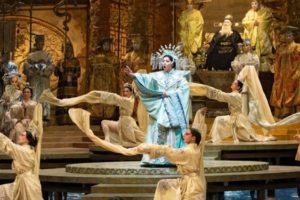
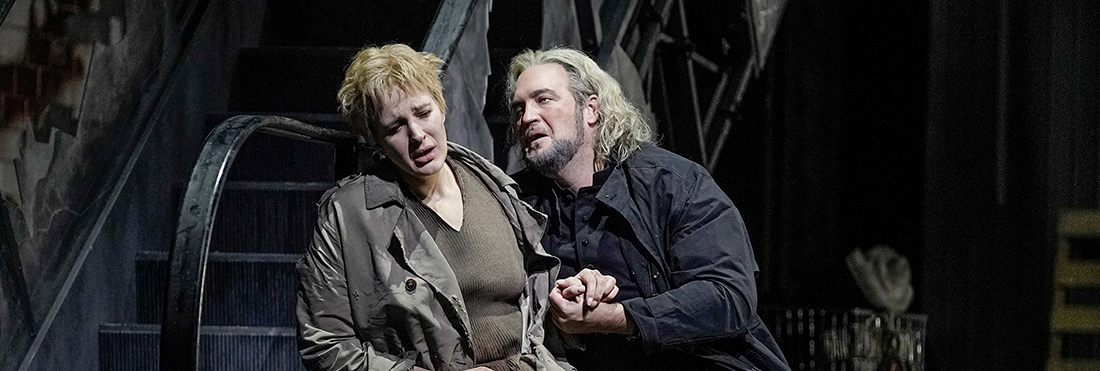
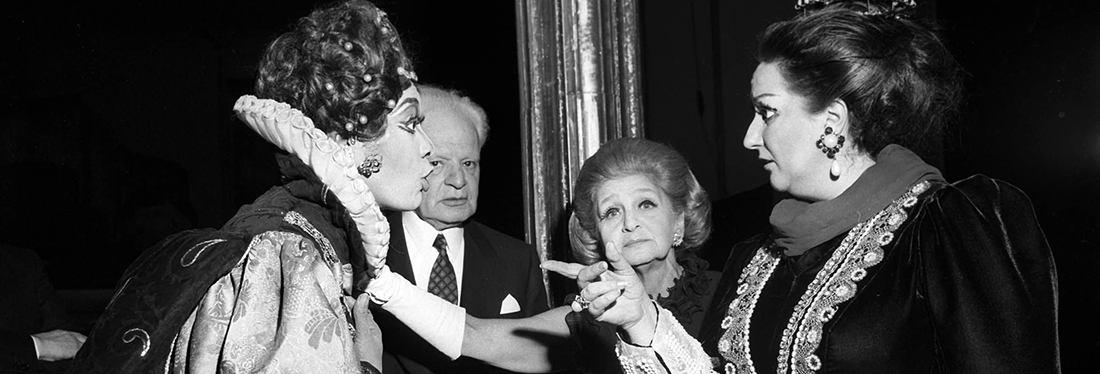
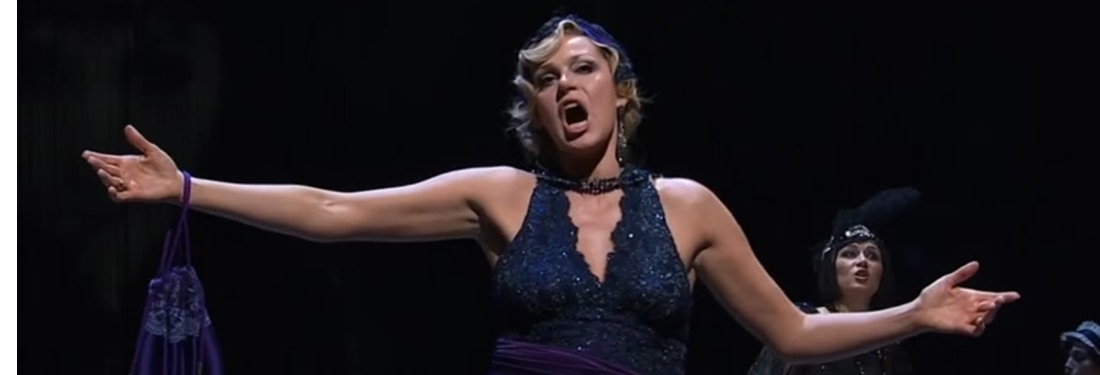
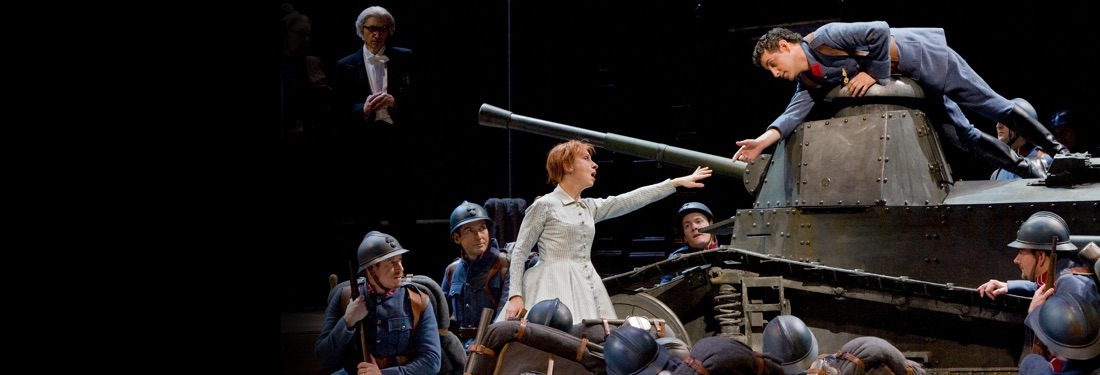
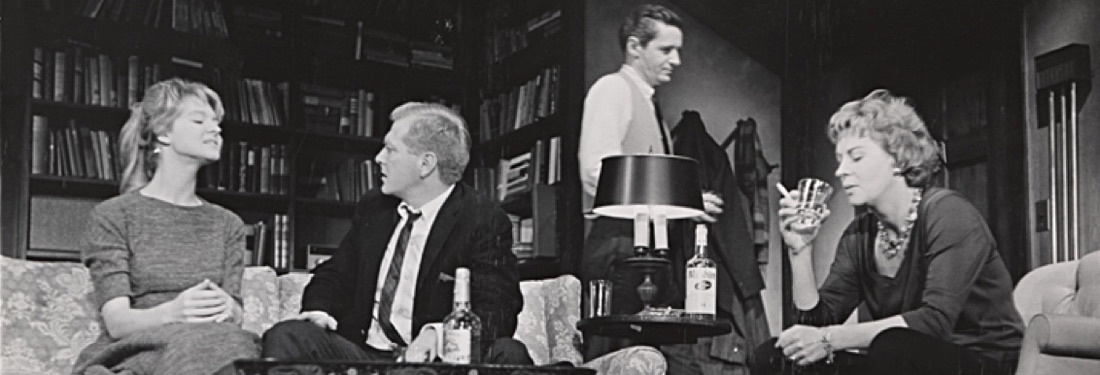
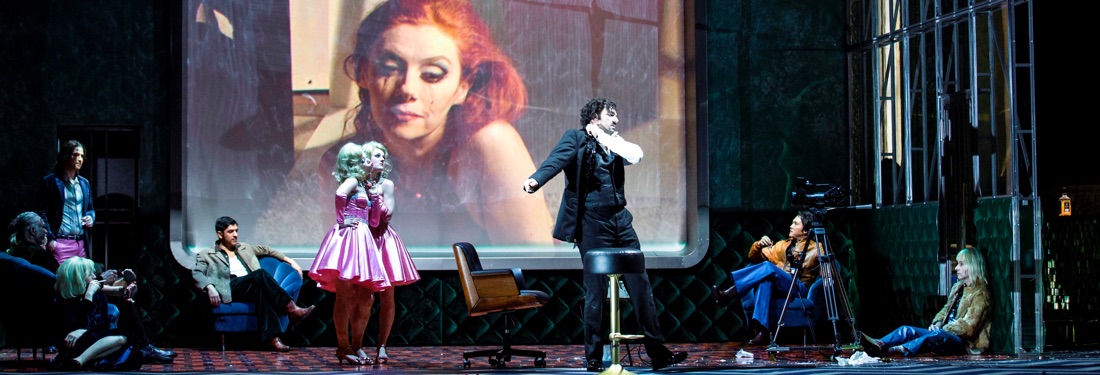
So, tell me this, what do Anthony Tommasini, Zachary Woolfe and James Jorden (not pictured) have in common? Well, according to John M. Olin Fellow at the Manhattan Institute Heather MacDonald, these three “trendy” critics constitute “a press corps determined to push Met general manager Peter Gelb into conformity with European opera houses, where narcissistic updatings of opera plots are now de rigueur.” [City Journal]

149 comments

  • tancredipasero says:

    Oh, and p.s. to La Cieca -- do please review the history of scenic design and its illustrious protagonists -- it is sad to imagine that “dimly perceived gray drop” (another straw man, or another thumb on the scale….)

  • tancredipasero says:

    p.s. re “standard operating procedure” -- well, it IS that in most if not all German houses, and increasingly so in France, Austria and Switzerland, and on the upswing elsewhere. And the implied conviction of the critics whose positions got this thread started is that it SHOULD become the norm wherever it hasn’t yet -- that it is intrinsically a superior approach and that its adoption should be considered normative.

  • oedipe says:

    Don Giovanni at Aix-en-Provence, July 2010.
    Production: Dmitry Tcherniakov (who also staged that ki$$-ar$e Bolshoi Gala, unbelievable as it may seem!)

    A family affair: Donna Anna is Commendatore’s daughter, Don Ottavio is her new fiancé, Zerlina is her daughter. Masetto is Zerlina’s fiancé. Donna Elvira is Donna Anna’s cousin. Don Giovanni is Donna Elvira’s husband. Leporallo is a relation, some sort of bum living under the same roof.

  • LeperEllo says:

    A portion of Grandage’s interview and his intentions for this production:

    http://www.metoperafamily.org/metopera/news/interviews/michaelgrandage.aspx?source=nfbucket

    I haven’t been able to find the video interview where he specifically talks about wanting to reach the neophytes, and not necessarily the audiences who have seen this over and over. Seems he might have tried to reach both, but that’s not the way he said it.

    For the most part, I have to say he met the goal he set for himself, based on how my friends experienced it. Was that goal lofty enough to satisfy everybody?

    Sure, I was disappointed and had hoped for something more but he wasn’t trying to talk to me -- although he might at least have tried a little harder.

    Sometimes our discussions on here of New vs Old sound not like preaching to the choir, but two choirs arguing over who has the better preacher. And while it’s fun for us, I question whether this brings converts into the fold -- and some of it may have the opposite effect. Because reflecting on it a day later now, the feedback that sticks in my craw is less about the relative merits of the production, but their reaction to the critics’ lambasting of it.

    I don’t think they really meant to say that the critics were being culture snobs (on either side) although that’s how their words came out; it’s that here they thought they were having a pretty good time, this opera stuff isn’t that difficult after all, and then they are made to feel that they were in the wrong to have enjoyed it.

    At least they didn’t leave the performance wondering what happened (and not WTF was all that about?), they were in unison about what they saw (so something came across that was accessible), they liked Don Ottavio’s music (that alone has to mean something; hooray Mozart and Vargas), for the most part they were entertained, and they saw some snippets of Siegfried and wanted to know if they should see it.

    I think there’s something to rejoice about in all that even if the rest of us have seen better (and worse) DGs in our time.

    • oedipe says:

      Could you (or someone else) please explain to me clearly what a “culture snob” is?

      • phoenix says:

        Whoever you are currently disagreeing with on parterre.com.

      • m. croche says:

        The opposite of “philistine”. To determine who is a “philistine”, see phoenix’s rule at 35.1.1.

      • LeperEllo says:

        Oedipe:

        Well, God forbid a “culture snob” be any one of us here!

        The back-story is that a friend of mine and I have been inviting our friends to come to the HDs with us over the last year, nearly all of whom are new to opera and have expressed their resistance one way or another (as “I won’t know the words,” “I don’t understand that kind of music”, “it just sounds like screaming to me” and so on.) We have had as many as 8 at one time come along, but there has been a consistent set of three who have come each time. It’s been fun to watch them form their own tastes and opinions.

        (FWIW, Boris last year was a big hit, hardly any of them liked Fanciulla, Nixon in China got mixed reviews.)

        This weekend it was the core three “newbies” and it was their first Mozart, and first Don Giovanni; for the most part, they liked it. Afterwards I blurted out (and maybe I should not have done so) that the critics were blasting this production; they didn’t understand why; I tried to paraphrase it collectively as everyone seems to like the singers but the production is too safe or too much of the same thing and nothing new’ -- when I used the NY Times phrase that the production had “no point of view” -- and the AP said it was already time for a new DG, there was nothing new in this one --

        well, the newbies took offense at those last two comments. It was new to them after all. They thought it smacked of elitism, one of them used the word “snotty” and (in her words) “that this was one of the reasons that people who don’t like opera, don’t like it.”

        Granted, she didn’t use the exact phrase “culture snob” but that was pretty much her meaning and the others were right there with her. I probably should have said something along the lines that her opinion was just as valid as any critic’s, a critic just gets paid for it, and left it alone.

        As it was, it led into some talk about what they liked about this production, what they thought worked and what didn’t, which HD should we see next, and we got off the matter of critics altogether.

        Today it had me thinking about what, if anything, there was to be learned from their reaction. Up above was me wondering out loud about it more than anything else.

        • oedipe says:

          Thanks for your reply, LeperEllo.

          I like your stories about your novice friends. It’s interesting, for instance, that they preferred Boris to either Fanciulla or Nixon. Could it be that they perceived Boris as “exotic”, whereas the other two were hitting much closer to home and so your friends had more of a cultural framework to judge the works against? Just thinking…

          I don’t believe our Three Critics blasted the Grandage production primarily for not saying anything new, but rather for not saying anything meaningful in an original way. (Someone will correct me if I am wrong, I am sure.) Maybe that’s why your friends reacted strongly: how does one define newness, after all.

          As for the “cultural snob”, if I came across one -on Parterre or elsewhere-, how would I recognize her/him? The only indication you are giving me is:
          God forbid a “culture snob” be any one of us here!
          So, I gather that a “culture snob” is something very bad. Why and in what way?