
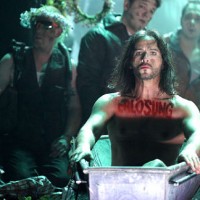
Parole parole parole
Our Own JJ (not pictured) gets the Staatsoper Stuttgart experience off his chest, to the tune of about 4,000 words, in his new blog post at Musical America.
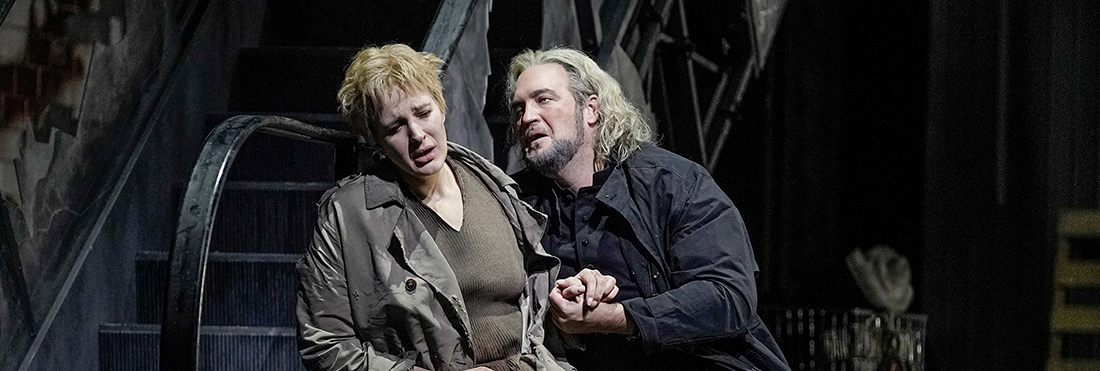
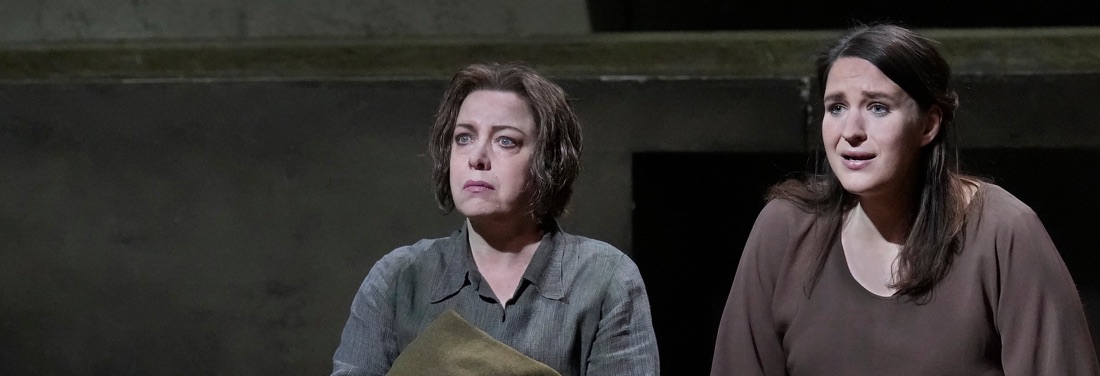
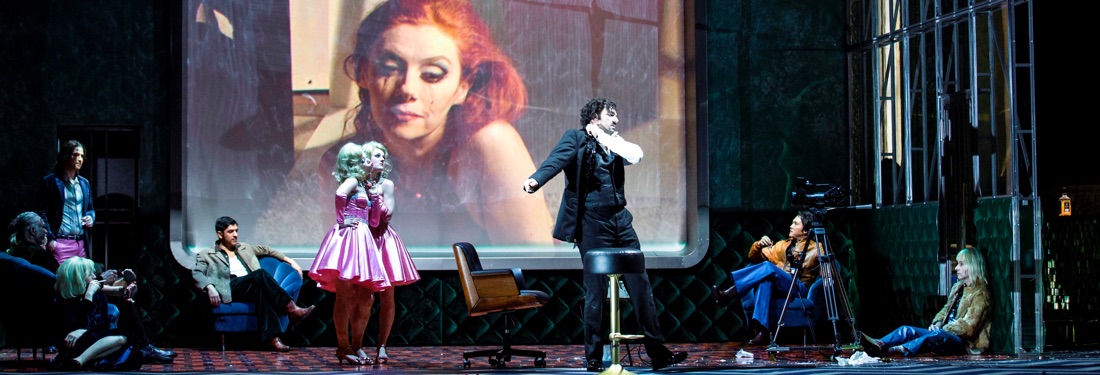
Included is a massive and (one hopes) final deconstruction of the Calixto Bieito Parsifal.
Remarkably detailed recount here, la C! What released your koken when you saw this? It sounds like a decent take on the work, but for it to actually brand your psyche like that is astonishing. Dawn seemed just as transfixed in her take on it. At least the two of you made good on your trip. One production as memorable as that makes it the whole escape worthwhile.
[img]http://parterre.com/wp-content/uploads/2011/04/00003.jpg[/img]
I saw this production a few weeks ago. It was a life-changing experience. I have been knowing “Parsifal” by heart ever since I was a teenager, and before the Bieto production, I had seen 14 different “Parsifal” productions live, some traditional, some timeless, some pseudo-modern, some conceptual, a few of them more or less successfully attempting to interpret the complex story and its context and background on a deeper level and trying to get to the core of this incredibly rich, multi-layered piece. I had also seen more than a dozen different Bieito productions before, some of them, like the Berlin Komische Oper “Entführung”, shocking, others totally predictable and lame. However, this Stuttgart production was not only by far the greatest Bieito production I have seen so far, but also the most moving, most profound, and most truthful “Parsifal” I have seen. I agree with everything JJ says in his brilliant review. This production is a thrilling, gripping, perfect example of what “Regietheater” ideally can be. Unfortunately, productions of such intensity, fascinating complexity and such depth are rare…
Really detailed, descriptive review! How was the singing though?
The best “one-liner” about this subject I’ve ever seen. Thank you poisonivy!
ivy, as much as I love you, I am not going back into that tome to search out any references to the actual singing. Dawn Fatale’s first review did give some descriptive one-liners about the singing. Dawn attended the same performance and reviewed it awhile back. See here:
http://parterre.com/2011/03/23/future-imperfect/#more-19903
What absolute GARBAGE! The only one who should have been urinated on……….is the director!
Wonderfully insightful and well-reasoned analysis.
I do not believe one would have to see the production given the fullness of the essay… but one has to ask: which people need such confrontational material to change their life or the way they think. They must have had sheltered lives to start with. Forget the make believe of Bieito, some of us in our careers and life have repeatedly witnessed in real life the most appalling results of crimes, violence, murder, and death. It appears deconstruction has a new meaning and course in Regie. Where you can even take the characters, torture and tear them apart at will like rag dolls or shop dummies and then literally reassemble them in a new framework scenario if you feel like it. Expecting onlookers not only to praise it but intellectualize over the exercise with gilded explanations. Such depictions -- then praised as Life changing situation? ….BLAH!!!! Where has everyone been? What are we really looking at?
If such philosophies were considered sound and serious, it would be deemed propaganda, to appease actions celebrating human atrocities. Pity Bieito and his ilk never got the chance to experience the hospitality of the likes of a Pol Pot, or a Stalin who specialized in those forms of total annihilation , he seems to revel in creating on stage.
Some of us refuse to accept some director deciding to have a complete mental ‘s..t’ on stage and expect people to applaud. Perhaps that ‘for real’ is Bieito’s next shock tactic by a performer in one of his coming productions.
“some of us in our careers and life have repeatedly witnessed in real life the most appalling results of crimes, violence, murder, and death”
Thank goodness the audiences in Stuttgart and the other regie hotbeds of Germany were spared these horrors during the last century.
Messa di voice, if we had a rating system here, I’d give you a +1000 for that riposte.
messa di voce: While no doubt you are trying to be witty and rather ironic; you fail to consider a certain important point to make your retort, hit home.
Your “Stuttgart and other regie audiences” would have to have an average age of 70 pushing 80 to have properly experienced your quoted “these horrors during the last century” if you are using WW2 as the reference.
[img]http://parterre.com/wp-content/uploads/2011/04/000001-1.JPG[/img]
Having been fascinated by the video of this production in private circulation, I find JJ’s account really fine and beautifully written. The better one knows the opera the more challenging and enriching this production can be. I would be interested in knowing more about how it has changed JJ’s life.
A heartfelt thanks for such a detailed, and touching recount of a truly special production.
And many thanks too for Dawn’s kind words. This was by far the hardest production I’ve taken part in, but when people say they were deeply effected, I have to think it was worth it.
It is perhaps dangerous to try to judge a production and its effectiveness by a YT video, but I can’t seem to help myself. Here ya go…
Thanks for the clips OperaRocks. The singing is, as Dawn Fatale described, quite wonderful, full of vocal freedom with no glitches. It really would make a fine audio performance if it were broadcast. The complete audio of the Parsifal from de Munt is also a great performance, but quite different and, in a way, more dynamically exciting audially, less smooth & cohesive than these clips.
-- As far as the great effectiveness spoken about the visual production, it doesn’t quite come across on utube… perhaps the essence of the experience itself, but that’s about all. I guess one would have to witness it live & complete in person in order to link up to the shifting changes & revelations as it goes on as a complete event.
What would….er…er… what’s-his-name, er..Dick Wagner, I think, would say about it?
Unless he’s sending notes from beyond the grave, I’m not sure his opinion is really important.
Wagner was in his time a man who believed in cutting edge theater. If many of the photos of his original stagings of operas seem hokey today, that’s because of the style of costumes, wigs, and scenery that were “cutting edge” back in the day. He considered himself quite the stage director. I think if anything he would have been very flattered that his works are drawing the attentions of prominent stage directors, and that new Wagner productions remain Events in the music world. It would have fed into his ginormous ego nicely.
Here’s part of Mark Twain’s description of the 1891 Parsifal at Bayreuth, rigorously pickled in formaldehyde by the grieving widow, which I’m sure was much more to Harry’s taste:
“There isn’t often anything in the Wagner opera that one would call by such a violent name as acting; as a rule all you would see would be a couple of … people, one of them standing still, the other catching flies. Of course I don’t really mean that he would be catching flies; I only mean that the usual operatic gestures which consist in reaching first one hand out into the air and then the other might suggest the sport I speak of if the operator attended strictly to business and uttered no sound …. In ‘Parsifal’ there is a hermit named Gurnemanz who stands on the stage in one spot and practices by the hour, while first one and then another of the cast endures what he can of it and then retires to die.”
Batty -- it actually sounds like a Robert Wilson to me …
They say there is nothing new under the sun, chère Marquise.
Thanks for this very detailed and beautifully written review. I’ve seen a few clips on youtube, and this production immediately clicked with my understanding of the work and its difficulties. Let’s hope for a DVD release.