
Headshot of La Cieca

Cher Public

  • Camille: I hope one day……e tc. 9:47 PM
  • Camille: Nerva, you are the funniest. TY for the word pn Carmelita Pope. Supposing I know her from PAM. I am one... 9:46 PM
  • Nerva Nelli: Surely it must be Christopher Alden’s ENO restaging of THE ENCHANTED ISLAND . 9:19 PM
  • actfive: Also saw this at LOC…Zajick looked totally bored, occasionally annoyed (maybe she was pissed at... 7:56 PM
  • phoenix: Fanciulla is primetime Puccini – I find Voigt about as italianate as Niamh Parsons – still,... 7:23 PM
  • Henry Holland: Good Dame Gwyneth as Minnie, Domingo as Jack Rance, LA Opera, 90′s sometime. At the end of... 7:16 PM
  • PushedUpMezzo: Well of course the mike’s the clue. She famously had no need of such things. The lady... 6:25 PM
  • La Valkyrietta: I voted, but it was not easy. I mean, for example, how do you decide which was a lousier... 6:17 PM

Plain speaking

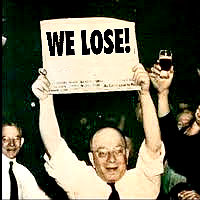
we_loseMartin Bernheimer, who was wise long before most of the rest of us were on solid food, writes what is likely to be remembered as the definitive essay on the Donald Rosenberg/Plain Dealer situation.

69 comments

  • kashania says:

    I remember hearing about this when Rosenberg was first sidelined. Then and now, I get the feeling that I’m reading one side of the story. Ultimately, I don’t agree with the sidelining of a critic because he dared to be critical, but I also wonder about the larger context and background to the story. Brilliant critical faculties don’t always come with objectivity. Like m. p. arazza, I would also be interested in a sampling of some of Rosenberg’s reviews.

    • operabitch says:

      Kashania. But that’s the problem. No one in Cleveland and in music circles believe that Mr. Rosenberg was sidelined for being “critical.” He was sidelined for being unfair. That’s different. Audiences and musicians would leave a concert elated at what they had achieved and then read a review from Mr. Rosenberg that bore no relation to the reality of what every one had just witnessed. When you couple that with the kind of stuff Rosenberg was saying behind the scenes it made for an untenable situation.

      Everyone is entitled to their opinion but there are responsibilities that come with that opinion if you are paid to be an objective observer for the city’s only major newspaper. It was certainly clear to the orchestra, the musicians, the audience, the greater public at large, and eventually his bosses at the paper that a change needed to be made. That’s what happened.

      Making Rosenberg a cause celebre for freedom of the press is sort of like making Linda Tripp the poster child for whisteblowers.

      • La Cieca says:

        Okay, a couple of things here. A critic is in no sense “an objective observer.” The very nature of criticism is that it’s subjective. That you, or someone else, or “the orchestra, the musicians, the audience, the greater public at large” or “everyone in the business” (even working from the assumption you are so utterly connected as you claim) disagrees with that criticism does not make in invalid, because it’s an opinion, not a fact.

        So if, in fact, as you claim, everyone knew that Rosenberg was “unfair,” then why was everyone in such a tizzy about it? You insist that everyone involved recognized bias in Rosenberg’s writing, so why couldn’t they discount it instead of bringing pressure to bear to shut him up? If the crazy man on the corner is spouting nonsense, then you just disregard him: you don’t try to get someone to gag him.

        As far as causes celebres and whistleblowers go, for important issues perfect poster children are hard to find, and even once they’re in place they’re essentially a fraud. Most moral and ethical issues are complicated with no 100% right or wrong side. This complication is further muddied by anonymous and unprovable claims of what “everyone in the business” thinks — even assuming that a consensus of insiders amounts to moral certainty.

        • Arianna a Nasso says:

          “So if, in fact, as you claim, everyone knew that Rosenberg was “unfair,” then why was everyone in such a tizzy about it?”

          I may have the answer. If Cleveland, like most cities, has only one major newspaper, then Rosenberg’s opinion becomes virtually the only one which the public receives and potentially can have great influence on the public’s thought about the Orchestra. It’s not like London where one can say, “Oh, the critic of The Times is full of crap. I’m going to The Telegraph (or The Guardian or the Independent) for my arts coverage.” Even in New York where there are multiple papers, the NYT carries significantly more weight in people’s minds than others.

    • mrmyster says:

      Kashania: Go to the P-D archives (see below).
      You will get the drift there.

  • alex says:

    Not unsurprisingly, there the Plain Dealer keeps an archive of its stories (almost all of which seems to be available).

    Rosenberg’s posts are collected here: http://connect.cleveland.com/user/drosenb/posts.html

    I don’t really know what the time frame is for his reviews of FWM that are at issue, but then again, I’m not the one who cares.

  • Arianna a Nasso says:

    While I have great respect for Martin Bernheimer’s career, I don’t feel he’s to be considered the Dean of American critics any longer. He’s great when writing about past singers and opinion pieces like this one. However, when it comes to reviewing performances, I find there is a near-constant bitterness present in his reviews that is off-putting. It’s fine on blogs but not in professional criticism.

    Critics such as La Cieca’s friend JJ (I’m not sucking up here!) still have a sense of joy about the art. In contrast, MB seems rather jaded. I realize he’s seen decades of great performances, and certain parts of the repertoire today just won’t match his previous experiences. He still should be critical, but the belittling tone is off-putting and unnecessary to making his points. I’m remember a while back when in one review he complained how few people were in the audience for Jenufa yet in another review he complained about Peter Gelb’s bumped-up marketing efforts, which clearly were trying to fix the problem.

    • rapt says:

      I’ve only read (and admired) Bernheimer’s reviews spottily over the years, so I can’t comment on how his reviews have or haven’t changed. I’m only writing to thank you for the wonderful phrase, “a sense of joy about the art”–for me, too, that’s the animating spirit I seek in reviews or any discussion of opera.

    • Hippolyte says:

      Brava, Arianna! What a revelation to finally read something that closely mirrors my own bafflement at the near-unanimous Bernheimer-love that usually appears on opera-l (thanks to his tireless sycophant janosg) and on here as well. I’ve been on opera-l long enough to recall the utter joy expressed by some California members upon his LA retirement, so I have a feeling that Mrs. Chandler wasn’t the only one who wasn’t a fan. And Arianna nails it on the head in the utter boredom that usually radiates from his writing. The nearest parallel that I can think of is John Simon who seemed 90% of the time to be utterly contemptuous of what he was seeing before him. As with Simon, I always wondered–if it’s all so boring/badly done/not nearly as good as in the old days–why not retire (again) and leave it to someone who might actually express some interest in actually being there. Given that I live in NYC and have attended many of the performances that I read about in OPERA magazine (recycled Financial Times pieces–it’s not bad enough that he has one venue, he has two!), I quite often disagreed with his opinions (not a problem) but his sneering, snarky one-liner dismissals of so many artists irked me so much that I generally skip over his coverage and am grateful when there’s an occasional NYC review by David Shengold or Eric Myers.

      I would agree that the Rosenberg piece is more compelling than his usual writing. Why? Having lived with a professional writer and knowing many others, nothing interests them more than themselves (and peripherally other writers). Bernheimer makes that even more manifest by closing his piece writing–about himself. That topic engages him; yet another Tosca, however, seemingly not at all. I met Bernheimer once at a party and he fairly dripped condescension which wasn’t much of a surprise; Learning that he is married to Linda Winer, theater critic for Newsday, who writes in blurb-ese was a surprise.

      • mrmyster says:

        Hippo! Your own condescension is quite shocking! And your
        argument so ad hominum as to be as full of holes as a chunk
        of Swiss cheese, or is that your head? What does it matter
        who is a critic’s wife? Really now, that is too much! I would
        observe that you are not worthy so much as to sweep up
        the crumbs that may have fallen from Mr Bernheimer’s table!
        AND, of course one’s personal experience is highly relevant;
        if you had experienced in your way the same as Rosenberg
        would you have not found it germane to a discussion of
        the topic? Of course you would!!! Time for you to return to
        writing classes!

        • Hippolyte says:

          I’m fascinated that apparently your entire objection to my lengthy post results from a simple observation in the final sentence. If your reading of my post perceives that my “argument” has anything to do with Bernheimer’s spouse, then perhaps you’re the one in need of remedial schooling. (A paragraph break means one has moved onto another idea, FYI.)

          If you object to my pointing out the irony of MB being married to a fellow-critic whose writing couldn’t be more different in tone than his, so be it. But then perhaps such a topic never arose in one of your many conversations with “Peggy” Harshaw, hence your confusion.

      • La Cieca says:

        I’m going to take exception to the “utter boredom” and “utterly contemptuous” characterizations for a couple of reasons. To begin with, Bernheimer is not always, or I think even generally utterly bored, just as Simon is not as a rule contemptuous. I would say a more accurate observation is that each of these gentlemen has vast experience in his fields and therefore a much broader range of possible comparisons that most of the rest of us might have. After 40 years or so of listening to music or observing theater for a living, one has a very clear idea of what is superb, what is reasonably good, what is mediocre and what is something less than that. The “superb” is quite rare, and as one learns more and experiences more, I think one’s standards become more rigorous, and therefore “the superb” becomes ever more elusive. What does not change is that most performing art is mediocre or worse; what might change is how the critic responds to mediocrity. So long as a Bernheimer or a Simon is consistent in his reactions, one has a sense of a relative scale.

        Or, to approach this another way: why should the critic not write in a bored manner if in fact he was bored by the performance — or contemptuously if he indeed feels contempt for what he saw? If an opera house with international status puts on stage a listless or cheesy production — or poorly-cast or downright untalented singers — then why should the critic be expected to respond with feigned interest or exaggerated courtesy? And the parallel goes for Simon and theater; I’m just too tired right now to work out the sentences.

        A further point is that it is just possible that these gentlemen are writing in a manner their readers have come to expect, or even that their editors are requesting because, as it turns out, not everyone who reads reviews is there for the judgment. A lot of the critic’s audience wants to be entertained with one-liners and a familiarly world-weary or acerbic style of writing.

        Having walked a few yards in these gentlemen’s shoes, I think I can say with at least a trace of authority that nobody, a critic most of all, wants to attend a lousy performance. But that’s no excuse for pretending that lousiness is actually not all that bad, which is what a lot of people seem to be asking.

    • Violetta says:

      I, for one, don’t look for entertainment or niceties in a review – that’s what the actual show is for…

  • Nero Wolfe says:

    I am generally on the side of Rosenberg but a few comments

    #1. I doubt Mr. Rosenberg will go on to bigger and better things. Many large city newspapers are eliminating their full time critic and using part time ones at a significantly cheaper cost.

    #2. I would like to see examples of his bias against FWM in the reviews.

    #3. I would like to see reviews of the Cleveland under FWM when on tour in other cities and another critic reviewed them–and especially if Rosenberg was there and also wrote a review.

    #4. Obviously, Mr. Rosenberg’s lawyers failed to convince the jury of his view. I wonder if he had the best representation. It might have been difficult to get a top notch lawyer in Cleveland due to conflicts of interests–namely, no firm who represents any of the board members of the orchestra or their businesses could accept Rosenberg as a client. I would guess that the board members have all of the top firms locked up.

    • mrmyster says:

      Nero Wolfe: Go to The Cleveland Plain Dealer’s web site and there you will
      see a path to Archives, and there you will find examples of Rosenberg’s
      writing. I lately read his review of a W-M performance of a Mahler
      Symphony, for which the conductor obviously had little sympathy. It was
      a hard-edged, blunt review; I do not doubt its accuracy. I take it, however,
      that Mr Rosenberg was no diplomat.

  • DonCarloFanatic says:

    Hippolyte, I agree with you about John Simon. Another such who comes to mind was Craig Claiborne, who wrote an entire cookbook (maybe more, but I didn’t read those) belittling the food currently available in markets, claiming that it all used to be much better quality. That hardly encouraged one to cook. A music critic determined to dislike everything under review is a similar turn-off.

  • Constantine A. Papas says:

    I lived in Cleveland for many years and had season tickets for the Cleveland Orchestra, and I saw Szell, Maazel, and Dohnanyi. Wesler-Most came after I relocated. I read the Plain Dealer online almost every day and I found nothing offensive about Rosemberg’s reviews. Another Plain Dealer critic once wrote that “Maazel did not know how to conduct Brahms!’ and nobody cared. Other US and international critics have written negative reviews about Most. He will never be another Maazel or Dohnanyi, and forget about Szell. BTW, the new critic’s reviews they don’t even come close in depth to Rosemberg’s. They’re so simplistic. You can read them, if you wish, to get my point.

  • BETSY_ANN_BOBOLINK says:

    I’m disturbed by this essay-ette and I don’t know why. Certainly it’s honest, but I think there are flaws in the reasoning. The only way I can think to approach it is obliquely, with an anecdote.

    When I returned to Los Angeles to live a couple decades ago, there was a sportscaster on the ABC affiliate named (fictitious) John Jones. He was excellent, clear diction, flawless grammar, intelligent and animated presentation. I became a one-man public relations team. “Listen to this guy Jones; he’s pure gold.” Well, actually he was black, a fact I mention only because it has relevance.

    A few months later, I was called out of town for a year. When I came back, I tuned in ABC to watch Jones and could not believe what I was hearing and seeing. His articulation was slurred and drawled, his grammar was almost purposefully incorrect. It was horrifying. I called a friend at ABC to find out what was going on. He swore me to secrecy, but since he’s dead now what harm can it do. It seems that a research management team had determined that Jones did not sound “black enough,” and he had been working with a private coach to make him sound “blacker.”

    If you do not detect the racist land-mines buried in this field, let me point out the ones I can see from here. Number one is obvious: How can a black man NOT sound black? If that is what he is and that is the way he sounds, then that’s black.

    Mines Numbers two and three have to do with that Research Management Team. Let’s assume that it actually did conduct research. If they polled predominantly white people, then that is racism at its most blatant. If they polled predominantly black people, then one can only draw the conclusion that the black population of Los Angeles wanted its exemplars to sound uneducated and even drug-addled. Mine Number Four is that ABC management decided to sidestep its research and present a stereotypical urban Uncle Tom/Steppin Fetchit to boost its ratings.

    That’s the point at which I can segue back into your apologia. “. . . these gentlemen are writing in a manner their readers have come to expect, or even that their editors are requesting . . .” seems a tacit admission that even these two estimable gentlemen would be willing to sell themselves out, and if so then to what degree can their judgment be trusted.

    I’ve got at least two other major issues which are generating a response in me, so if any of you people see my moniker over the course of the next few hours, please blip over me.

  • BETSY_ANN_BOBOLINK says:

    Chapter Two has to deal with one of the most shattering realizations of my life, but one which came too late for me to do anything about it. I share that realization now: By definition, one-half of all human beings on the planet — a plain and simple fifty fuckin’ per cent of everybody — is of below average intelligence. That is somewhat different from the popular way of looking at it, which is “Yes, there are some really smart ones, and some lamentably disabled ones, but most of us fall into a vast grey area.” NO ! There is no “vast grey area.” That grey area can be carefully calibrated, and fifty per cent of us fall below the center line. In order for us to function sociologically we have developed ways of making allowances, trying to find a functional niche for each individual. Most of the systems we have developed do not work at all well, but I think we’re still trying. Maybe.

    I apply the same concept to theatrical presentations. There is no quibble with your statement that there are superb perforamnces and total disasters. Most of us can identify those within a few bars of the overture. For me, the test of a critic is how well (s)he calibrates those in “the grey area.” Can a functional niche be found for the also-rans? Even more, can (s)he detect salvage possibilities for teh walking wounded.

    If the charges against Bernheimer, Simon, et al, have any validity, I would say that it is in their unwillingness to make allowances for the fatally mediocre, which unfortunately constitute the bulk of operatic activity today.

  • BETSY_ANN_BOBOLINK says:

    Chapter Three (I can’t believe I’m doing this instead of going to bed.) Is there in any school of logic such a thing as “The Fallacy of the False Prophet”? A prominent propaganda technique is “The Testimonial,” but I don’t think it can be codified into logical terms. You twice refer to Bernheimer’s years of experience, but I disagree that it necessarily follows that his judgment can/should be accepted without question.

    Again I cite my own experience, and in this instance I think many others have had similar experiences. I bought my first opera recording at the age of 14 and I knew immediately that it was not good. (It was the Remington TOSCA) I liked Eddy Ruhl and Melchiorre Luise was amusing and all the notes were there, but Holy Saint Mary Anne of the Ever-Bleeding Appendage, Vassilka Petrova was making unbearable noises. A friend loaned me his copy of hte Gigli/Caniglia version. (Well, he didn’t loan it to me; we listened to it at his house while his parents were gone; he made veiled innuendos which I ignored.) I had now heard the opera twice; I had two days’ experience, not forty years, but I could tell that Gigli was superior to Ruhl, and while Caniglia was better than Petrova, she still was not what I wanted to hear.

    I bought a second opera recording — the Toscanini BOHEME — and the experience was the opposite. I disliked the sound of Peerce’s voice, and thought Albanese was simpery and poopy, but by God it was a performance, a drama, an opera!

    My point, if I have one, is that each of us has an innate critical faculty to a greater or lesser degree. That critical faculty can be trusted — developed and modified, yes — but first of all trusted. I do not trust any critic to the same degree that I trust myself. I rely on the critic to make suggestions where I might like to apply my critical faculties next. Ideally, the critic should be the guide dog leading the way through the hype and hyperbole to where something slightly more than mediocre might be found. If, as sometimes happens, the guide dog happens upon a lamp post with the freshly-deposited urine of a particularly strapping canine — well, tough shit for the guy at the other end of the leash.

    • La Cieca says:

      It’s times like these (6:45 am?) I’m reminded of a classic bit of homespun philosophy.

    • La Cieca says:

      I don’t think we’re quite talking about the same thing here. My point was that the professional critic by the very nature of his job is going to witness a lot more performances than the average layman, and, as such, is more likely to grow intolerant of the mediocre in his the works within his purview. The average audience member’s tolerance for mediocrity I don’t think has much to do with “innate critical faculty” but rather with the relative neophyte’s response to novelty. In general (and your own early experience may not be indicative of this trend) a newcomer to a performing art form is not going to be able to separate the work from the performance; in other words, for a beginner it’s hard to say whether a positive response to Gigli in La boheme should be credited to the singer or the composer or some combination of the two.

      After one has heard many performances of the opera, it becomes somewhat easier to say, yes, this new fellow is a really good Rodolfo despite some problems with intonation here and there, or this other fellow is a pig who indulges in the cheapest effects, etc. — all while keeping a fairly consistent opinion of the quality of the opera itself.

      The critic doesn’t generally have the novelty of a new work to react to, and so he’s focused on the specifics of the performance, which, as you noted, if statistically likely to fall somewhere on the shady side of mediocre 50% of the time. But unlike the layman, the critic doesn’t (generally) have the option of walking out of a dreary performance, or filing a review consisting only of the word “meh.” I think each critic has to find his own way to work out that problem of saying “meh” in an articulate and entertaining way, and one approach that seems to work for some writers and their audiences is the detached, ironic attitude, distilling an emotional response into a carefully crafted bon mot. A writer who really doesn’t care passionately about his subject (e.g., the unlamented Bernard Holland of the Times on the topic of repertory opera) is going to lose his readership and (even at the Times) his job.

      One other point I’d like to make here is that the regular reviewer doesn’t have the choice of tossing a lousy piece into the wastebasket as (say) a short story writer does, and in most cases an editor doesn’t have the luxury of saying, “no this review is rather bad, work on it for another few days.” Writing to deadline means that whatever is written will be published, and some of that stuff is going be lousy. I think both of the gentlemen we’re discussing here have an astonishingly high “treasure to trash” ratio given those deadline restraints.

  • Sanford says:

    Ah, water sports. Now there’s a topic we haven’t discussed.