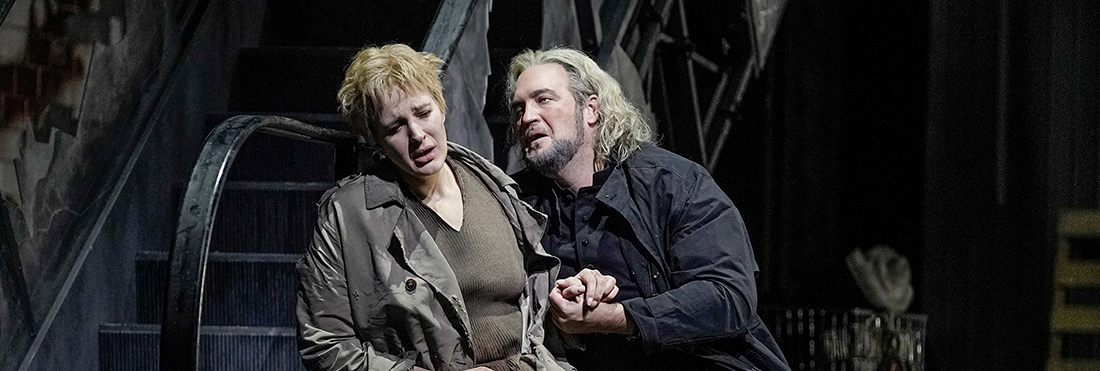

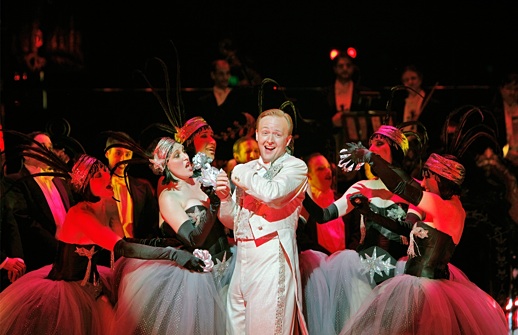
 Asking New Yorkers to travel two hours to the remote but beautiful campus of Bard College in New York’s Hudson River Valley to see an opera can be like asking them to cross the Sahara. Yet if there is any opera I would put my life at risk to see again, it just might be the production of Der Ferne Klang by Franz Schreker that premiered last night as part of Bard’s 21st annual SummerScape. This potentially once-in-a-lifetime production showcased the vast genius of Schreker, as well as the growing skill of director Thaddeus Strassberger, making for a night of complex yet visceral beauty.
Arguably, 1912 was the worst possible time to premiere a sophisticated and controversial opera in Europe. Due, in part, to this unfortunate timing, Der Ferne Klang has only been heard once before in the US, in concert with the American Symphony Orchestra under Leon Botstein, who also conducted this evening. He leads this challenging score with aplomb and grace, drawing out the most delicate moments of the piece with careful command, only to unleash the almost uncontrollable energy of the party music in Act II. His effort this evening was nothing short of masterful, especially since even a workmanlike interpretation of this score would be a heroic feat.
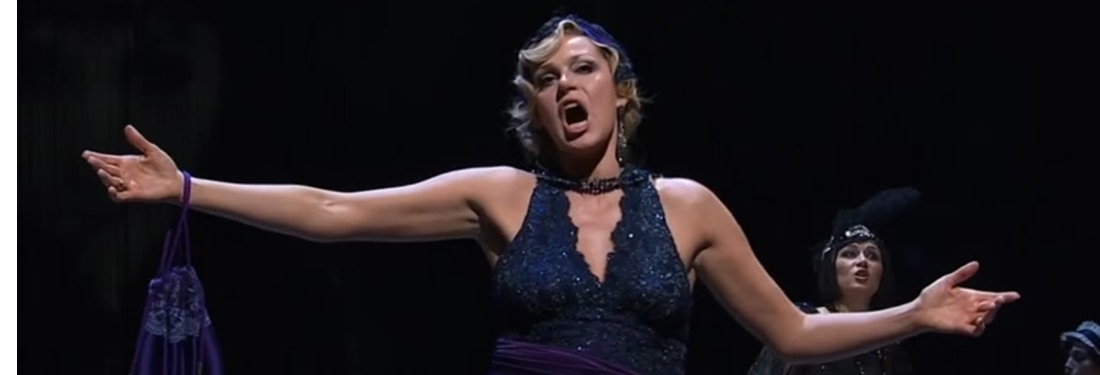
Schreker’s music is often described as “lush,” and indeed it is, but I found that mere adjective too pale a description for so vast a musical vocabulary. The wildly varying styles used in this opera, from superlative examples of early 20th century Germanic Romanticism to expressionist and atonal dramatic moments, create a vivid and engaging score. Act II is the musical (and for some, physical) climax of the piece, with three separate orchestras – the pit orchestra, an ensemble comprised of gypsy instruments, and a traditional Italian ensemble consisting of violins, mandolin, flute, guitar and other instruments – all playing for three different scenes within the scene, sometimes simultaneously. Moments in this sequence rival the greatest pages of Puccini or Verdi, with emotional power that is almost unsettling to be subjected to.
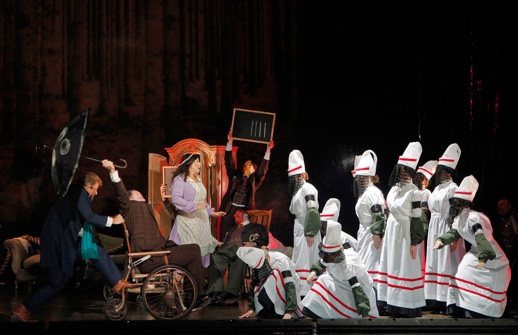 Schreker also wrote the libretto for Der Ferne Klang, which has its benefits and drawbacks; the text is beautifully set, but not as poetic and lyrical as some of the other operas written in this period, and tending heavily towards melodrama.
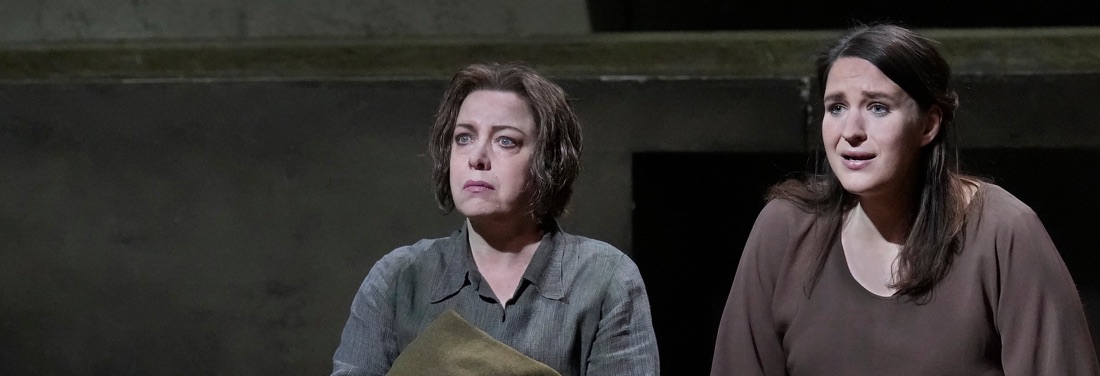
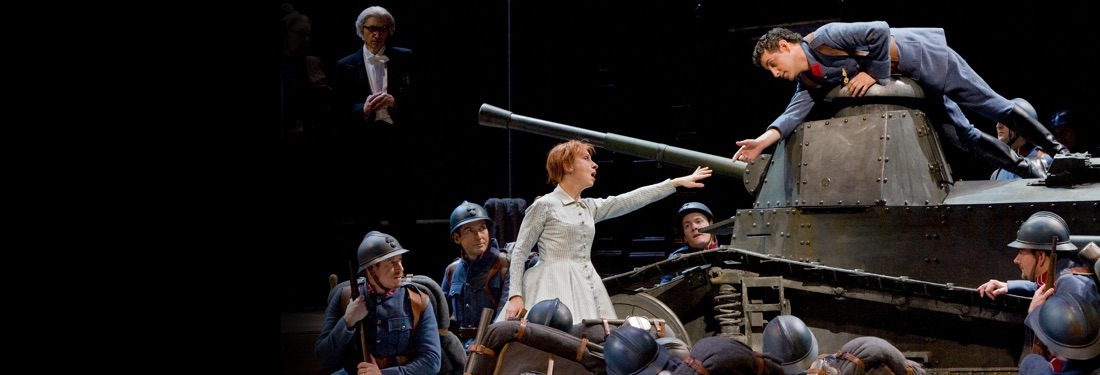
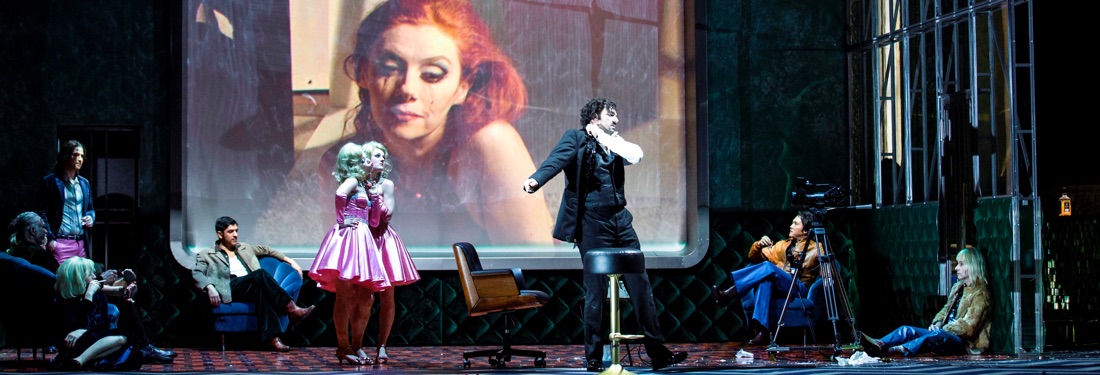
Strassberger returns to SummerScape for the second consecutive year, following last year’s very well received production of Les Huguenots. With its several layers of complex emotional and psychological drama, Der Ferne Klang might force a director into some muddled amalgam of a story. Strassberger instead manages to find the beauty in the chaotic or confusing moments, emphasizing the simultaneous stories (and orchestras) in the Venetian house of ill repute of Act II to great effect. The set is covered in mirrors and bristling with action and can almost overwhelm at first; at least until it becomes clear this scene is meant to be overwhelming, and Mr. Strassberger doesn’t shrink from that depiction. There were also several wonderful uses of video projections, eerily tying together the two scenes in the first act into one cohesive dramatic moment.
As Grete, Yamina Maamar brings a sizable soprano voice with a richly developed middle register and an easy, clarion upper voice. Fritz, the composer who leaves his betrothed Grete to seek the unreachable sound he craves, is portrayed by Mathias Schulz. He’s convincingly loving and mad in his portrayal, but his throaty and shallow sound was at times difficult to listen to and didn’t fully serve the beauty of the music. Other standouts in the large cast were Matthew Burns as The Innkeeper, whose even and husky bass-baritone voice was supported by the best German diction of the evening, and baritone Corey McKern as The Count, who impressed with an alluring voice of considerable size which he used with deft command and dramatic effect.
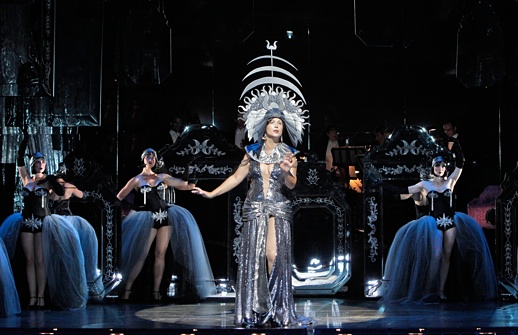 Der Ferne Klang has three remaining performances, on August 1st, 4th and 6th, with an Opera Talk given by Mr. Botstein before the performance on August 1.
Photographs: Cory Weaver
Latest on Parterre


Sponsored
MET Opera Legend Leona Mitchell Live in Concert
Leona Mitchell, the MET Opera’s leading Verdi soprano for 18 seasons, is returning to the stage April 19th in New York City. Get Tickets →


parterre in your box?
Get our free weekly newsletter delivered to your email.



Comments