
A problem like Maria
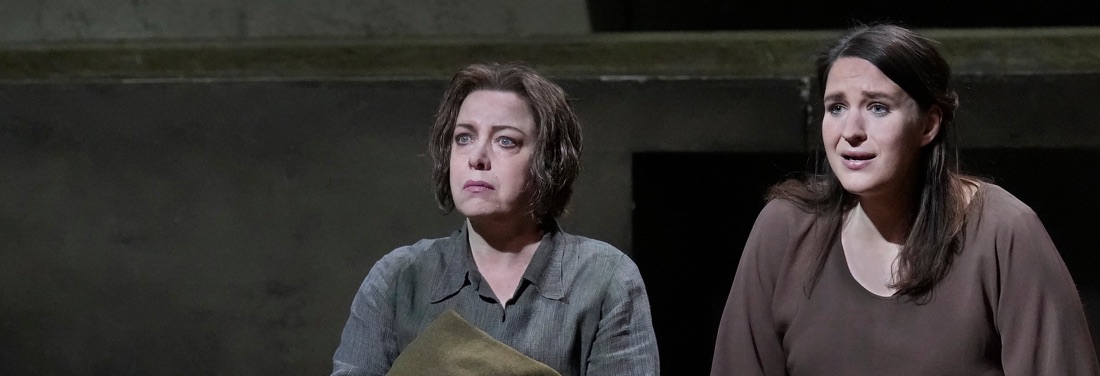
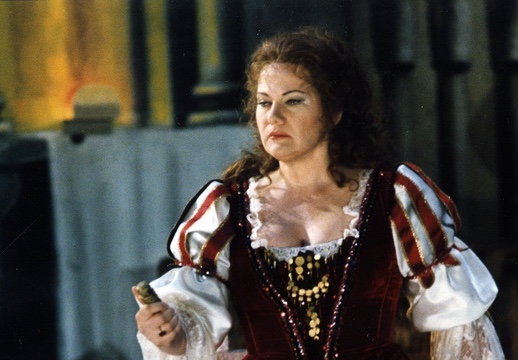
The much-publicized Takesha Meshé Kizart has withdrawn “due to illness” from the title role of Maria di Rohan at Caramoor tomorrow night (!!!) to be replaced by her cover, Jennifer Rowley.
Copyright © 2012 parterre box - All Rights Reserved
Powered by WordPress · Parterror Theme by Nick Scholl for DIS Magazine
Kashania, I too have wanted that Poulenc opera video for many years
Any opinions on last night’s performance?
…I was —A little UNDERWHELMED— BUT… I think some of that had to do with the work, itself–I found the pre Opera lectures and recitals much more interesting then actually hearing “Maria”
Rowley did an admirable job, all-in all, considering the situation..BUT LOOKED SCARED SHITLESS, from where i was sitting…
Some of the music was VERY BEAUTIFUL, but it didn’t make me wanna rush out and hear it again, immediately…
I still LOVE CARAMOOR..AND THE FESTIVAL up there….
Thanks.
A justly neglected masterpiece
Betsy:
To some degree. I think you’re absolutely spot on… there has to be a reason…other then it’s difficulty… that Opera houses aren’t clammering to present this work…..
It was interesting to hear it for historical reasons..and to catch segments that pre-shadowed early Verdii
First, Maria di Rohan isn’t neglected. It’s performed once or twice every two years or so by someone somewhere in the world. Gruberova, Scotto, Caballé, Devia, Massis, etc., either performed or recorded it. The recordings are still in print. For an opera composed more than 160 years ago that’s a pretty reasonable record.
A neglected work is something like Das Paradies und die Peri, which is performed once in a blue moon, then never again, just to use an example of a work just mentioned on this blog.
Second, the music and libretto of Maria di Rohan are both masterful, so much so that Verdi was hell-bent on ripping it off for his Ballo in Maschera some 20 years later. There isn’t a bar in Rohan that Verdi didn’t consider lifting, he stole the tunes, the situations, even the characters’ names. The 3rd act is breathtaking, a Hitchcock thriller for which even B. Herrmann couldn’t come up with a better score.
Lastly, to say that the pitiful lectures were more interesting than the opera is idiotic but not surprising if one considers we’re on Parterre. Philip Gossett was an embarrassment of sorts. I’d rather read his remarks than listening to the man at this point. He can’t remember anything, can’t talk anymore, can’t play the piano, can’t sing and is simply senile. We all know Verdi stole from Donizetti but please, Mr. Gossett, leave the singing to the professionals.
We were treated to some young singers in numbers that wouldn’t be heard in the opera later, that’s dandy, but these numbers hardly had anything to do with the final version envisioned by the composer.
Before writing anything just for the silly sake of writing, please, do your homework.
Admittedly, Gossett’s pre-concert lecture at 7 p.m. was not among his best. He rambled. However, he and Will Crutchfield early in the day at 3 p.m. gave a fascinating joint talk on the opera. I suspect that Gossett simply didn’t prepare an outline for his lecture. He seemed too preoccupied with not repeating his earlier comments that he just wandered all over the place.
BTW: we did hear a stunning black soprano sing music from “Maria di Rohan” in the “Maria Plus” section of the pre-concert events. Her name is Reyna Carguill and she rocked the place in the cut final rondo of “Maria di Rohan” – a piece that was elimated before the 1843 Vienna premiere. My take: put it back in – if a woman’s life has fallen apart she shouldn’t just collapse on the floor silent. It is dramatic to have a good old cry and bitch – especially in big dramatic coloratura runs climaxing in repeated staccato high B’s and C’s.
I didn’t even hear the concert (alas), but I very much felt the lack of a final cabaletta. She should have it. Donizetti may have been forward-looking to end so abruptly, but he was also peering forward and leaving bel canto tradition in the lurch.
Contritely, I beg your pardon, ardath_bey, for treating so cavalierly a work you obviously respect. Maria di Rohan has indeed been performed numerous times since its initial run of — what? two performances? Then came those years of dust-gathering before any attempt was made to resurrect it. I have only three recordings of it – Gruberova, Guittierez, and Nicolescu – and the work just doesn’t cohere for me, even though, like the Punk, I like certain sections, perhaps even the ones that inspired Verdi. I have not hear the Zeani, or either of the Scottos which are available, and I must track down the Massis.
You’ve shamed me into doing some homework, so even though I have no great fondness for the work, allow me to cite a few performances of the Schumann of which you may not be aware:
Ingo Metzmacher, Berlin, 2008, with Marlis Peterson
Giuseppe Sinopoli, Tanglewood, with Lorraine Hunt
Kenneth Montgomery, Netherlands Radio
John Eliot Gardiner, Rome, with Barbara Bonney
Giuseppe Sinpoli again, Dresden, Florence Quivar
Sounds like we had blue moons running out the ass.
BAB: “Maria di Rohan” had a very successful premiere in Vienna and was brought back there the final season. It was performed all over Italy and Europe for many years. Later in the 19th century and into the early 20th century, Mattia Battistini “La Gloria D’Italia” made a specialty of the role of Chevreuse keeping the opera in the repertory.
Where “Maria di Rohan” did have about two performances and disappeared is in the United States. American Opera Society presented it with Ilva Ligabue (evidently in poor form) in the early 1960′s. The singers couldn’t put it over.
Ilva Ligabue. I haven’t heard that name in ages. She recorded the role of Alice in Falstaff twice. It was a pretty voice but that’s the only role I’ve ever heard her sing.
She was also, unusually for an Italian soprano in those days, prized as a Mozartian, esp Countess Almaviva and Donna Elvira – so bigger roles than Freni. Isn’t there a pirate Figaro with both Ligabue and Freni? And other Italians….
I think she was rather more than that, and seemed to have done the rounds in some verismo rep too – i’ve heard some very impassioned excerpts from ‘Andrea Chenier’ with Vickers, and there’s a couple of ‘Francesca da Rimini”s floating around out there: not exactly a memorable voice but filled in all the right place and a strong sense of line, phrase and slancio………apart from that. I don’t know much about her…..
Sorry for my “idiotic” personal opinion… yup…this really must be parterre….
but…this is for Babs..and yes..it is very lovely…..
I think the problem with Maria di Rohan is simple:
The opera really requires Verdian voices to make its points. But those voices are typically NOT going to invest the time learning an obscure Donizetti opera when they could be earning top fees singing Trovatore or Ballo. Take the heroine. Sure she has some florid singing, but the role really requires a Leonora/Amelia voice. But why would a singer with that sort of voice want to spend her time learning what is a pretty challenging role. And sorry, but coloratura like Gruberova does NOT strike me as apt for Maria. I mean can you even imagine Gruberova singing Aida or Ballo? Ditto Scotto – who NEVER sang Aida or the Trovatore Leonora, as far as I know.
I have a live recording of Scotto singing the ‘Mira d’acerbe lagrime’ with Bruson- is that from a recital, then?
I was wondering the other day why Scotto hadn’t sung Aida. Yes, it’s not exactly her role, but then again she did other Verdi roles (Abigaille, Elisabetta) which you wouldn’t necessarily connect her with. And of course Freni, whose voice was of a comparable size, sang Aida. I’m not sure I’d be thrilled by a Scotto ‘O Patria Mia’ but she’d be worth hearing in the two duets with Radames.
AJ:
Freni’s Aida, like her Ernani Elvira, represents the most serious miscalculations of her career. Yes, she can hit all (or most of the notes), but both those roles stretch her to the point where the legato completely breaks down. Freni was a great natural singer, but she, like so many Italian singers of the pre-Devia era, was not techniquely complete. Ditto Scotto. For example, neither singer had complete control over the upper register. Scotto had the high pps, but high fortes were wiry and wobbly. Not surprising, given Scotto’s reliance on the “held” voice so popular among veristas. Freni had the opposite problem. She really didn’t have the ability to sing high pps, but the fortes were clear and steady.
Sorry, but Aida requires both the ability to float high notes sweetly as well sing with a steady tone at all louder dynamic levels.
Sooo no great Italian Aidas since Arangi-Lombardi. The last great Italian soprano trained pre-Verismo.
Tebaldi?
Evelyn Lear wouldn’t agree with you about Freni, for what it’s worth- she’s quoted in Demented as saying that Freni possessed ‘the most perfect technique’.
“I’m not sure I’d be thrilled by a Scotto ‘O Patria Mia’ . . . ”
Actually, she made a lovely recording of it in the 60s for DG as part of a “Monte Carlo” gala concert. This was reissued a few years ago. Her other contributions to the album are “O luce di quest’anima” and “Son vergin vezzosa” (I’d love to know who thought the Aida paired well with those two).
Also, didn’t scotto mention that she auditioned with it along w/ strida la vampa in her younger years, when she wasn’t sure if she was a mezzo or soprano?
I seem to remember an interesting article in UK opera mag about the dearth of Verdi voices recently – and Scotto was interviewed – and she mentions that the orchestration and the middle register of the first two acts of ‘Aida’ made the role impossible for her………I’m not quite sure I understand, when she sang Elisabetta, Elena in ‘Vespri’ and so on, not to mention Abigaille (or was that on record only?) – I always get the impression that Verdi’s orchestration got lighter and subtler as he got later…….
I think aida in particular though, doesn’t allow the soprano to “make her points” and frankly to be heard well enough without a middle that really projects. I can’t recall how many times i’ve seen aida without hearing her. The others that you mention–elisabetta and whatnot–aren’t quite as grandly orchestrated and allow the singer to make more of an impact, especially above the staff. The abigaille was indeed studio-only, unless she sang a performance of it in her living room.
Scotto most certainly did sing the Trovatore Leonora, and at the Met.
When and with whom?
And not very often, I presume. Do you know if she sang it anywhere else?
I believe she sang two seasons of it at the Met in 76 and 77. The night I heard her, she was joined by the Pav, Verrett and Manuguerra. I was still crazy about her at that point and although it was a size too big for her, she made a very convincing case.
Luvtennis, Freni may have not made the wisest decision to sing Aida and Ernani, but it certainly didn’t effect her longevity. How many years did she continue to sing after she took on those roles? She took on additional roles and still sang at a high level almost to the age of seventy. If that’s not evidence of a great technique, I’m not sure what is.
With all due respect to Evelyn, I can say that she was wrong if by perfect she meant complete. Mirella did have a great natural method for producing her voice, and she preserved it.
But she used aspirates in legato. Had no trill. Could not sing pp on high notes. Not perfect by my standards.
But I loved her anyway. Still do.
1976-ish.
I believe Scotto also sang in Trovatore in Paris in around 1978 (alternating with, if I remember rightly, Jones and Arroyo).
Yes, she did, and I thought she did quite well by it.
She also sang it in San Francisco in 1975, years ago I heard a recording of that and she also was pretty successful in the role there also.
At this point her voice was still very healthy sounding , as long as she didn’t apply extreme pressure. The mid 70s were a very good time for Scotto.
Scotto sang a whole bunch of Trovatores at the Met starting with the opening night of the 1976 season and including a broadcast in the spring of 1977 and performances on tour with the Met. She had sung the role previously in Italy.
I think scotto would have been more noted as Leonora at the Met if Gavazzeni didn’t drive it so damn hard…clearly a case of a conductor not taking into account the types of singers (in this case, lyric) he had.
Montsy: Jones as leonora in ’78?? ouch.
I would disagree with you about the weight of voice for Maria (di Rohan). The role was created by Tadolini, who also was the first Alzira and Linda di Chamounix, and a famous Norina and Adina. She did sing heavier roles, but the center of her repertoire seems to have been on the lyric side. Felice Romani thought her miscast in Bellini’s Straniera because
My impression from the performance on Saturday night was that a fine Violetta would be a good candidate for Maria as well.
Cieca:
I would venture that La Tadolini was a juicy lyric – just the sort of singer I said SHOULD sing Maria – as opposed to a lyric coloratura, like Gruberova.
After all, was not la Tadolini originally considered for Lady M?
Hardly sounds like a LIGHT lyric, despite the Norinas and Adinas. Also, I think Violetta is also best served by a juicy lyric. In fact, the greatest Traviata’s in my listening experience were Callas and Ponselle.
Also, I never suggested that Gruberova COULDN’T sing Maria. With her technique she can sing almost anything, but I think she lacks the warmth of tone and weight in the middle voice that is ideal for Maria di Rohan.
Verdi protested her casting as Lady Macbeth. She insisted on doing the role anyway and in fact made a success of it. (Thought it should be remembered this was of the original version of the score without “La luce langue,” etc.)
Tadolini also sang Elvira in Ernani but pissed Verdi off once more when he learned she omitted “Ernani involami,” substituting the “Cabaletta della visione” from I Lombardi.
Also, La Cieca, doesn’t your quotation refer more to her emotive limitations than purely vocal ones?
That is a really good point, luvtennis. The bits and pieces I have heard of MDR make think “oh that’s nice – very nice that bit – I wonder if I should do something with those blueberries… maybe some blueberry coffee cake… oh yes, I can see it’s bigger than the usual Donizetti roles… how many operas did he even write…. like over 6000… yes, definitely blueberry coffee cake.”
So yes, since the days of vanity productions appear to be over (e.g. Sutherland’s Esclarmonde etc – yes, Fleming’s Armida comes to mind, but didn’t we all savage it as the height of fiscal irresponsibility during these troubled times?) I can’t imagine anyone big insisting on (and getting)a revival.
Oh – here’s a good question for everyone – what are some of your favourite operas that were revived at someone’s insistence, and actually turned out to be really really good?
I don’t know enough of the politics involved, but I’m happy Stiffelio was brought in for Domingo. While we’re on the Domingo track, his championing of the zarzuela rep has sort of fizzled but Luisa Fernanda is “really really good” in that genre. Now, as far as tweeety-birds are concerned, a case might be made for Susannah but wasn’t that more for Ramey? Did Sills ask for Thais? Some say that’s a good opera.
Some vanity projects are well worth it. When you have the fabulous combination of Esclarmonde and Sutherland, you make it happen!
How about Francesa da Rimini? Wasn’t that revived for Scotto and Domingo? It certainly has its moments but who could sing it now?
Okay, so I guess I like to live dangerously–but I’m going to nominate La Rondine/Gheorghiu.
Chérubin for Frederica von Stade.
Was Semiramide staged because either Jackie or Joanie insisted on it, or was it brought out because there were finally two singers who could do it?
luvtennis, as Peter has already pointed out Scotto did sing the Trovatore Leonora at the Met and no less than the Opening Night of the 1976-77 season with Pavarotti, and Verrett. She more than held her own. She was pretty fabulous actually, so fabulous that one could forgive her forgeting the lines of D’amor sull’ ali rosee no less, she must have been nervous, and got a lacuna, but more than made up with that up with a handwork that we still talk about with my friends that were there with me. And the final scene starting with a Questa Infame was UNFORGETTABLE! That same week was the sensational Obraztosova debut as Amneris by the way. Peter it does sound that we overlapped an awful numbe rof times at the Met at that time.
And one mopre thing luvtennis, Freni had great forte high notes, but she could also float like none other, to wit the gorgeous In quelle trine morbide in 82 or 83 at the Met and of course the sublime final duet in Don Carlo with a Domingo that could definitely NOT float.
<<:
You are going to have to product some auditory evidence for me. I have never heard Freni sing anything above an A natural at a true pp.
As for Scotto, I love her in Verismo, despite the negative effect singing those roles appears to have had on her voice. Her Puccini can be sublime as well. But I have never heard a performance of Verdi role from her that I truly enjoyed. Not even Desdemona, which was a signature role for a time. Not even Violetta, a role that helped launch her international career. The lack of secure upper register really tells in Verdi like few other composers. And Scotto was just too unsteady above the staff at anthing mf and louder.
For the Freni DOn Carlo there is a full video on DG nu? although I am not sure there is anything above an A in the final duet
In Manon Lecaut I think it’s B but I am not sure…..
Scotto not a great Violetta?????????? To me she is a GREAT Violetta, in fact for a Maria Queen, who for years would brook no one else in “Mariiiiiia’s Roles”, one fine day I heard Scotto as Violetta, and had to admit that she was simply glorious, in her very own way, and very much the equal of Maria. I can think of no greater complement for Scotto. I think she is one of the very greatest Violettas!!!!
Scotto sang 16 TROVATOREs for the Met Opera alone…including a b’dcast in April 1977. I don’t think she ever sang AIDA.
FWIW, I heard Scotto as Leonore in Il Trouvere in San Francisco in 1975.
So, Hans Lick, how was it?
Can you remember?
On the above Scotto Trovatore: there is alot of “reverb” and I just wondered is that what it sounds like when you here a live performance at the met? Scotto sounds huge! She is really spectaclar here.
Have you heard this? It’s more clear and incredibly beautiful, I might add. Her voice was not huge in the theater.