Headshot of La Cieca

Cher Public

  • Camille: Gee, that is bizarre—R 11;I was thinking of you a while back and wanting to let you know I HAD... 4:02 PM
  • kashania: I also checked out the second act finale and agree completely. It’s rare that a moment of hysteria... 3:59 PM
  • Lucy: Like arepo, I’m seeing Andrea Chenier: 1. Courtroom scene, just before “Si, fui soldato.”... 3:51 PM
  • grimoaldo: Hi Camille, you were interested in “Craig’ ;s Wife” with Rosalind Russell.I watched... 3:20 PM
  • Camille: “Inno ad Imene”. Sorry. Just had to try it on for size. Thanks, operaguy. 3:11 PM
  • lorenzo.venezia: hair-raising. that’s why the tee shirts were so surprising. it has been a while since the... 3:04 PM
  • operaguy: Down in the Depths on the 90th Floor is a Cole Porter song from “Red, Hot and Blue” –... 2:56 PM
  • Clita del Toro: Cammie, well, Swiffers do make this old lady’s life much easier. You can Swiffer around the... 2:54 PM

Two faces of Tosca

avantiWhile we’re waiting for further news on the final Tosca of the Met season, La Cieca suggests we consider the diva and the non-diva, on the other side of the jump.
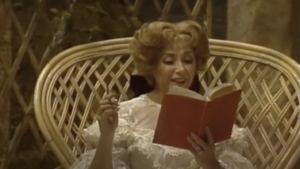
First, Anna Magnani is, as La Cieca imagines, Floria Tosca backstage at a provincial gig.

And now, another view of the character from Catherine Malfitano, who is directing Tosca for the English National Opera.

The danger of perfection

164 comments

  • florezrocks says:

    I WANT NINA STEMME FOR THE NEW RING!!!!!!!!

  • Constantine A. Papas says:

    #28.1,

    Now, you made the distinction clear. BTW, I’m not a savage and I’ll never bite the hand that feeds me!

  • Clita del Toro says:

    I have a feeling that Voigt will sing the Walküre Brunnhilde next season, but will be replaced for the full Ring.

    • luvtennis says:

      Hey Amneris!

      I have two words for anyone casting Brunnhilde (assuming Brewer is NOT going to continue in the role): Jennifer Wilson.

      I have the Valencia Ring and she is just THE BOMB.

      Her top C at the end of the Siegfried duet was just glorious. She is like Rita Hunter crossed with Anne Evans but louder than both. Moreover she is a REAL singer. Her legato is excellent and she has real control over every part of the voice.

      JUST LOVE HER!

  • mrmyster says:

    Richard and Gualtier – I am interested in your comments on the
    vocal status of DV.
    I’d like to share this — I do not think the soprano’s current vocal problems, which are serious, necessarily relate to her bariatric surgery, though that has to be counted in. Here is why I say this — her last Carnegie Hall solo recital before
    the surgery, maybe a couple of months before, showed a lot of vocal problems,
    especially pitch, but also tonal quality. This happens to have been quite clearly captured, live, on a CD and is a commercial issue – the name I don’t recall, but it’s her last live recital CD. If you can hear it see what you think, and you may hear, as I do, all the current problems in a somewhat less severe state. I’ve heard DV’s situation discussed by other singers, including some fatladies, and they all agree that bariatric surgery is too extreme and undercuts support, which of course is one of her major problems. A bit of a mystery here. The surgery may
    have worsened a condition that was already being manifested.
    My personal feeling about DV is that her voice has always had it’s greatest strength a the top – she is a very high soprano. I heard her Sieglinde in the
    mid-90s SFO Ring, and certainly that role was too low for her. She was compensating in various ways that singers do, but the net effect was to ‘push’
    the mid-voice for volume, and ultimately that takes a toll. Enuff from me.

    • richard says:

      I can’t really comment too much on the connection between Voigt’s surgery to the changes in her voice in the past decade. I don’t follow her career that closely, as I noted, she’s never been a favorite of mine, so I don’t see her , or even hear her all that often.

      But I do go along with your comment on the start of problems prior to her surgery.

      I did hear hear as the Empress in early 2002 at the Met. It was a good performance, her voice was still even, the middle was firm and the top was very impressive with a good bloom to it. She was pretty inert on stage, but , well, that’s how she was.

      About 18 months later in late 2003, I heard her in a revival of the Frau production and she sounded less good. Some of the eveness was less obvious, there was more of a difference between the middle register, which wasn’t quite so firm, and the top, which was still very good, but a bit harder.

      I don’t want to draw too many conclusions here because certainly a singer can vary from performance to performance and it wouldn’t be all that unusual for the later performance to be better than the earlier one. That happens all the time so I’m not going to saw “well. the decline started in 2003…”

      But the changes I noted in the later performance were the beginnings of the sound she has today. Today the tops are still there (mostly) but much harder sounding than previously and the middle now sounds ugly and curdled to me. I can’t really get past this, it reminds me of Lucine Amara’s mature career middle register, not a sound I find attractive at all. And of course there is a big difference in having a voice even throughout it’s registers to one that now sounds more slintered.

      So is there a connection between the after effects of Voigt’s surgery and the changes in her vocal condition. Probably, but is that the only factor?
      Probably not. I think it’s guessing to take it further than that.

      • richard says:

        splintered not slintered!!!

      • CruzSF says:

        “slintered”! Now that’s a new musical term for me. (no snark intended) I’m guessing it means a combo of “splintered” and “slanted”?

      • kashania says:

        I haven’t had the chance to hear Voigt consistently to be able to do an accurate analysis but I will say that her voice has really declined in the last few years. In the first couple of years after surgery, the voice was sounding a lot better than now. THis seems pretty typical of singers who lose a lot of weight fast. The effects take a couple of years to really show.

        Her Helena at the Met was great and she sounded very good in a the final scene (vocally, not necessarily dramatically) of Salome that she did in CHicago (based on a video posted on this site). So, while there may have been signs of decline before the surgery, the biggest decline has been in the last few years.

        • luvtennis says:

          Kashania

          I must disagree. In my opinion, Voigt’s Helens have always been problematic largely due to her support issues with the middle voice. In my opinion, Voigt really squeezed her tone in the middle register – that tension, which served to conceal the support issue – was not sustainable. I heard her live as Sieglinde in 2000 and the difference in sound between top and middle was extreme. Since the middle was still relatively well-controlled, it was ok. Now, 10 years on she can no longer rely on the tricks of youth. So, we have a singer with a stringy, somewhat iffy middle voice (end result of a longstanding technical problem)and an upper register that no longer blooms (perhaps due to the support changes necessitated by the weight loss. Not a pretty picture really.

        • kashania says:

          Luvt: I actually agree about Voigt’s middle voice and heard what you describe in her Helena. However, I still thought that overall, Voigt still gave a great performance in her post-op Helena at the Met. But yes, the first thing I noticed was the her middle voice had lost its warmth.

      • operaddict says:

        It has been very distressing to hear how Miss Voigt’s singing has slipped from the warm, round and beautiful middle voice sounds and thrilling high notes of years past to what it is now. Personally, I don’t believe it has so much to do with her surgery as with a switch in vocal technique. Although a drastic weight loss, and in particular, one which was surgically induced, has got to throw the entire system into turmoil for a while, a healthy singing technique should be able to override this trauma after a period of recovery time.
        First of all, the more dramatic soprano voices must be couched in a wide, rich full head voice, which in lower notes sounds cushioned, dark, rich and fat. Some sopranos, in particular Leontyne Price and Joan Sutherland, even had a “smoky” quality to their lower tones from employing this strong head voice technique. The head voice (which is a definite muscular adjustment of the vocal aparatus and not just a sound) when employed this way, will never have a pointed, bright sound on lower notes, however, those tones will still carry beautifully. A smart soprano will never allow her lower tones to become overly bright and edgy. In attempting to have the clearest diction possible, many great sopranos have chiseled down this fat, warm headtone sound and have suffered the same consequences as the soprano in question. Conversely, those who didn’t were often roundly criticised for having mushy diction. This is a dilemma which every soprano has to face at some point.
        Anyway, as a soprano’s voice ascends, the head voice, when kept full, round and fat, gains more and more in brilliance, and by the time a soprano reaches the tones above the staff, the voice begins to take on a clarion quality. Top notes, when the bottom notes are sung correctly, are naturally bigger, brighter and also easier, since great high notes are the gift of lower notes which have not been pinched and narrowed, and the focus of the high notes is now in the palate rather than behind the nose, as it is for the middle tones.
        The middle voice is often problematic for sopranos, since the voice must focus in the nasal pharynx, behind the nose, and not in the palate. This middle voice focus, even when perfectly executed, is often criticised in some vocal studios as sounding “too dark” or too much like a “mezzo soprano”…well…duh! It is in the mezzo range, and should have that masky, darker, almost nasal resonance which is felt behind the nose, but not IN the nose up to and including top line F. This is the mask, or forward feeling a soprano should feel. However, above the top line F, there is a register shift, the soft palate naturally lifts, and the higher tones feel further back and no longer “masky” but in the palate, and not behind the nose any more. This sense of the voice being in the mask, then going higher and more back is classic Italian vocal technique jargon. Sadly, it has been lost in most vocal studios.
        Miss Voigt used to sing this way I describe, but for some reason has abbandoned this bel canto vocal approach, which in the clip below she was doing beautifully. She now sings narrow, pinched, wordy, mouthy middle and low tones. Her head voice is compromised by doing this, and her top notes then have little head voice from which to grow out of, and have become tremulous and not on pitch. The top notes are the gift of the warm, rich, full middle and low tones…and if they wither, the top soon goes quickly too.
        I wish Miss Voigt can again find what I have described here, and continue many more years in even greater voice than before. She is a fabulous artist, and deserves to enjoy the fruits of her hard and long years of great work.
        I hope this little technique lesson is interesting and helpful to those readers who are not singers and are wondering just what is, or is not happening both with Miss Voigt, and with other singers, past and present, who have faced similar vocal difficulties and have, more often than not, fallen by the wayside.

        • luvtennis says:

          Operaddict:

          I think that singing low-lying roles like Ariadne and Sieglinde ultimately had a negative effect on the Voigt technique.

          Voigt was a “high soprano” like Price or Sutherland (perfect examples) – the voice and the technique were built for a strong soaring upper register. But she appears to have sacrificed all that for more “pointed” dramatic declamation in the middle register. Sadly, sopranos who adopt that technical device may please in the short term (especially when youth provides the gleam on top), but they DO NOT last. Singers as different and Callas and Tebaldi are proof of that.

        • operaddict says:

          Luvtennis,
          I agree with you..because those roles require a soprano to sing in a low range and in German. Coaches insist on the clearest diction…which in by my definition means that the production of the head voice is severely undermined. Obedient sopranos often then will get all wordy and speechy and soon their voices begin to suffer as a result. When the middle voice gets harsh and thin, the end is near.

        • Harry says:

          I have to congratulate you for your clear remarks. What you have said, is smack on the mark about singing technique and the complex decisions singers have to make. Others here have stated about singers coming to grief ….’using tension to hide lack of real support’. It would be simpler for them to just say ‘they’re pushing!’.I.E Take Carreras and that classic habit of his, ‘lifting the shoulders….dropping support and using throat muscles instead, to sound big’. Now we are left with a legendary number of recordings of his, essaying the downwards progress of his voice. What a lovely lyric voice he once had in the early stages of his career, before he wanted to sing all the roles of Pavarotti and Domingo.

    • Gualtier M says:

      What I will say, Jim is that there was also some criticism of Deborah’s performance as Cassandre in “Les Troyens” – a falcon role. A lot of people heard a waver or beat in the middle voice and the vocal quality wasn’t sympathetic. My ear wasn’t all that attuned to the beat but it didn’t sound easy or plush. That was in 2003 just before the surgery.

      Another note – she had begun singing Isolde at that point which may have aggravated some problems. I also must mention that I believe that Voigt’s “inertness” onstage was a byproduct of her obesity. She was devastatingly aware of her appearance and terrified almost to move in fear of waddling or jiggling or looking ridiculous. I remember a “Ballo” back in 1997 where Debbie had lost like 80 to 100 lbs. – she wasn’t skinny but she wasn’t obese. She had worked with a trainer and with a movement teacher. Suddenly she was connected with her body and giving everything she had. Her acting was wonderful and she was singing better than ever – pouring out golden shafts of tone. She was passionate, enthusiastic, on fire. If she could have kept up that route, then she would be the reigning jugendlich heldensopran today.

      • mrmyster says:

        Gualtier, absolutely! I remember those days after her first, brief weight
        loss. It worked brilliantly and she did it by diet and exercise. My
        experience with her in the early 90s (I think it was before ’97), is
        exactly yours. Even her Aida was wonderful. That all soon changed,
        and her dieted condition was not long lasting. Alas!

      • kashania says:

        I never understood why Voigt spent so much time in low-lying parts like Ariadne, Sieglinde and Cassandre. She basically took over Norman’s roles at the Met, which is odd, considering that Norman’s voice sat a lot lower than Voigt’s. My problem is not with the fact that she sang those roles but that she sang them so frequently (well, Ariadne and Sieglinde).

        I heard her Sieglinde and Cassandre live and, in both cases, I felt that she was singing well in a role that didn’t sit well in her voice. Most of Cassandre was just too low for her (though not low enough to sound bad, just not great). The most memorable part of her Cassandre was a glorious high C at the end of the duet with Coroebes. And as Sieglinde, her voice only bloomed in high-lying parts. The rest was good but not great.

        • Gualtier M says:

          Yeah, Kashania agreed but the Ariadne really worked for Voigt (why isn’t that 2003 telecast not being released? The Met Store has its own label now…). Ariadne has a weird tessitura that has low stuff and then money notes above the staff. It was her cheval de bataille for many years. But I agree with everyone above, the voice was basically high-lying – a Strauss voice. I also remember that her Elsa was nothing special either – another central tessitura role. But that could have been the Wilson production with the very unflattering tight blue silk dress and heiratic “do the robot” gestures.

        • MontyNostry says:

          Gualtier — you will be pleased to hear that the DVD Met Ariadne from 2003 will be released in 2010-11 on Virgin Classics.

        • You mean the Voigt Ariadne with Dessay that was filmed and never released is finally seeing the light of day?

        • richard says:

          I agree, Ariadne really worked well for Voigt.
          Theoretically it should have been a bit low for her. But she really did shine in the high flying passages and the whole thing worked.

          Plus she treated the part with a tiny bit of self parody, almost as if she was amused by all the goings on. It really made it for me.

          Good news about the 2003 Ariadne. But it’s too bad Dessay dropped out of the 2001 revival that was originally planned to be filmed. I would rather have heard Voigt and Dessay a bit earlier than 2003. 1997, when both ladies first did Ariadne together at the MEt would have been ideal. I saw one of those and it was just wonderful. 2003 was good (although I saw Brewer rather than Voigt that go around) and the DVD will be fine by me.

        • kashania says:

          I think that Ariadne (as well as the first Mattila Salome) got lost between Volpe’s departure and Gelb’s arrival. Gelb has focused all the DVD releases on HD broadcasts. Personally, I would have much preferred the Mattila’s first Salome when she looked and sounded younger (and had Terfel as her Jokanaan). Glad to see that that Ariadne is finally being released. I’d also love to see more broadcasts from the 80s released on DVD.

      • DrugProduct says:

        Dear La Cieca and cher public, I would like to introduce to you a promising singer:

        I think she has real bel canto voice and ability,no?

        • richard says:

          She really sounds lovely here. I first heard her on a big Rossini concert celebrating his 200th
          birthday back in 1992(?). Voigt came out, and I thought, oh this one is on the heavy side, she must be good. Even back then, if a woman singer was overweight, it was a sign that she had some pretty special vocal ability to get past the “fat police”.

          And she was very good in Inflamatus with ringing high c’s.

          But, and there is usually a “but” with me for Debbie, she sounds carefully coached in the Selva Opaca and she still pretty much sounds like that today.

          I am having trouble posting youtube videos, I used to be able to do it but I no longer see the url in the screen itself and when I use the one from the browser search field, it doesn’t embed.

          This is why I don’t like Voigt. Very externalized expression, no relation of one phrase to the next, no tension built up by cumulative phrasing, lots of pitch problems, no low notes, icky middle all balanced against a very good high B.

  • Quanto Painy Fakor says:

    As if all this was not enough, now Opera Chic break the news of Domingo’s new restaurant in Quatar. Gotta hand it to the Chic, she knows what’s Shiek!

    • La Cieca says:

      “I’ll have the Quatar Pounder with Cheese.”

      • Quanto Painy Fakor says:

        Can the Villazon knockoff be far behind? Look for the posedown with Ronald McDonald at a street corner near you.

        • Harry says:

          Both La Cieca and you for your comments are hereby being deemed ‘deliciously tasteful and wicked’

    • havfruen says:

      How long will a Mexican restaurant survive without Margaritas or Corona? Not the best country to be caught drinking!

      • Harry says:

        Forget the alcohol for a moment. Imagine ….eating one of those soft serve ice cream cones or thick shakes, synonymous with such venues in those places. When you hear it is rumored that one of its constituents is pork fat, to add textural smoothness!

  • Quanto Painy Fakor says:

    Then there’s that new press release (that must have cost a fortune) about Opera News: “Opera News Launches New Web Site at http://www.operanews.com

    June Issue of Magazine Heads Down South:
    Cover Story on New Orleans’s Bass-Baritone Greer Grimsley; Reports from Nashville, Atlanta, and Charleston’s Spoleto Festival USA; and Features on Southern Church Choirs, Music in Eudora Welty’s Fiction, and Southerners Joyce Castle, Keith Jameson, and Anthony Roth Costanzo

    Opera News announces the launch of its new, redesigned web site at http://www.operanews.com , which boasts a dynamic, image-rich look, new and expanded content, and improved navigation and search tools, making online exclusives, favorite sections, and new material more accessible than ever before. Meanwhile the world’s premier opera magazine takes on a southern flavor this June, with a cover story profiling Louisiana’s bass-baritone Greer Grimsley, and numerous related articles, featuring Charleston’s Spoleto Festival USA; the state of opera in Nashville and Atlanta; Southern church choirs; Eudora Welty’s musical inspiration; and three southern singers: countertenor Anthony Roth Costanzo and tenor Keith Jameson, who hail from North and South Carolina respectively, and Texas-born mezzo Joyce Castle. Also included is the magazine’s annual guide to the best U.S. festivals of the summer season.

    Opera News’s online home, http://www.operanews.com , boasts a beguiling new look with enhanced multimedia and exclusive online content. “The revamped http://www.operanews.com will be a major step forward in how our established readership, as well as newcomers to opera, interacts with the magazine,” says Adam Wasserman, online editor of Opera News. “The design, at once inviting, efficient, and functional, will highlight the breadth of content featured on our web site and in the print edition of Opera News. From ‘Breaking News’ items to CD and DVD appraisals, audio and video features to performance reviews, Q&As to photo galleries, the new http://www.operanews.com will truly be the opera lover’s home on the internet.”

    The site’s new design is clearer to read and navigate, with more content pushed to the home page, while improved search tools make searching current and past issues easier and more effective. New features include specially designed areas for audio and video podcasts, recording excerpts, and exclusive media, plus a new blog from Wasserman himself. Thanks to new sharing tools, content is not only more easily accessible but also available for sharing with friends, social networks, and other sites. The new web site – along with Opera News’s new fan page on Facebook (www.facebook.com/operanews ) and Twitter feed (www.twitter.com/operanews ) – demonstrates the Metropolitan Opera Guild’s commitment to fostering an informed and active audience for opera, even in cyberspace….”

    • m. p. arazza says:

      Thanks for pointing this out! Now of course – and no doubt others will discover the same – all the links to their articles that I’d saved and, in fact, posted on a website, no longer work — not the first time they’ve done this. (And the “improved search tool” is crap.) Perhaps in their modesty they fail to realize that they’re a crucial informational resource and not just a Web design showcase.

  • Bluessweet says:

    OT Alert: Here’s the Philly Inquirer’s critque of the OCP La Traviata. Leah Partridge in the title role.

    http://www.philly.com/inquirer/columnists/peter_dobrin/20100511__La_Traviata__revival_expressive__impressive.html

    • Nerva Nelli says:

      Dobrin knows NOTHING.

      Partridge Sunday was a wash-out pretty to seeand nothing else. No presence, no parola scenica, no chest voice, little dynamic variety, often sharp, BORING. IThe worst Violetta I’ve seen since Kiri, and she at least had a great voice.

      Castronovo was quite endearing and sang with real artistry and beauty if not huge resources.

      Stone woofy, having an off-day? Rovaris conducted very well.

      • Uninvolved Bystander says:

        I wouldn’t believe Dobrin if he told me the sun rose in the east and set in the west. The way he sabotaged Christoph Eschenbach’s tenure with the Philadelphia Orchestra from the very beginning was a disgrace. I have zero sympathy for the Cleveland critic who was fired because it appears he had the same type of agenda re: Welser-Most that Dobrin had with Eschenbach.

      • Bluessweet says:

        “Everyone has the right to their own opinion, no matter how stupid.” I’m not saying that Nelli is stupid or Peter Dobrin either, just paraphrasing an old saw.

        Here’s what Dan Rottenberg, of the Broad Street Review, says about Partridge. Doesn’t sound that she gave a bad performance, according to him. My vote will come after I see the production on Wednesday.

        “Slender but powerful
        Let me say at the outset that this is a first-rate production, with two ideally cast new faces in the leads. Soprano Leah Partridge makes a credibly gaunt Violetta, displaying remarkable range and vocal power for such a slender body, especially since the staging calls for her to sing many of her parts seated or prone. Charles Castronovo as Alfredo possesses a tender tenor voice that’s ideally suited to his innocent and impressionable character as well.”

  • mrmyster says:

    Poor Partridge. Many are called but few are chosen.

  • 98rsd says:

    From what I heard and saw of Mark Stone in Santa Fe, he’s hardly a Verdi baritone…I can’t say I’d really want to see him again in anything, based on my limited experience.

    • armerjacquino says:

      I’ve seen him as a terrific Onegin (albeit in a 500 seater) and as a very funny Maximillian in Candide- a really star performance.

      But no, he doesn’t strike me as a Verdian.

      • Uninvolved Bystander says:

        Does Giorgio Germont require the requisite Verdi baritone? It is more lyrical than some of the other Verdi baritone roles.

        Besides, the acoustic in the Academy of Music is so sensitive that singers can take on roles that might defeat them in other houses. I sit in the amphitheater and I never have trouble hearing anyone.

        • manou says:

          I went to the dress rehearsal of Traviata on Saturday at Covent Garden, and afterwards to a talk with the principals and Yves Abel (who is very nice and very dishy!). Abel was pointing out that Germont’s music is written in a different style to the rest of the score – Una siccome un’angelo and Di Provenza are deliberately scored in an old fashioned way to underline the generation gap and point out the fact that he is a dry old stick. So maybe he is a sui generis Verdi baritone?

        • richard says:

          I think Germont really calls for a lyric baritone with a technique suitable for bel canto.

          I know the character is supposed to be older than the other leads but it doesn’t sound right to me when an old sounding voice sings it.

          Toscanini used Robert Merrill for his NBC broadcast and I like his performance a lot there.
          I thought Merrill did better than the later recordings he made of the role and unfortunately by the time I saw him in the role, he was older and tended to bellow it.

        • Inveterate Gossip says:

          Uninvolved Bystander (or anyone else who knows), can you explain what the deal is with the Academy of Music? I never heard the Philadelphia Orchestra there, but for years it seemed like most people who care about these things said that the Academy’s acoustics were bad, at least for the Orchestra. (I guess they were comparing with Carnegie Hall, where the Philadelphians have always played regularly.) But I have heard opera at the Academy of Music a number of times, and it seems to me that the acoustics are great for opera. I can understand that the same acoustic might not work for both opera and symphonic music, but can anyone explain why why or how that’s the case at the Academy?

        • Bluessweet says:

          IG: You ar late to the party. I complained, several days ago now, about how, in my younger days, there were people who told me that the Academy had the best acoustics in the US, if not even far beyond our boarders. Then came Muti and the sound was HORRIBLE, according to him. That great white elephant, the Kimmel was built, sucking great sums of the available cash out of the Philly arts scene. There are already cries that this hall needs a serious “fix,” ala NYC’s Fisher Hall, gutted time and time again, with no substantial improvement. The first gut, by the way can be seen in Woody Allen’s “Annie Hall” where, in one of the late scenes, shot in a restaurant down the street, you can see out the window and the debris removal chutes are clearly visible. How long ago was that?

          Acoustics is a VERY inexact science.

          Anyway to get back on point, Harry, I believe it was, stated that the sound was very dead for orchestra strings and that led to heavy bowing of the same, which in turn led to the “Philadelphia” sound, heard, not at home, but when on tour, when the orchestra did not moderate the practice. I have no way of knowing this first hand, not being a musician and not having followed the orchestra at home or on tour. My exposure was mostly either Robin Hood Dell or the Mann, summer outdoor venues in Philly.

          Hope this brings you up to speed.

        • Uninvolved Bystander says:

          Bluessweet’s explanation jibes with what I have heard about the Academy. It was built as an opera house. I believe it’s the oldest house as far as continuously presenting opera in this country. Its charm and its problem is that it is a 19th century building, constructed when opera productions were basically flats and opera singers stepped to the apron to sing. But its configuration makes it difficult to stage the more visual and sophisticated productions that are more in-demand today, particularly if you want to attract a newer audience.

      • CruzSF says:

        AJ, where do you have access to a 500 seater?

        • armerjacquino says:

          Glyndebourne tour to regional theatres, with what is basically the cover cast of the main house production. It’s a good chance for a bit of ‘before they were famous’ spotting.

        • CruzSF says:

          NICE! All the recent discussion on houses too big to succeed has me hankering for seat in a smaller venue.

        • CruzSF says:

          … and for *a* seat, too.

        • kashania says:

          CruzSF: Make a trip to Toronto if you can. It’s a 2000-seat theatre (hardly the same as a 500-seater) but the difference between it and the Met is huge. The acoustics and sight-lines are uniformly great throughout the house (unlike the Met which has great sound in the balconies and horrible sound in Rear Orchestra). The acoustics have just the right balance between warmth and clarity, meaning that one can be enveloped in the sound while still being able to understand the words.

        • Harry says:

          With any venue, the point is to personally learn with your own ears where in the place is the best sound. I know of one old World 1600 seater with three levels that dated back to the late 1800′s – early 1900′s at least. It was used for straight plays , Broadway musicals and opera. It had a fabulous chandelier dome, the natural sound would ‘rocket up’ into it and come down with gorgeous slam in crescendos. The upper circle, its highest level was the place to be, for sound. Along comes a Musical entrepreneur, does a deal with the owners to park all his shows in the place…the owners ‘refurbish’ the place as their part of the deal. Adding box -sections across the roof lines of the canopy shaped roof …for new air conditioning. Result ‘they F…..d the acoustic’. But then the clowns that flock to some of these silly shows would not know or care, since all those shows are amplified anyway.

        • CruzSF says:

          kashania: I’ve heard very good things about Toronto (the opera cmpany and the city). My visit there is long overdue.

        • CruzSF says:

          Harry: the original acoustic of that venue sounds totally sick. I wish I’d been able to hear it. Do you remember the name of the place?

    • Bluessweet says:

      Here’s Mark Stone’s repertoire, as listed on his website. Not too much Verdi there and, in short bios, such as were passed out at his concert last Week, he does not mention even the ones listed here.

      REPERTOIRE
      ADAMS: Nixon in China (Chou En-lai) ADES: The Tempest (Sebastian) ALFANO: Cyrano de Bergerac (Valvert) ARGENTO: The Aspern Papers (The Lodger) BACH: B Minor Mass; St. John Passion; St. Matthew Passion; Christmas Oratorio CPE BACH:Magnificat BELLINI: La straniera (Valdeburgo) BERLIOZ: Béatrice et Bénédict (Claudio); Les Troyens (Chorèbe) BERNSTEIN: Candide (Maximillian) BIZET: Carmen (Escamillo); Djamileh (Splendiano) BRITTEN: Albert Herring (Sid); A Midsummer Night’s Dream (Demetrius); Billy Budd (Billy Budd); Death in Venice (Traveller); Gloriana (Mountjoy); Owen Wingrave (Owen Wingrave); Peter Grimes (Ned Keane); The Rape of Lucretia (Junius/Tarquinius) DEBUSSY: Pelleas et Melisande (Pelleas) DE FALLA: La Vida Breve (Manuel) DONIZETTI: Don Pasquale (Malatesta); L’Elisir d’amore (Belcore); Lucia di Lammermoor (Enrico); Roberto Devereux (Nottingham) ELGAR: Dream of GerontiusFAURE: Requiem GLASS: Symphony No. 5 GLUCK: Alceste (High Priest); Iphigénie en Tauride (Oreste) GOUNOD: Faust (Valentin) HANDEL: Acis and Galatea (Polyphemus); La Resurezzione (Lucifero); Messiah; Serse (Elviro); Tolomeo (Araspe) HAYDN: Nelson mass JANACEK: The Cunning Little Vixen (Harašta) LEHAR: Die lustige Witwe (Danilo) LEONCAVALLO: I Pagliacci (Silvio) JAMES MACMILLAN: St. John Passion MASCAGNI: Cavalleria rusticana (Alfio) MASSENET: Don Quichotte (Sancho Panza); Manon (Lescaut) MENDELSSOHN: Elijah MESSAGER: Veronique (Florestan) MOZART: Cosi fan tutte (Guglielmo); Die Zauberflöte (Papageno); Don Giovanni (Don Giovanni): Le nozze di Figaro (il Conte) ORFF: Carmina Burana PROKOFIEV: The Gambler (Mr Astley/Unlucky Gambler) PUCCINI: Gianni Schicchi (Gianni Schicchi); La bohème (Marcello); La fanciulla del West (Sonora); Madama Butterfly (Sharpless); Manon Lescaut (Lescaut) RAVEL: L’Heure Espagnole (Ramiro) ROSSINI: Il barbiere di Siviglia (Figaro); Il campanello (Enrico): La Cenerentola (Dandini); Le comte Ory (Raimbaud); L’occasione fa il ladro (Parmenione); Il turco in Italia (Prosdocimo) RAVEL: Die Fledermaus (Eisensetin/Falke) TCHAIKOVSKY: Eugene Onegin (Onegin); Iolanta (Robert); Pique Dame (Yeletsky) TIPPETT: King Priam (Hector) VERDI: Don Carlo (Rodrigo); Falstaff (Ford); La forza del destino (Don Carlo); La traviata (Germont) WEBER: Der Freischütz (Ottakar)

  • The Vicar of John Wakefield says:

    Stone is a fine Germont in the traditions of Delme Bryn- Jones and Neil Howlett.