


Friday afternoon news dump, Rossini edition
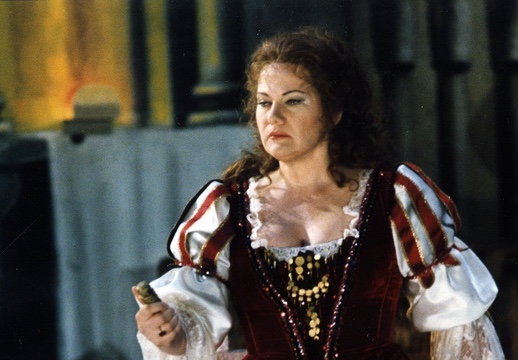
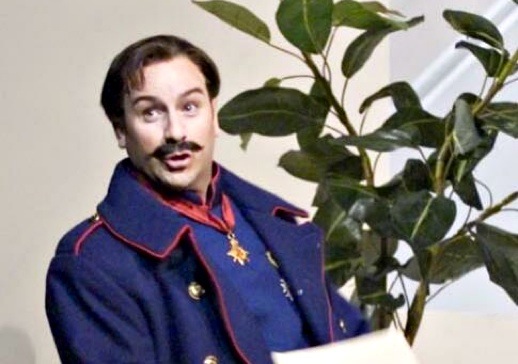
No press release yet, but a couple of cher pubes have written to La Cieca noting that the name of Bruce Ford has disappeared from cast listings of the Met’s Armida, replaced by John Osborn.

Copyright © 2012 parterre box - All Rights Reserved
Powered by WordPress · Parterror Theme by Nick Scholl for DIS Magazine
Maybe this was mentioned earlier, but what happened to having lead roles taken on by two “stars” in the run, with one covering the other?
As for student performances…..well, let’s just say the Met isn’t exactly thinking about creating the next generation of opera lovers…it really should, given the void left by the disappearance of music education and cultural programming in this country. All the Met cares about is wooing more 80 year old crones to fill their coffers. What happens when they are all dead?
Well, that would work if you had two Stars singing the same part in the first place…but as we all know, in many parts of the repertory there aren’t enough Stars to go around.
which “stars” these days would want to be a cover?
my problem with the “cover system” at the met is that they don’t seem to know who is a singer these days. often, the “stars” they present are shit.
well, for example, from this season’s figaro, oropesa sang some of the run and de niese sang some. They were each other’s covers. Speaking of covers, who else is hoping renee gets sick for at least part of the armida run so that angela meade gets to go on!
i don’t know, as good as oropesa is, i don’t knw that she is a “star” already.
“All the Met cares about is wooing more 80 year old crones to fill their coffers. What happens when they are all dead?”
There will be a new generation of “crones” to take their place. You could have made the same comment in 1960.
While we are all debating covers, fat (or otherwise) Nemorinos and who actually does the casting at the Met, let’s spare a thought for Bruce Ford who I understand is fighting cancer.
That is something we don’t joke about.
You’re right. All the other stuff pales in comparison if the bad news is true.
I second scifisci’s comments regarding utlising the MET’s resources.The MET would gain great publicity by runnng a education program with programs such a series of student performances at affforable prices. They could also get on board some coropration body to come on line to help defray the costs. It would allow the administration to see singers currently not ‘first rankers’ really show their stuff. Win-win benefits including morale, all around.
Opera is an art, a cultural activity, a source of employment, etc.,etc. But I see buying a ticket to the opera as no different than buying a ticket to a movie or any kind of function, paying for a meal, buying a car. It’s a business contract. I give you so much money and in return you give me something as previously agreed to. If I buy a ticket for an opera performance for which singers A and B have been advertised, I expect singers A and B to appear. Of course, accidents and illness happens, and we can be reasonably enough to accept a substitution of equivalent quality to me. But if such substitution is not available, I should be given a refund.
Arts institutions may be taking their patrons too much for granted. Nothing precludes the Met from not listing specific casts. They could sell tickets for Boheme as presented by the Met – which means a certain level of sets, production, singing, orchestra playing, etc. But if you sell me a ticket for a performance of Boheme with singer A, presenting a substitute without the opportunity for a refund seems to me to be bad business. If you buy a red Cadillac and the dealer runs out of them, you may be willing to accept a blue one or a green one. But you wouldn’t accept just any other GM car, would you?
I agree with La Cieca completely regarding the cover issue. Covers should not automatically expect to go on if the star is unavailable. Personally, I think that Gelb’s practise of bringing in star replacements whenever possible is one of the notable improvements of his administration over Volpe’s. This doesn’t mean that covers never get a chance to sing at the Met but I admire the extra effort (and money) put into finding a star replacement whenever possible.
A year or two ago, it was quite exciting when Giordani stepped in for Alagna as Pinkerton, who stepped in for Villazon as Romeo (my details are foggy but I think that’s how it went). We should remember that Villazon’s vocal troubles alone have been the cause of a lot of high-profile replacements.
And I recall a famous Tosca at the Met when Bing stepped in front of the curtain to announce that Mme Tebaldi was fine and would sing. Mr. Gobbi was fine and would sing. But the tenor (whose name escapes me) was ill and would be replaced by… Mr. Corelli. Mayhem ensued.
I also agree that while Gelb is responsible for the overall product that goes on stage, he can’t be held accountable for every casting detail. Even if his background were in voice rather than marketing, he still could be expected to be on top of every casting detail. He has to oversee production, casting, fundraising, marketing, PR, etc. Let’s give the guy a break. It is entirely reasonable for him to rely on Friend and Billinghurst (though their merit is up for debate) in the majority of casting matters and zoom in when there’s a star cancellation.
Finally, cancellations will always happen and the laws of mathematics dictate that they will happen most often at big houses like the Met. It’s easy to take for granted that the company puts on seven performances a week! There will always be a large number of cancellations. And yes, sometimes they will occur because the Met (like many other major companies) books artist up to five or six years in advance. That doesn’t mean that the Met should stop booking artists so far ahead. They book that far ahead because that’s the only way the can guarantee that a certain singer will be available not only to sing a certain role but to sing (and rehearse) at a very specific time. The Met schedule is a complicated beast after all.