
Ferocious!
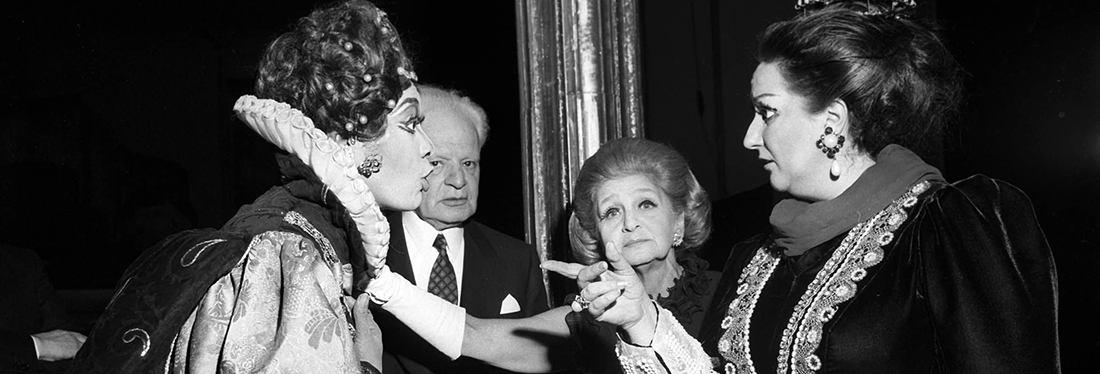
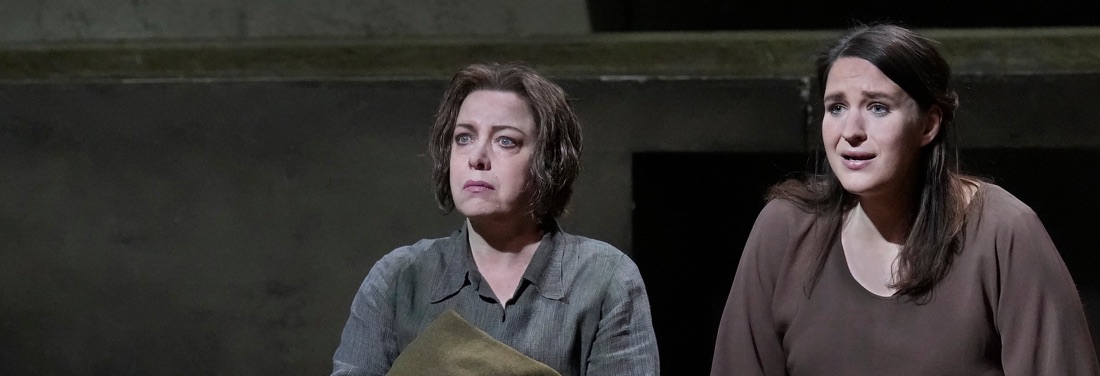
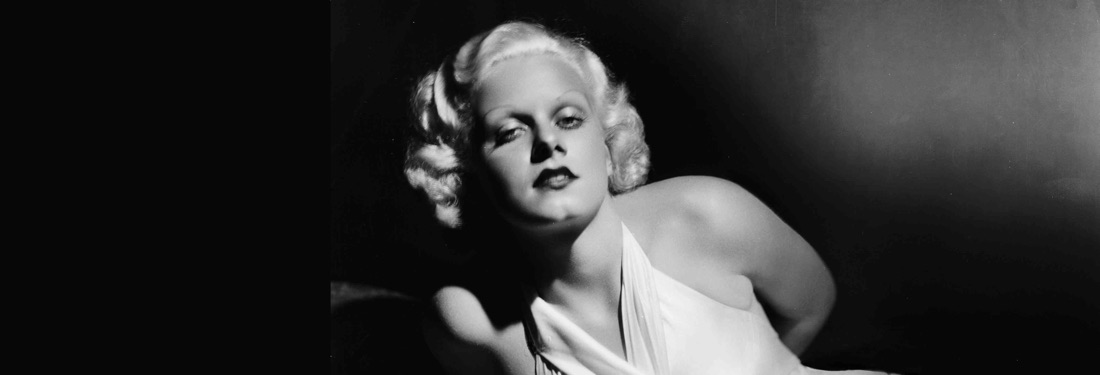
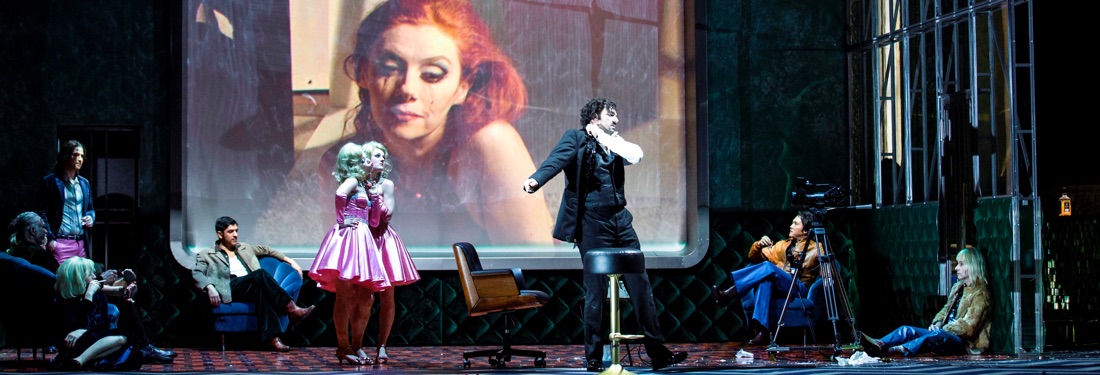
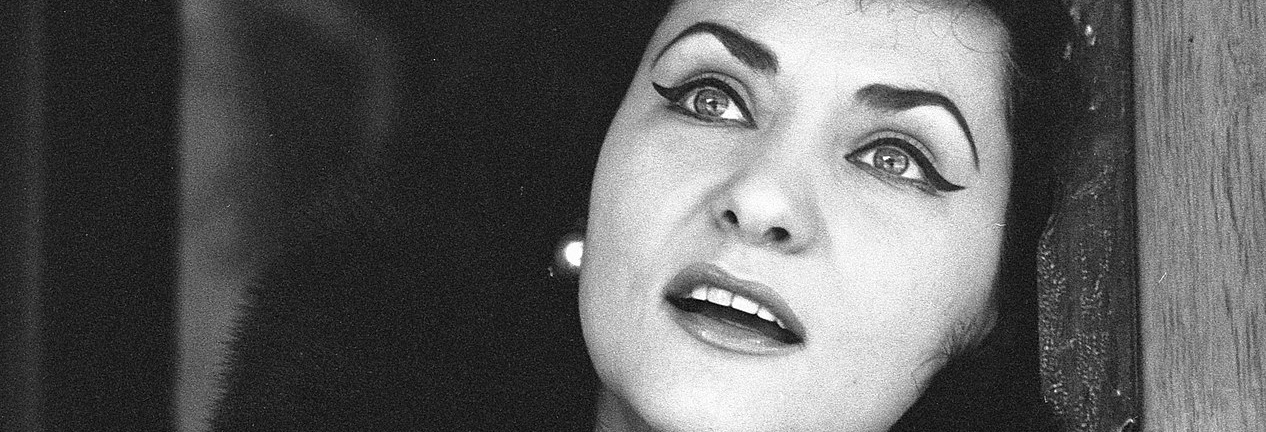
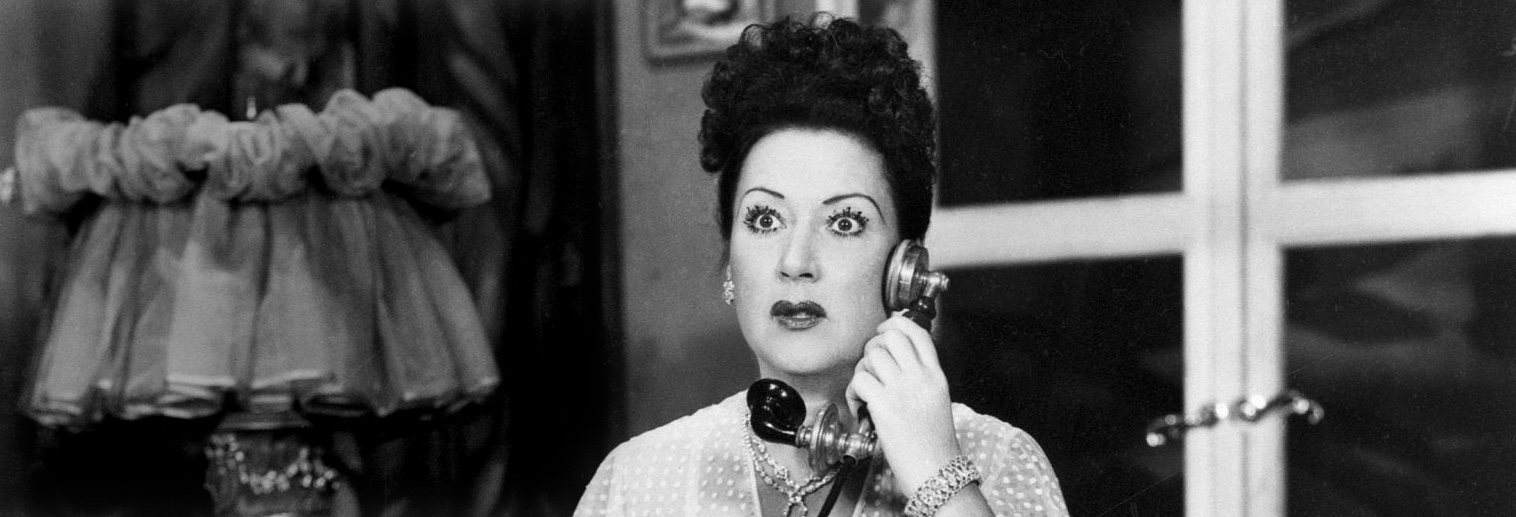
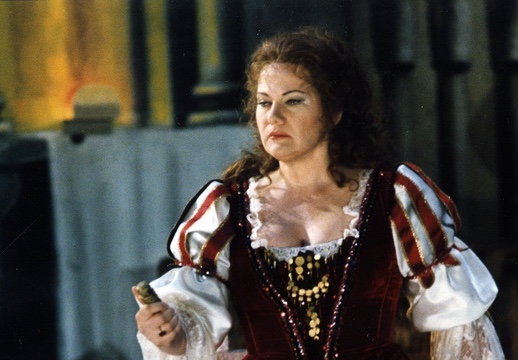
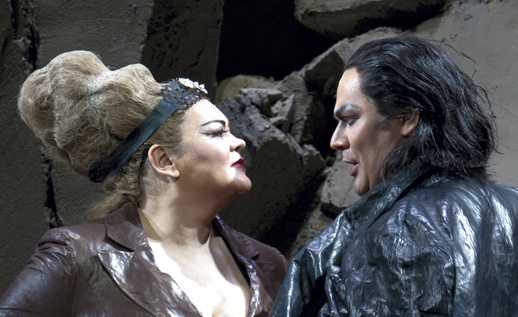
Tomorrow night’s performance of Attila promises to be a visual feast, especially for those of us whose visual aesthetic was crystallized in the 1960s era of gigantic hair, pearlized eyeshadow, liquid eyeliner and sharply tailored sportswear.
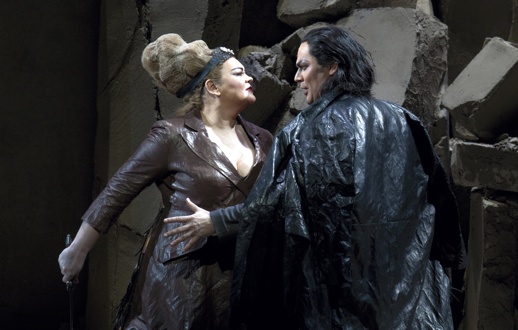
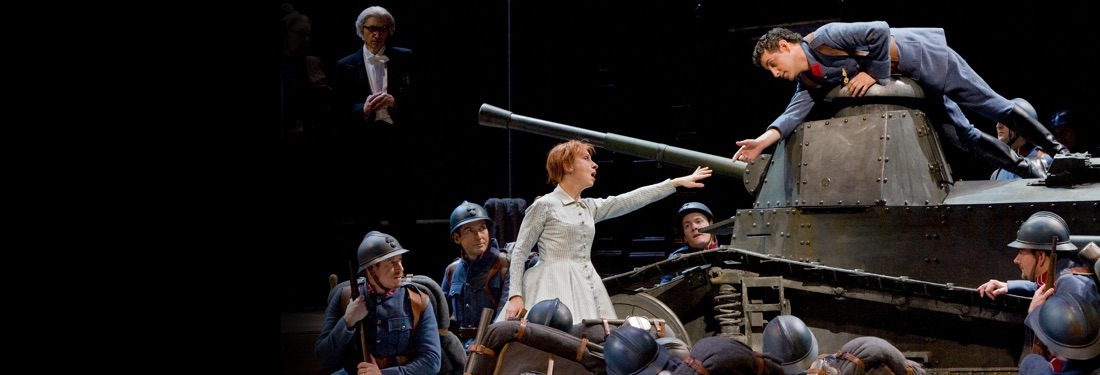
Detail of a photo by Ken Howard, Metropolitan Opera
And Violeta Urmana‘s look is pretty fierce too!
That fury sparkle had us all rolling in the reeking fields with laughter – please tell us you are joking!!This isn’t make believe
as much as lunacy.
So Attila is early Verdi with a libretto that contains some howlers. I still want to see it and hear it. To me, “Beautiful, O Virgin, is that fury sparkling in your eyes” sounds like an early version of Scarpia’s words throughout Act II of Tosca, except that no one confused La Tosca with a virgin.
I don’t know how many of you have had the occasion to write song lyrics, but it’s not the easiest thing in the world to deliver verses of an exact number of syllables in a defined meter, with rhymes in specified places, the vowels and consonants distributed so as to avoid tongue-twisters, and besides that, for Verdi, the entire dramatic idea of the scene summed up in a phrase of half a dozen words or fewer (the “parola scenica”). Given those constraints, the six lines
do most efficiently the job required, which is to set up a “distacco di pensiero” (change of mood) motivating the upcoming cabaletta. And who better to appreciate the beauty of a glance flashing with fury than Attila the Hun?
Since Odabella’s text apostrophizes first Divine Justice and then the sword itself, we can be sure that the cabaletta is not meant to be overheard, i.e., she is not “speaking aloud.” 19th century theater had a very clear convention to indicate this sort of soliloquizing, which is to have the artist move downstage to the footlights and directly address the audience.
Or, as John Wayne (as Genghis Khan) says to Susan Hayward in THE CONQUEROR: “Yer beautiful in yer wrath.”
to quote Manou -
Chaconne a son gout
No self repecting artist would sing
this lunacy , no matter who wrote it.
I would quote a famous moment-
“Mr. Muti have you no shame ?”
I see some irony in some of the comments to my copying the English translation of part of the libretto, but no one has helped me with “Tartar tyrant”. Well, I’ll remember eventually.
Women were involved in Italy’s fight for freedom, some even friends of Verdi, but they were less weapon yielding than Odabella or Abigaile. The stage is bigger than life.
As to the howlers, well, we see in Shakespeare characters speaking what they are thinking, we hear them in the audience, but we know it is their thoughts. Could we make the above scene completely rational if the parenthesis that encloses “Ah, a sword!” is made to enclose the whole cabaletta? Could Solera and Verdi have been as rational as Kant and this be a mistake of some Guido Beppo at Ricordi? Just a conjecture.
The original Werner play is bizarre too. I will think twice before dismissing it. This author was loved by whom was called one of the three main enemies of Napoleon besides Italy and Russia, Madame de Stael. He was considered at one point the successor of Schiller. Not only Verdi made this opera, but Beethoven considered writing one based on the play and Beethoven composed the European Union National Anthem. As to self-respecting singers having sang this opera, well, the list will be too long to mention.
Any idea how it went last night?
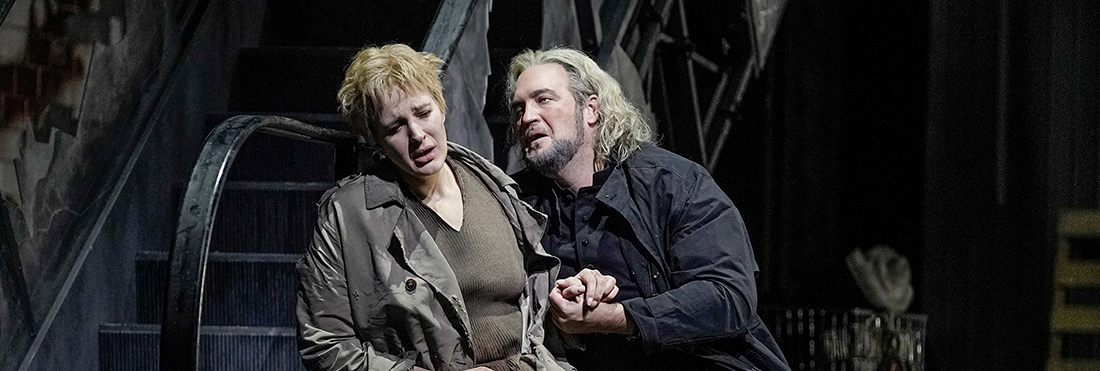
Muti had the greatest success with the audience, the set designer and director the least (costume designer did not bow). Singers all well received, Giovanni Meoni substituting for Carlos Alvarez in a debut.
The Hun army got to wear Prada tank-top and crew-neck T-shirts (and shorts!) and didn’t have to do much except sit there and sing, gloriously. The higher ups were quite a fashion show, with super-shiny headgear and epaulets, fine furs and fabrics and frightening make-up, with a special huge fright wig for Ms. Urmana.
Somehow, they got the flora from Avatar and cut holes in it for principals to sing arias through. Took a long time to change the holes, though. Also, they had a huge earthquake wreck for the first scene that looked frightening to walk upon. Fortunately, that never re-appeared.
The orchestra clearly loved Muti, who clearly loves the opera. The played like a Stradivarius. Sam Ramey in the small part of Leone, though wobbly, gave a demonstration of what an Attila is actually supposed to sound like. A true nightmare not only for Attila but for Mr. Abdrazakov as well.
The initial Italian audience cheered
this work in sections where reference could be drawn to their
fight with the Habsburg empire
History claims the ending of the opera as ludicrous as well as fiction
But then it is opera . As to list of singers who took on this nonsense I
agree the list is long .But confess
that I belong to the school and
philosophy of that great lecturer & musicologist Anna Russell whose
first lecture brought her the great fame she deserved by that one
opening observation that most singers have resonance where their
brains aught to be .Thus works like this will find its way to some opera house for at least a once runthrough which is more than
enough .
Superb performance last night. If you don’t have tickets, hurry.
Musically, I doubt one could see a better performance of this opera. Muti made everything seem musically logical, and conducted with great “snap” and vitality.
Every note sounded exactly right. This was really great conducting — a less familar work (perhaps thouight of as minor) — is revealed in all its beauty. The singers and chorus seemed inspired by his presence. The evening flew by.
The scenery and direction were less immediately impressive. Although they did not especially detract, there was not much that they added. The movement was rather static throughout, even oratorio-like, and the chorus was given little to do but pose about in Prada tees and tanks. Odabella’s Marge Simpson beehive seemed especially odd. There were times I nostalgically recalled the “lurch, clutch the throat and stagger” school of operatic performance.
But be sure to tape the broadcast. Musically, it’s really one for the books. And Bravo palumbo.
Audiences unfamiliar with this opera can be excused for thinking that the plot, characters, etc. are just a muddled,trite mess when you read the totally clueless ( that’s the right word here) review in Bloomberg today.
The reviewer ( name escapes me ) refers to the famous duet and clearly doesn’t “get it”. This is the part of the opera that should be the easiest to “get”!
The reviewer remarks:
” Vivid tunes race through the score, most memorably a duet for Attila and the traitorous Roman General Ezio who wants help dethroning the emperor in Rome. “Leave Italy to me and you can have the universe,” urges Ezio. When the Hun scowls at the suggestion (why can’t he have both?), he blithely goes to plan B which involves keeping the emperor.”
The Hun doesn’t scowl at the suggestion because of the reason offered! Attila has up until that point
considered Ezio a worthy opponent, and his scorn is a result of the contempt he feels when he discoveres that Ezio is, in fact, a traitor to his own side!
With reviews like that, what are people who are new to this opera think???
It’s pretty clear from the libretto that Attila is disgusted by Ezio’s willingness to sell out his own side. I wonder how the Bloomberg critic missed it. (I’m not being facetious.)
Pernille,
I agree completely. Reviewers usually take the easy road of considering anything unfamiliar sort of trash not worthy of sophisticated audiences. Well, this opera was very successful in its time. The play it is based on was too. You can pretend being high-brow and dismiss it, but then you are not being historically accurate. Beethoven considered writing an opera on this play. Crazy Werner was considered by many as the successor, and superior, to Schiller. Verdi liked the play, which came to his attention from reading Madame de Stael, a fan of Werner. I’m not saying that the original play, or the opera, are models of rationality; they are, after all, romantic, but I think there is an interest there that demands a different treatment.
Visconti or Zeffirelli would have given us something much more theatrical. I know they have their detractors, but then pick a director that would approach the libretto with the same respect Muti approached the music. Someone who will look into the work itself, the time, the subject being presented, and do a proper production. I think a critic that considers Attila nonsense, as that critic in Bloomberg, is just not doing the right service to interested opera audiences, or to the work. That critic is either taking the easy way out, or is more interested in buying a Prada dress than enjoying opera.