Headshot of La Cieca

Cher Public

  • Feldmarschallin: I think either Elsa Msxwell or Getrude Stein need to be Fric...
  • Superconductor: For a review that does not menton Whitney Houston, the Whitn...
  • Lindoro Almaviva: Not long ago we were talking in these pages as to how some r...
  • Will: It simply means that you cast the role with the singer or ac...
  • Will: Camilla Williams, who broke the color barrier for black wome...
  • Signor Bruschino: I think Bobby Brown is the reason that the LePage ring is so...
  • Camille: Thank you, Manrico, for taking time out from plghting your t...
  • kashania: A review of Domingo as Simon B. in LA. I found it interestin...
  • kashania: Wow, the connection to Whitney Houston is pretty desperate (...
  • Gualtier M: Can anyone think of a black soprano singing Violetta Valery ...

blog advertising is good for you

Council chamber

Torch brochure winter 09-10La Cieca welcomes cher plebians and cher patricians alike to a chat during this afternoon’s Met broadcast of Simon Boccanegra. The performance begins at 1:00 PM.
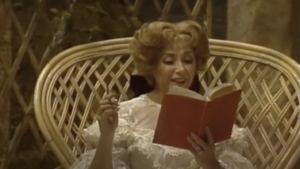
Intermission features today include the Toll Brothers Metropolitan Opera Quiz with moderator Teddy Tahu Rhodes testing Michelle Krisel, Neal Goren and Michael Capasso. Backstage, Renée Fleming (“La Dappertutta”) interviews Adrianne Pieczonka, Marcello Giordani, Placido Domingo and James Morris.

The real-time chat is, as usual, over at La Casa della Cieca.

170 comments

  • bassoprano says:

    Domingo sounds nothing like a Verdi baritone, Pieczonka nothing like a Verdi soprano, and Giordani little like a tenor. Why are they doing this opera? And, putting it on worldwide view with an HD telecast? This shows how well the media people know opera…

    • brooklyndivo says:

      True, Domingo sounds nothing like a baritone period. I have to diasgree with the other two singers. They do sound the part. Everyone thinks a Verdi soprano must always sound dark but that’s not true, listen to some of his early operas and the color of the tone the soprano makes, nice and lyrico. If they had the right cast this would be ok to a point.

    • pernille says:

      The saddest part of this is that a whole new generation ( maybe not even so young) of “fans” will think this is what it should sound like. These may very well be sincere opera newcomers who, for example, can hear when a phrase is ugly, a note is cracked, but have no idea that this is not Verdi’s Boccanegra. And HD will have caused the spread of this ignorance.

      • dermotafan says:

        Yes Pernille, I agree with you. Instead of a reall Boccanegra we are presented with a tenor who can’t sing Othello any more, and sings it with remainings of his othello voice.

      • LittleMasterMiles says:

        Oh for heaven’s sake. Don’t worry, Domingo, the Met, and HD are not going to kill opera. While I’m not arguing for this particular performance, I would point out that operatic vocal styles change over time; don’t pretend like you know what “Verdi’s Boccanegra” really sounds like unless you were there in 1856 (for the revised version).

        • LittleMasterMiles says:

          Sorry, 1881 for the revised version.

        • pernille says:

          And now we have the 2010 revision.

        • mrsjohnclaggart says:

          Sorry Little Master Miles — by the way, do you know Prince Harry Windsor? We are destined to meet. I asked Armerjaquino but he sneered. I would ask Manou but her refusal to wash out her vulva (it’s been twenty years) makes her unlikely to be a good interlocutor — though maybe Betsy-Ann could use her tongue on it (but might get her tongue, rough and strong as it undoubtedly is, cut by Manou’s teeth despite the cavities, a renowned affliction of the English though not I am sure of Prince Harry Windsor).

          In any case we DO know how baritones sounded around the time of the second Boccanegra, Pacini, Magini-Coletti, Kaschmann (an Italian despite the name) and most importantly the greatest Italian baritone and the one with the most records in still listenable sound, Battistini were all singing professionally in the late 1880′s and some, before. Verdi especially liked Magini-Coletti and Pacini (he befriended the later’s family) and he also praised the young Battistini. Finally, we have records from the first 1881 Simon, Victor Maurel, made very late but they give an idea of his style and some of his skill. Aside from Maurel the other baritones recorded more or less in their primes (Battistini never passed his prime)or at least while they were fully active in the biggest Italian theaters and on the international circuit.

          The sweetness of tone, ease of emission at all dynamic levels, fine spun legato with power in reserve, powerful and varied (not forced or artificially weighted) declamation, gorgeous words (no twisted or odd vowels) and superb line show a remarkable school, one that Verdi wrote for even in the buffo part of Falstaff (who must be able to trill, float high in the range, accomplish divisions, and offer endless color in long declamation). Also the voices extend easily into the top without yelling, forcing, vowel changing or ‘shifting gears’ in the American big baritone tradition — yet the high notes are ‘baritone’ notes, not tenor notes and the difference in impact and color is considerable.

          This school, corrupted rather by verismo writing and Wagner in Italian, which became all the rage in Italy but was sung verismo style (as far as anyone knows Wagner liked/loved/admired – depending on what you read — Italian singing and would have probably liked the older baritones) continued powerfully, certainly into the late 1920′s.

          Subsequent Italian baritones often had great voices but tended to have rough and compromised techniques and short primes (interestingly the pre-WW1 baritones sang very heavy roles in heavy schedules but held on to their voices by and large, Battistini being the miracle).

          Surely Bechi, Gobbi, Taddei, Guelfi, Panerai, Bastianini were all great talents and actually Taddei and Panerai went on for a long time (Bastinaini, never the smoothest singer but with arguably the most beautiful voice, died young of throat cancer) — in the not to be recommended Karajan Falstaff of the 1980′s both do some very impressive singing, especially Panerai, and Taddei live at the Met was overwhelming though quite old. But the combination of sweetness and power with a true baritone’s resonance and weight was not only in Verdi’s ear as he wrote, but was accomplished by the singers he heard.

          One might also argue for the American tradition, first Tibbett, a really remarkable artist with a great voice, then Warren, less an artist perhaps but amazing to hear, Merrill likewise, and MacNeil especially before 1970 when his voice became quite wobbly (but he went on and on) were all wonderful, with some though not all the skills of that early Italian school. MacNeil was a stunning Boccanegra to experience live, Taddei who wobbled some, was also tremendous and very moving. Both had the kind of rolling richness and weight as well as darkness of tone Simon needs — it’s in the writing all the time. Since then I think Cappuccilli was the most remarkable though best at La Scala and in DC with Scala, I didn’t think Carroli was bad and among baritones that’s about it.

          For my part, I think Domingo gave his typical performance. He survived but wasn’t as good as even the relatively recent best — as I felt about his Otello when he was first doing it, and his mediocre badly pronounced largely unfelt Wagner. That there’s worse in the world isn’t the same thing as being good, and really hearing any of the best Simons he delivers far less.

          Evviva Tebaldi!

        • LittleMasterMiles says:

          And on what are you basing your expert opinion on what Verdi really wanted? Performances from the 60s, 70s, or 80s? Or recordings from a little earlier? I agree that Domingo’s tenorial tone is unusual for today’s role, but he’s NOT the last person we’re ever going to hear sing it (speriamo…). One poorly-cast performance doesn’t ruin an opera, even if they sell it on DVD.

          The attitude that everything was sung better 30 or 40 years ago is surely the tiredest opera-queen cliché in the étui.

        • LittleMasterMiles says:

          @mrsjohnclaggart – Sorry, our posts crossed in the iEther or whatever it is. You’re quite right about late 19th-century voices on record, and I stand (not literally) corrected about my comments re: recordings. My larger point, that the occasional fached-up casting choice is nothing to get apoplectic about (and as I read your description of Domingo’s performance you would, I think, agree).

          And no, I don’t know Harry. But I did once spend a torrid week in Aldeburgh with Princess Margaret of Hesse and the Rhine.

        • mrsjohnclaggart says:

          LittleMasterMiles — I AM Princess Margaret of Hesse and the Rhine. Well in spirit anyway. Weren’t she and her husbear Ben and Peter’s pals on that tremendous trip to Bali without which we wouldn’t have all that amazing writing in Prince of the Pagodas and Death in Venice? I am VERY impressed. I visited all the parts of Suffolk in Ben’s memory but never made it to the Aldeburgh Festival, though I will brag and admit that both Sir Peter Pears and Murray Perahia invited me (I think. One thing that is odd for we lower class Americans — I don’t mean ALL Americans are lower class, I AM, is reading the sincerity of the English). But it didn’t work out.

          It’s wonderful to know good people from England. I rather like Armerjacquino, not reciprocated alas. So good to know there is better that the base Manou with the dripping diaper and her (probably American) klytmistress BestyAnn who drinks the drip.

        • mrsjohnclaggart says:

          Oh, I forgot, Long live Tebaldi!!!

        • BETSY_ANN_BOBOLINK says:

          Oh dear, Manou, I think we’ve been outed. All right, I’ll try what you suggest, but I’m not really comfortable with it. Here goes.

          “Oh Mrs. Claggart, you’re just poo-poo caa-caa.”

        • BETSY_ANN_BOBOLINK says:

          BTW, shouldn’t it be “for us lower-class Americans” or do you now have the MLA in thrall as well?

        • CruzSF says:

          Mrs John’s obsession with dripping orifices makes me wonder if she’s a former plumber-cum-proctologist. One with an enviably rich (and long) love affair with opera.

        • BETSY_ANN_BOBOLINK says:

          Oh, I’m sure she’s had her fingers in lots of . . . pies, but she always licks them clean afterward.

        • Bill says:

          Dear Mrs. JC – in writing of the long history of Italian Baritones as Simon and indicating that “that’s about it” at least in my short list there is one major omission – Renato Bruson, certainly one of the finest Simon’s I was ever able to see – the legato of a beautiful baritone voice, the subtle nuances of interpretation without pretence, the lyrical phrasing – stupendous in my book. Bruson sang 36 performances of he role in Vienna alone (mostly under Abbado) and perhaps the finest Simon in my experience – but only perhaps as I was deeply moved by Eberhard Waechter’s interpretation, gorgeously sung (under Krips with Ghiaurov, Cossutta, Robert Kerns and either Janowitz or Gerda Scheyrer). I would assume that Paul Schoeffler was, earlier on, effective in the role. I never heard Nucci in it – but he is still singing such roles with considerable success and is now to be 68. Bruson is now 73 and sang Scarpia in Budapest last season though he lost the freshness of voice he commanded quite some time ago. Perhaps I am one of the few who prefers Simon to much else in Verdi’s canon though my favorite Verdi is certainly Don Carlo

        • mrsjohnclaggart says:

          Bill, thank you for adding Bruson (and subtracting BetsyAnn and Manrou thus raising the IQ of Parterre) who I saw often (including as Rodrigo where when Christoff tried to behead him after: “Orrenda, orrenda pace…” by drawing a REAL sword and swinging it at his neck; he ran off stage thereby ending act one).

          I had mixed experiences of him live — there was the Rigoletto with Muti and the Phila Orchestra where when Mo. Muti launched Cortigiani very fast Renato reached out and grabbed his arm and almost broke it (Mo. Muti slowed down), I also saw him do Don Carlo in a bad Forza at the Met, Scarpia, too many Germonts in various places but never Simon. I did see Nucci do it and wasn’t that impressed.

          I’ve never been that impressed with Nucci on stage but I was lucky enough to be in residence at a certain great opera house where he rehearsed Forza and went to every rehearsal including one the day after an angioplasty while still in pain and sang full out and I was very moved and really taken with his intelligence and seriousness. I just wish his voice had had more juice and weight in his prime though like Bruson he certainly had all the right ideas and great words (though Bruson was a master of declamation).

          My first Waechter was Wolfram at Bayreuth with my grandfather and his brother — we were amazed at this gorgeous and large voice. We went to see him the next season at the Met, couldn’t hear him at all. I saw him do a very well managed but not exactly refulgent Kurvenal and Amfortas but don’t remember any Italian roles.

          Among Germans I suspect Josef Herrman was marvelous — there are some great moments on an otherwise weird b’cast out on Walhall but he is a great Rigoletto. I also saw Van Dam (Belgian of course and in Italian) feint at some high notes but be very moving and sing the Recognition Scene beautifully. I don’t know if Metternich ever did Simon but that was a great voice.

          I’m with you, I think the revision is a great opera and I am usually profoundly moved by it though there just aren’t the people around to get it over the pit and out into the house (or if there are and there may be somehow they are not connecting with the big places) and I was not convinced today.

        • Bill says:

          Thanks Mrs. JC – your comments are always illuminating. Waechter had a broad repertory and sang numerous Italian roles (originally from 1953 in German and after 1957 in Italian) including Gerard, Scarpia, Marcello, Posa, Ford, Simon, Sharpless, Germont. Silvio, Luna, Rigoletto, Renato etc and of course his Mozart Roles (a splendid Count in Figaro, a suave Don Giovanni), and in French and German operas almost anything and everything possible ( an elegant Mandryka ) – his voice became tattered late in his career perhaps due to drinking. He was beloved in Vienna though somewhat scandalized the Viennese when he was ordained as a Kammersaenger and exclaimed that he “already had a title” (Baron – thought the title was lost in Austria after the war). His range was from Handel’s Julius Caesar to Danton’s Tod (He sang countless Scarpias to Rysanek’s Tosca – they were never quite the same in any performance – spontaneously acted each time.) He cut a handsome figure on the stage as did his protegee, Boje Skovhus (who also seems to be suffering some vocal decline these days). Waechter’s career was slightly shorter than that of Walter Berry who was on the scene much of the same time, but curiously, with a few exceptions, most of the roles each sang were not done by the other. Both were fine lieder singers, less arty than Fischer-Dieskau – I always listen to Waecher’s Dichterliebe with the greatest pleasure.

        • mrsjohnclaggart says:

          Bill you are always so kind. I forgot Waechter’s Count and Posa, which I saw, also Mandryka. Best of all is that Dichterliebe, I think always available on CD, one of the great performances of the cycle and there his voice is very beautiful. I wish I had seen one of the Scarpias with Leonie!!! Also didn’t he run the Opera in Vienna for a while?

          I once knew Bo very well. Unfortunately another baritone and his wife took a big shine to me — for no reason except the great sweetness I exhibit here on Parterre and he got very angry at this betrayal. But the final straw was a THIRD baritone for whom I did some things of a creative nature. We were not friends at all but I had to see him fairly often for a while, and he was gracious to me. When one of these projects got a great deal of play Bo cut me dead!!!!!

          Oh well, he was a fine talent, a superb musician, highly intelligent and really beautiful. Something had been added to and something subtracted from the drinking water — he was very tall yet his voice was not large enough for the really big roles in the biggest houses and that’s what he wanted. But the same could be said of the other two baritones, though for sheer insane ego the third has at least the personality of someone with a huge voice. Bo was an outstanding lieder singer and very serious. I think it’s been a fine career but of course he wanted more and in a fairer universe he would have had that bit more.

          For spirit and feeling any of these three baritones would have been a better Simon that we had today but as I always say and know from experience LUCK is everything in a career. It isn’t a matter of having IT or not having IT at all but it does come in degrees — these were three lucky men, the third the luckiest, but none were kissed by the luck fairy to the degree that Domingo was. And no it isn’t that he has worked so hard and is smart and a good musician (though all that is true) for others have worked harder, are smarter and are better musicians — it is LUCK.

        • Bill says:

          Waechter was indeed intendant of the Wiener Staatsoper but only for one year before his sudden death – Holender, with whom Waechter was sharing responsibilities, then took over and remains until June of 2010.

          Waechter nutured Bo Skovhus – steering Skovhus into roles in which Waechter had triumphed in his first years – so Skovhus began as Don Giovanni at the Volksoper at the age of 26 and almost immediately was singing in both Vienna houses. In the Don Giovanni, a Marelli, production. Skovhus, in a dark wig (who knew he was blonde in the production?) became an instant Viennese “Liebling”, used to bicycle around Vienna and the city became his cultural home. He surely will eventually be an Ehrenmitglieder in time. Skovhus’ Billy Budd (with Shicoff as Fairfax and Eric Halfvarson as MISTER John Claggart) was masterful – probably the most effective of the various Billy Budds I’ve seen – great beauty of voice, totally delightful in his naivity and of course with his manly figure and blonde good looks, ideal in that respect (he kept his shirt on in that Willy Decker production which was also shown elsewhere thereafter – Koeln for sure). Skovhus gave up the role of Billy Budd when he turned 40 claiming that he was too old for the role. His ditsy Count, brother of Renee Fleming’s Madeleine in Capriccio in Vienna’s recent production, was a marvel in acting -and sonorous to the ears. Skovhus has now also begun to take on roles such as Don Alfonso in Cosi – (as did Schoeffler and Berry and Waechter – Schoeffler singing it 109 times in Vienna alone, numerous times in Salzburg as well) so presumably Skovhus is preparing for a lingering career in the typical Viennese baritone fach. When Vienna had its last new production of Simon Boccanegra in 2002, Hampson sang the role (better than he was later at the Met) and I do not believe, at least until now, Simon has entered Skovhus’ repertoire which has not included too much Italian opera save for his effective Rodrigue in Don Carlos and earlier on some Marcellos, Silvios and Sharplesses. His lieder is cultivated and very straight – no affectations. Skovhus’s repertoire is varied (now Kurwenal for example) but not as wide as that of Waechter or Berry. Bo’s Barbiere in Schweigsame Frau was delightful. Schoeffler may have had the most far reaching repertoire of all – remarkable. When Schoeffler sang Hans Sachs in Vienna and made his entrance in the last scene the audience always exploded and applauded fiercely right during the music as can be heard on the 1955 Reiner Meistersinger on Orfeo from Vienna – it is deeply thrilling to hear the excited audience response to a beloved artist in one of his greatest roles. Are the Met audiences as loyal to their favorite artists as Viennese are to their “Lieblings” when the sun has begun to set on their careers? I remember when Moedl came back at the age of 80 to sing the Pique Dame Countess in Vienna – the ovation was immense (and indeed she sang it just as well at that age as many others who assumed the role at much younger ages). We shall see how Bumbry fares when she returns to the Staatsoper in he same role in Pique Dame in 2012 48 years after her debut there as Eboli.

        • Arianna a Nasso says:

          “Are the Met audiences as loyal to their favorite artists as Viennese are to their “Lieblings” when the sun has begun to set on their careers?”

          No, or at least, not any more; probably the last were the Rysanek and G. Jones fans. The die-hard Millo fans are more of a small ‘niche’ at this point, and beside, she’s not appear regularly as the Viennese ‘Lieblings’ do. The general public supports the superstars to the end (Pavarotti, now Domingo), though the afficiandos often tend to abandon them at a certain point, unlike the Viennese.

          I’ve assumed the Viennese have a stereotyped fondness for the past, which extends to their fading Lieblings.

        • manou says:

          Betsy Ann – my governess always taught me to act like a lady. A lady ignores vulgarity and pities uncouth, offensive and discourteous people.

        • BETSY_ANN_BOBOLINK says:

          Even so, Manou, I unthinkingly dragged you into the line of fire and for that I apologize.

    • iltenoredigrazia says:

      Because Domingo wanted to sing the role. That simple.

      • iltenoredigrazia says:

        Am I the only whose comments seem to appear at random rather than following the post I was trying to address?

        Anyway, with ref to 11.2.2.17, I think the Met fans can be very loyal but they need charismatic true stars to be loyal to. From the early years of Caruso and Farrar, there have been many Lieblings at the Met. Some in recent times that come to mind: Price, Corelli, Caballe, Sutherland, Del Monaco, Rysanek, Tebaldi, Nilsson, Milanov, Warren, Pons, Moore, de los Angeles, Kraus. Even Tucker, Merrill, Peters, Albanese, Kirsten, Amara had many loyal fans. In more recent years Freni, Scotto, Troyanos, Cossotto, Milnes and of course Pavarotti and Domingo also had loyal followings. Who’s there now to follow? Florez definitely. Netrebko, Dessay, Fleming have a following but hard to know how long they would last in the absence of all the publicity around them. Note that all the examples mentioned appeared often, in a variety of roles, and for long periods of time at the Met. It takes time to develop a following.

      • OlivePratt says:

        Arianna, I think the Met audiences are very loyal. They stayed with all the Met stalwarts till the last, and as for the “small” niche, as you put it of die hard fans for Millo, her performances were the best sold of the Gioconda and Chenier runs a few years back. The public knows the name, and Urmana was the Gioconda and received great press and the night I heard her the house was 2/3rds full, so I do believe the Met audiences do love their “lieblings”.

        More to the bad side is the complete lack from Volpe on to doing anything to honor singers. Charlie Anthony bid goodbye to a career of almost 3,000 performances the other night at Turandot, and NO ONE came from the front office.

        No titles are given to the singers at this house or any other in the United States, so for some the affection of the public is all they are gonna get. Dessay and Florez and the new ilk, good point to ask if anyone will flock loyally to hear anything without Gelb’s press pushes.

  • uwsinnyc says:

    domingo does not sound bad but he doesn’t really sound right in the role.
    the voice has some good moments and some hoarse ones

    Pieczonka (thus far) is disappointing but she may get better as the opera progresses.

    • brooklyndivo says:

      Maybe I’m missing something on my radio in surround sound but Pieczonka sounds really good. I like to hear her sing Nina in Stifello, as I think she has the voice to sing it. Just listen to Del Monaco, Gulin in the live recording from Naples, Italy from 1973 and I think she has the timber in the voice to sing this role.

    • dermotafan says:

      Pieczonka did improve. I was rather dissapointed by here entrance aria.

      • dermotafan says:

        *her

      • OlivePratt says:

        Placido is the wrong vocal category to be sure but the only real Verdi this afternoon. His legato his a miracle. I hate him in this, and prefer always a rich, dark baritone, but hey in today’s broadcast we are dealing with what we got.
        Giordani always sounds better in the house.
        the soprano is like most sopranos there, she sings it. not much more.

  • Reggiani says:

    There is no title tenor role in which Domingo could be making a similar high-profile farewell. He’s not embarking on a career as a baritone. This is his swan song, and it hardly matters what he sounds like. We’re supposed to be enthralled by the legend and grateful for the decades of service. I’m willing.

    • dermotafan says:

      Sorry. I’ m not that ready to succumb to legends. And Domingo was never mine. He is singing marvelously while I’m writing this. With what I’m hearing he could’have sung something else.
      It all comes to money, I think.

      • Cassandra says:

        It has nothing to do with money but everything to do with ego.

        • richard says:

          both money and ego

        • CruzSF says:

          Domingo could sing Godunov tomorrow. It’s just a question of money and ego.

        • dermotafan says:

          Jah, I agree with that, and he will have a lot of supporters in that.

        • Liana says:

          And then both Filippo and the Inquisitor. Come on, why are you so mean? I thought Domingo was actually the only one trying to do something with the part. Pieczonka did warm up, but she’s no actress, and Giordani is simply awful to watch. He has just one facial expression, which is “very pained, on the verge of crying”, irrespective of what he’s actually singing. For me,the only drama was between Domingo and Morris, wobble and ego notwithstanding. BTW, today’s Polish translation was done by some inane idiot, and, as a result, we got Boccanegra as the Doge of Geneva..

        • wladek says:

          The great Anna Russell \Comments that most singers have resonance where their
          brains ought to be -could this be a problem with Mr.
          Domingo, and as long as stupid people pay money he will go
          on and on like that rabbit .

        • Cassandra says:

          Your concepts of fees at the Met are highly inaccurate. Met top fees are some of the lowest in the world.

          The Met doesn’t pay nearly enough for it to be interesting to Domingo. He made his money a long, long time ago. The fee for him is nothing.

          This has to do with building an unsurpassable record of roles and debuts at the Met so he will never be forgotten.

          Money doesn’t even enter into it.

    • mifune says:

      I agree (with Reggiani). You see a lot of comments around here about how the “sheeple are off to see Domingo again” or how it’s a disgrace to Verdi and a stunt. I find it hard to see these performances as a bad thing. Sure, it’s perhaps a little egomaniacal, and pretty much everyone agrees that Domingo doesn’t have the “authentic Verdi baritone sound.” You can even say that he sounds bad in the role. But to say it’s a disgrace, or it’s bad for opera, or it is perverting the ears of future Boccanegra listeners, or it’s a sign of a general lowering of standards, or that people who enjoy it are half-baked nitwits? It just seems way over the top.

      I never got to see Domingo in his prime, but I thought the Boccanegras I saw in the house were very affecting. Maybe if I had seen performances with some of the great baritones of the past, I would feel differently, but as it is I am willing to enjoy them on their own terms.

      • Lucky Pierre says:

        just wondering if you’d be so understanding when netrebko says she wants to sing more bel canto roles (rosina, anyone?), or gheorghiu wants to sing tosca and carmen. it’s not so bad, is it? btw, i can enjoy sarah brightman or josh groban in their own terms too (NOT).

    • iltenoredigrazia says:

      Not sure about that. Domingo has been quoted as being interested in Iago and Falstaff. Whether that’s true or not, I have no idea.

  • dermotafan says:

    Well,at least I can hear a baritone and a tenor singing at the moment. Both rather crude.

  • Big Q says:

    Far more annoying than tenors-as-baritones is that we almost never get to hear the last notes of any opera at the Met because they start lowering the curtain, triggering a Pavlovian response. Is it too much to ask that they hold the stage picture until the last note dies out, fade the lights, and lower the curtain?

    • Reggiani says:

      Exactly what I was wishing, especially this ending. A blackout when the music finishes holds off the applause.

    • RobNYNY1957 says:

      In the three scores I checked for this issue (Traviata, Tosca and Tristan und Isolde), the composer indicated a direction for the curtain to come down while the music was still playing. In fact, in Traviata, Verdi indicates that the curtain is to start coming down while Annina, Alfredo and Germont are still singing.

      • Zerbinetta says:

        Sorry, but this rationale really bothers me. Do you agree that audiences shouldn’t start clapping before the orchestra finishes? If you do, then it seems sensible and reasonable to do something to prevent them from doing so. I don’t know if 19th-century audiences had the same reactions to moving curtains as today’s audiences. Hell, I don’t even know if curtains moved more slowly back then–maybe you needed to crank them for a few measures before they started to cover the stage. Either way, I think we should be more concerned about creating an effective performance for today than a stage direction that was written long ago under considerably different and ambiguous circumstances.

        • BETSY_ANN_BOBOLINK says:

          I have always felt that there are three key elements to any performance: a) the material, b) the performer, and c) the audience. If you dictate too strongly how the audience is to behave or react, you end up with ritual, i.e. “church,” in which The Great Whoozis won’t descend unless you all fold your hands in a certain way. That’s appropriate perhaps for Wagner, but I feel even his operas become somewhat cultish.
          Listen to some of those Sirius broadcasts from the 40′s and 50′s; the audiences had paid to have a good time and if they were excited by the appearance of Ms. Kirsten or Mr. Corelli in “Tosca,” they applauded. When Violetta died movingly, they reacted not just with their silent tears but with kinetic response as well.
          But three generations of tyrannical hushers have imposed on us an artificial code of manners. As a for instance, we are not to aqpplaud after an individual movement of a symphony “so as not to break the mood.” So instead we sit and listen to 90 seconds of re-tuning and watch the brass drip spit out of their valves. Very mood-presrving, I’m sure. Or on another level, that announcement from the stage, “Please do not applaud, as today’s performance is being recorded for release by the Smegma label.” Holy crap, I paid $140 to fucking SIT!?!?!?!
          I say audiences should take back their natural function. The show is being put on for your benefit — not just your money, but for your enjoyment. If you are thrilled, show it

        • Liana says:

          I think the problem is, it works also the other way round. The 19th century audiences would be probably very surprised if someone told them they shouldn’t talk loud, or walk during a performance, or, if they were not satisfied, throw things on stage. Actually, sometimes, I really regret the latter custom, especially when I pay a lot of money and get a very bad performance in exchange. In such moments, I really miss the oppotunity of throwing some tomatoes. Oh, btw, is it true that in La Scala, they once threw a dead cat on stage?

        • Zerbinetta says:

          I broadly agree with you, but I think that early clapping is a ritual reaction of the worst sort, prompted by the visual cue of the curtain rather than engagement with the music. To me, if feels much more natural to let the music breathe out its final cadence, and I don’t like clapping sucking me out of the story before it’s done.

        • RobNYNY1957 says:

          I have no opinion on audiences applauding while the music is still playing. I was just pointing out that lowering the curtain during the music is not just something “they” do at the Met, and it was often the composers’ intention for the curtain to be lowered at a certain time and in a certain manner.

          Puccini (for example, in Tosca) and Strauss (for example, in Rosenkavalier) frequently specified a rapid or slow curtain in their operas, in addition to indicating with great specificity where they want it to start falling. A some places they seem to be going for a blackout effect (fast curtain in the last moments), and sometimes a fadeout effect (slow curtain starting considerably before the end of the music). In Tosca, Puccini wants the last six bars of the first act to be in front of a closed curtain, in the second act a slow curtain in front of a fixed stage picture, and in the third act a rapid curtain as the soldiers mill about in confusion. It seems to me that Puccini and Strauss were both highly concerned with “creating an effective performance” and considered the timing of the curtain to be part of that.

        • Zerbinetta says:

          I understand your point. But I think we should trust our own instincts and knowledge about today’s audiences. Closing the curtain early now seem to make audiences clap early. If we don’t want that to happen, we should close the curtain later, no matter what Verdi wrote. The ingredients that create “good theater”–and the conception of what constitutes “good theater”–have changed since the 19th and early 20th century, and we should acknowledge this and adjust accordingly to create the most effective performance today.

        • BETSY_ANN_BOBOLINK says:

          I grant you that, Zerbinetta, but there is probably a great variance of opinion as to at what point the story is to end. I’m not at all good at reading Verdi’s mind, for instance, to determine that he didn’t intend for the utter bourgeois banality of “O rio dolore” to be covered by respect for Violetta. And what is to be made of the two prime examples of coitus (or “voitus”) interruptus inherent in the false endings of Nessun dorma or Grossmachtige Prinzessin, both of which cadentially beg for applause. Dare I say it, I think there is some music which is not meant to be listened to.

        • mrsjohnclaggart says:

          Sorry Liana, I realize reading isn’t something you do but you might try two books I always recommend: “Italian Opera in the 19th Century” and “The Italian Opera Singer” both by that great scholar, the late John Roselli, marvelously and scrupulously researched yet concise and written with wit — I wish I had those qualities and that intellect.

          [...]

          Dr. Roselli has verified information about how audiences reacted under different circumstances and in different places, what composers expected and (a different matter) hoped for, and how they came to write directions for curtain fall at the end of acts (and whether what is in the score or libretto was always the composer’s idea or done at the first performance). He has also a lot of (often delicious) information about audience behavior(s).

          [...]

        • Arianna a Nasso says:

          Two other changes that play into this – 21st century audience behavior and stage lighting technology. Who knows what Verdi, Puccini, etc. would chose when confronted with those two factors.

        • BETSY_ANN_BOBOLINK says:

          [...]

          [Don't take this personally, Betsy, but La Cieca is going to take this opportunity to warn everyone -- you know who you are -- to ease up with the personal sniping. - LC]

        • BETSY_ANN_BOBOLINK says:

          one more thing, MrsJC, will you please bother to learn the difference between “compliment” and “complement.” Someone who makes a living dealing with the language might be able to help you — like a high school English teacher, perhaps.

        • La Cieca says:

          As Betsy Ann points out below, or perhaps above, there should be some sense of proportion to these things. La Cieca is of the opinion that (e.g.) seven measures of loud repetition of the tonic chord are not of much musical interest anyway, so if the performance, E-flat or no E-flat, is an exciting one, why not start applauding as soon as the prima donna finishes singing?

          A quiet ending is another matter, which means the end of the first act of Butterfly or the finish of Tristan is going to need some help from the stage manager if the audience is to hear the dying fall. That means, at least at the Met, no movement of the curtain until the music is quite completely done, and probably a few extra seconds for good measure.

        • mrsjohnclaggart says:

          Why, [...]

        • Zerbinetta says:

          As usual, La Cieca is right. :) I’m still a bit irate about the audience clapping at least five or six bars before the end of Act 3 of Boccanegra.

          As someone who has worked on a few productions, I can say that between the conductor, blocking, lights, and of course curtains it is usually fairly easy to control applause (with some exceptions, no one is ever going to be able to stop the audience from clapping at the end of Nessun dorma). But these are decisions that the stage director and conductor have to make for each production.

        • BETSY_ANN_BOBOLINK says:

          Might I suggest another variable — the age of the performer? The performance was not of Verdi’s “Simon Boccanegra” but of “Placido Domingo as Simon Boccanegra, incidentally written by Verdi.” Without having been in the house to conduct a survey, I would say that a large sampling was there to bid farewell to a beloved performer. When he “died,” their need was filled and so why should anything else matter? Or it might be they felt they’d better clap while he could still hear it.

        • Liana says:

          MrsJC, I’m honoured by your attention. As for books by Rosselli, at least the second one, “Singers of Italian Opera” (if that’s the one you meant) is much more about the profession itself than about the audience. Still, one quote: “A young tenor in Ancona, in 1872, could not be heard because the audience was shouting and demonstrating angainst the supervisory board” (p. 153). Not exactly the behaviour we would expect today, isn’t it? And, from another book (Peter Conrad, A Song of Love and Death): “The subscribers at La Scala even brought their cooks, and every opera included an “aria del sorbetto”, timed to coincide with the refreshemnt course”; “”An octogenarian Princess Metternich ordered that the house lights be raised once more, so she could study the dresses of the ladies in the audience” (both p. 238). This is what I alluded to, mentioning the behaviour of 19th century audiences, very different from our behaviour today. And since the remarks ad personam have disappeared (thank you, La Cieca), I’ll just point out that winter is so very cold this year, here in the Far East, that visiting Parterre seems more attractive than any activity involving leaving my warm house…

        • BETSY_ANN_BOBOLINK says:

          Now I know why there are streets in Chicago named after Polish heroes !

        • Wanna come visit Tel Aviv, Liana? :) It’s only slightly warmer, only 8 degrees and probably degrees have dissappeared altogether come nightfall. No use night-swimming then :(
          Anyway no interesting concerts, although Carydis does Berlioz’ Romeo & Juliette (one of my lone island works) and Pasichnyk (whom I like) comes to sing for my orchestra, the Camerata. And now I have to go start writing the programme notes, hope to finish Linz symphony by the time I drop out.

        • La Cieca says:

          with some exceptions, no one is ever going to be able to stop the audience from clapping at the end of Nessun dorma

          Well, you could hire Richard Margison.

        • Liana says:

          Thank you CF :-) ; actually, 8 degrees sound much more attractive than -15 and dropping. Unfortunately, I have to work for living, which, for the moment, means some 300 students to examine in the week to come -:(. But, as a fan of Baroque, you should try the Easter Festival Misteria Paschalia in Krakow, someday; this year, there will be Jaroussky, Vivica Genaux, Johannes Passion with Minkowski, and some other Baroque stars :-) .

        • Note taken, Liana. Johannes Passion is a problem though, makes me feel more Jewish than I want to admit :) Sang it under Hermann Max in Jerusalem and it certainly went deeper than ever! Of course I’ve heard about the festival, everybody who is anybody seems to be singing there…

        • armerjacquino says:

          Liana, I have happy memories of concertgoing in Poland. I saw a magnificent Verdi Requiem in Krakow when on holiday there in 2008- I particularly remember the soprano, Barbara Kubiak, who was wonderful (and who of course bears a significant surname).

        • Liana says:

          Nice to hear it armer :-) . CF, I think there is something in Johannes Passion having this kind of impact on people, because me, it makes me feel much more catholic than I would like to admit…

        • There’s a whiff of propaganda about the Johannes, which I don’t sense in the Matthaeus. Of course I love the opening and closing choruses and Es ist vollbracht. But the turbas are very disturbing (musically and therefore emotionally) whereas The Matthaus is much more concerned with aesthetics. But I’ll take the High Mass any day over those two. Even singing it for six consecutive days (and having to do office-work in between) hasn’t quenched my appetite for this masterpiece, one of a kind and my all-time No. 1.

        • Liana says:

          I prefer Matthaus Passion to Johannes, but overall, I must humbly admit that Baroque is not what I like most. Somehow, after a while, it always seems too monotonous; perhaps it would change if I had time to get to know it more thouroughly, but I don’t. And, since I mostly listen while working, that is, reading or writing, (and my job doesn’t have anything to do with music), I usually need something more dramatic to keep me awake :-) .

  • La Valkyrietta says:

    Maurice Chevalier -A tenor sang.
    Hermione Gingold -A baritone.

  • perfidia says:

    WHRB (Harvard radio) just played “Il lacerate spirito” with Pinza and part of the Recognition scene with Waren and Varnay. Cheeky. The announcer sounds pissed about the travesty we just heard. Remember when classical radio was passionate?

  • marknsa says:

    It’s frustrating after an interview with Adrianne Pieczonka and Marcello Giordani all we learn is that Renee sang Boccanegra once, Renee did Otello with Domingo and Renee sings Rusalka. Oh.. and there was something that Renee said about high notes. Can’t she do an interview without talking about herself? It’s really annoying and cheats the listener. Deborah Voigt and Patricia Racette are much preferred as intermission hosts.

    • pernille says:

      I picked up on that “habit” during her interviews for Carmen. It’s too bad.

    • Lucky Pierre says:

      is renee the new beverly?

      • javier says:

        As far as intermission hosts go, I liked Joyce DiDonato a lot, but she only did it once. She’s really nice and has lots of natural personality.

    • MontyNostry says:

      Come on, Renaay is America’s operatic sweetheart. Not an OUNCE of ego. She has the potential to become the Martha Stewart of music.

  • Ortrud La douce says:

    Domingo IS God. At least the only one I would care about. I heard a tenor singing Boccanegra and I just dont care it was supposed to be a barytone. He made the character and the music alive and its much more than we can say of any new young talent or any old rag.

    • perfidia says:

      I’ll have to confess I probably would rather listen to Domingo live doing this. Over the airwaves the mike picks up everything that is wrong with him doing this part. He probably is better than the woofy baritones that prtend to be Verdi singers today. But that says more about where things are today than about Domingo’s real merits doing this part.

  • scifisci says:

    I know most people don’t have the luxury of being in the house for this performance, but to say that A.P. or Marcello sounded bad/lightweight or whatever is just plain wrong. Both of their voices need a lot of space and unfortunately they are miked very closely during broadcasts. There are certain things that can be judged over the air, but honestly, it’s pretty useless to try to judge beauty of tone, projection, size, timbre, etc. unless you have heard them live.

    That said, domingo really did acquit himself very well–certainly preferable to hampson. Morris was miscast (where was furlanetto?), but the rest were very fine indeed. Adrienne should be a fixture at the Met…she has the perfect big-house lirico-spinto soprano voice. Let’s not forget that singers are presumably hired for what they deliver in the house and not over the radio.

    • Bill says:

      Fulanetto was singing in South Pacific at the Vienna Volksoper – from all reviews to gteat success. They added an extra performance (it was semi-staged).

    • OlivePratt says:

      yes, you really do like your science fiction.