Happy Birthday Renata Tebaldi
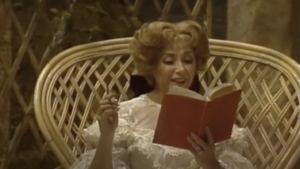
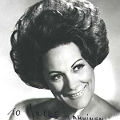
The “Voice of an Angel” was born February 1, 1922.
Copyright © 2012 parterre box - All Rights Reserved
Powered by WordPress · Parterror Theme by Nick Scholl for DIS Magazine
I first saw Tebaldi in a 1955,a Saturday afternoon Otello with MdM and Warren (non broadcast). I immediately fell in love with her and her gorgeous, big, warm voice. I got to see her Aida in 1955 as well–again totally wonderful–even the Milanov fans had to admit how great she was in the role “except for the “O patria mia” LOL. I saw everything she sang up until about 1958: when her voice lost some quality and became edgy I stopped going to her performances and only saw a few + the later Gioconda.
I am not a big fan now but appreciate what a wonderful, beloved, unique singer she was.
PS When Tebaldi opened up, her voice was quite huge. In Aida you could hear her over the whole chorus and orchestra.
La Tebaldi was supposed to give a recital here in town, ’82 or ’83 I think, and then she cancelled. Disappointing.
I always wondered if her final years were lonely, if she really “sat and listened to her old records and wept” as it was reported. Loved her, but loved Maria, too.
daviddc: the heartbroken Sonya is in “Uncle Vanya.” forgive me ; couldn’t resist showing off my erudition.
Blanchette: You are so right! [blush]
I didn’t “get” Tebaldi until I saw her live, in concert with Corelli in the early 1970s. A huge sound of enormous impact and, in spite of hard top notes by then, real beauty. Backstage, she was a total delight (unlike Corelli, who looked alternately frightened and irritated). Since that time, I’ve come to prefer some of her recordings to their competitors in spite of my deep and abiding love for other sopranos – Callas, Nilsson, Price, Sutherland, etc.
I really enjoyed both the criticisms and the encomiums on Tebaldi. One thing I’ve noticed though. A lot of people write as if they expect singers to be perfect ALL the time; and if they’re not, it’s a basis for the dominant judgment call. In an art – singing – opera in this case – where nothing ever approaches the 100% (non)ratio, I always get the impression, based on how some people perceive, they’re looking for or expecting that elusive, hallowed perfect performance. In Tebaldi’s case, I feel that so much more was right than was wrong; and I get queasy at someone who writes that a few aspirates – or even a few missed pitches – prevents total enjoyment, or rather, enjoyment appears to be canceled out.
Tebaldi had a voice that had few equals in the last century. I need not enumerate why, as it has been well-covered here. But I feel, that when a standard has been reached and has rarely been matched, as in her FORZA Leonoras, particularly the 1953 Firenze and most especially the 1959 kinescope (an operatic holy grail if there ever was one), there can be no fair quibbling. FORZA is my favorite Verdi opera, and I’ve heard just about every Leonora recorded, live and commercial. No one, to my ears, places ahead of Tebaldi. The purest Italianate voice possible, the splendor of the sound, the exquisite phrasing, and the genuine fervor in which she sings the character, it is the most satisfying account of the role I’ve ever heard. Plus: no soprano, outside of Maria Caniglia, sings the role to God as much as Tebaldi. The urgency in which she intones “Madre, Madre pietosa Vergine,” seems to come from within, she breathes it, she feels it, she LIVES it.
Regarding Tebaldi’s aspirates. Hers are NOTHING. I have now for the past several months been listening to a century of coloratura sopranos, and coloratura singing. Do you realize hoe many sopranos sing “Ca-ha-ha-ha-sta Dee-hee-hee-vah”? Or how many coloraturas use puntature to get through their music? Switching words to passages dominated by “ha ha ha” – nearly every coloratura does her high note “ha HAAAA”. Listen to Sills’ coloratura passages – they are liberally sprinkled with “ha’s” – she begins nearly every scale passage preceded with an aitch, and rolls around them with haaa-haaaing. I became aware of this phenomenon just in the past year; you listen to coloraturas and invariably just “accept” this device, but now that I am aware of it, I’m beginning to loathe coloraturas, especially the nightingale types who rat-a-tat like birds on speed to no consequence whatsoever. And the amount of puntature most of them use!
Oh no, I want to correct this in case I sent the wrong impression. I don’t mind people being occasionally off tune, having breath trouble and high note trouble. I do not judge an operatic performance by technicalities. Oh no. Nobody is supposed to be perfect.
For me a successful operatic performance (vocally speaking) requires all three:
1) Technical control of the voice in a way in which it will do everything its owner wishes it to do. Thus no shortcuts taken to compromise artistic wishes and composer’s intentions. A strong bondage between both should be encouraged.
2) Cultivation of the appropriate style and seamless possession and understanding of it.
3) An ability to side-step technical issues and ‘penetrate’ the inner core of the character and enliven it from within.
all of the above should, of course, come at the service of the composer and not solely in order to parade the performer’s vocal qualities / quantities.
So I don’t really mind technical lapses, What I do mind is singing that is out of style and does not highlight the music to its best advantage. Singing 19th century italian repertoire (indeed ANY) repertoire while consistently using aspirates is unforgivable in my book. The term aspirate does not relate solely to coloratura passages. On the contrary, aspirated singing of slow lyrical passages is much more aurally obscene and unpardonable on any grounds. And it is, unfortunately, quite common in Tebaldi’s middle 50s studio work.
Interesting that, like most of us, you reject the means by which other people judge a singer, beginning your post by pleading for a larger outlook, and then set up one of your own that can even justify “beginning to loathe coloraturas.”
I guess we’re all humans or something.
I am a Callas nut and I didn’t like her at all, not because of my fandom but because her voice seemed sterile compared to Callas and I found no beauty in it. Until I heard the card scene in Fanciulla that is.
That converted me.
Oh. My. God. Only ever heard this on studio recording. This blew me off my chair! Grazie tanti.
From the moment of slapping down the ‘winning’ card to the end of the Act, Tebaldi sends exhilarating shivers of excitement down one’s spine…. that is acting… with the voice. What Opera should always do!
For me the real opening of the new Met was the second day La Gioconda with Renata. At that time she was my favorite soprano, believe it or not. It was a few years later that I was converted to Maria, but I will always love ‘La Sublima’, and I’m glad I saw her live many times.
Thanks, the noctambulist, for that Fanciulla. She was fabulous at the Met in that role with Milnes as il sceriffo. Nobody has mentioned her Alice, wonderful too. Well, I loved her in everything she did. I wish I had heard her live in Rossini’s Stabat Mater. Also, I wish I had seen her as the Countess in Nozze, love her recording of ‘Dove sono’. I have a vinyl of a Lohengrin in Italian conducted by Santini, Naples 1954, Gino Penno as the knight, Elena Nicolai as Ortrud. Anyway, Tebaldi’s rendition of that first act aria is to die for.
Valkyrietta, Tebaldi’s Rances were Gian Giacomo Guelfi and Anselmo Colzani. Milnes sang the role in the early 90′s new production. Just nitpicking.
iltenoredigrazia,
Thank you, I was just wondering about this in another post here somewhere. So I was mixing memories and never really saw Milnes with Tebaldi in Fanciulla. That makes total sense. I do remember the first time I saw Milnes as the herald in Lohengrin, I was stunned at what a wonderful voice that herald had. This must have been perhaps around the time of Tebaldi’s Met Giocondas, a few years before her Minnies at the Met.
Yes, the Minnies with Milnes were Barbara Daniels and Carol Neblett -I vaguely recall this last one undressed in some opera. They were not of the stature of Renata. La Sublima never undressed, and never rolled on the floor.
Neblett went topless as Thais.
Milnes in fact sang three Student Performances in the New Met in Spring 1966 with Lynn Owen as Minnie.
With Tebaldi he sang one CHNIOER in the Old Met with Bergonzi and Mrs. Claggart in her guise of Gladys Kriese Caporale. In the new house they sang together four GIOCONDA performances, a concert, and three shows of OTELLO.
Tebaldi didn’t have to roll on the floor like Dessay or take her clother off like Neblett — she had class and a vocation to her art which very few have had. Plus an instrument of solid gold.
One may go on and on about her inadequacies and her failings all one wants but she was the real mozzarella and una Grande Signora. And next
to the pathetic array of Little Voices these days, it’s just pathetic to carp about her.
She gave her heart. What do you get these days? Ersatz-IPA-robot-like- rolling-on-the-floor-over-the-top-regie -nightmare-diva-bullshit. And you can quote me.
Just to show how much audiences adored tebaldi (including myself): after a Butterfly performance (maybe her first at the Met?), there was a HUGE ovation and the audience would just not leave–it lasted a very long time.
They finally brought down the fire curtain; but still the audience remained–going nuts.
So, up goes the fire curtain —and Tebaldi comes out in her bath robe for more applause!
I am right now loving her recording of La Wally; beautiful, and what conviction! she really believes in it!