Headshot of La Cieca

Cher Public

  • Indiana Loiterer III: September 24 – Elisir 26 – Turandot September 27 – L’El...
  • oedipe: Let's not be reductionist ourselves: I don't believe the art...
  • armerjacquino: http://parterre.com/2011/08/08/rip-brad-wilbers-met-futures-...
  • grimoaldo: Has anybody posted the classical Grammy winners?Engineer...
  • almavivante: When I read an inspired extravaganza like DharmaBay's, I rea...
  • OpinionatedNeophyte: Is this the same Laquita Mitchell? Is she ready for prime ti...
  • Betsy_Ann_Bobolink: An interesting sidebar is that to be historically "accurate"...
  • grimoaldo: Yeah, I missed both of those too. Very good, very funny, con...
  • CruzSF: Congrats to DharmaBay and iltenoredigrazia. I don't know HOW...
  • OpinionatedNeophyte: *sigh* The far more interesting "racial edge" to the story i...

blog advertising is good for you

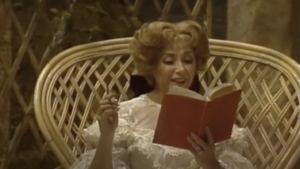
Happy Birthday Renata Tebaldi

tebaldi_thumbThe “Voice of an Angel” was born February 1, 1922.

122 comments

  • messa di voce says:

    I can’t imagine what it must have been like to be on stage hearing that voice.

  • perfidia says:

    That sound was just womanly. And she may have been placid on stage, but she had temperament to spare in her voice. That Tosca from 54, I think, is a great example of a demented performance.

  • kashania says:

    Indeed. To hear that huge yet silky sound live must have been something else.

    Perfidia: I don’t know which Tosca you mean but if it’s the one from the Met, it was from 1956 (with Tucker, Warren and Mitropolous). One of my top two or three recordings of the work.

  • Olivero is my Drug of Choice says:

    I’ve tried and tried and tried for my entire 52 years of Opera Queendom to like the voice of Renata Tebaldi and, as of yet, have been entirely unsuccessful.

    • Max Zook says:

      As a lifelomg Tebaldi fan, I mean this without any snark: Thank you for trying.

      For what it’s worth, I feel pretty much the same way about Callas’s voice. And yet I keep trying.

  • Feldmarschallin says:

    well I am much more of a Callas fan myself but do have a lot of Tebaldi’s recordings and there is much to admire in some of the early ones. For me the absolute best is the Forza from 1953 from Firenze. She is on fire and the top is there and pitch is very good. Also there is a Butterfly live from 1958 Napoli which is very moving. If you don’t like her after those two performances than I would give up.

    • Bill says:

      I cannot imagine anyone not liking Tebaldi’s voice. In her earlier years, her voice was one of he richest evenly produced Italian spinto voices of the post-war era. One might quibble with pitch at times, or perhaps the lack of flexibility (though she did sing Handel’s Cleopatra and other roles which, even in a cut performance, required some florid ability). But for pure beauty of sound, her Desdemona, Mimi, Manon Lescaut, Andrea Chenier Maddalena, her Leanora in Forza and roles of that ilk, were matchless and later, when her voice hardened on top (as often happens to lyric sopranos with sumptious middle registers) her middle voice remained quite lovely. She had taste, and according to Lisa della Casa, Tebaldi always did exactly as she wished on stage, always agreeing to suggestions of stage directors in rehearsal, but during the performances reverting back to a staging for which she felt comfortable. I cannot think of any Italian spinto soprano since Tebaldi who had the warmth of voice and projection and volume which Tebaldi had. And at the time we could compare her to Milanov, Stella, Callas, even Zeani. (I never saw Cerquetti or Gencer on stage). Each had considerable merits and it is hard to find anyone today who can match any of them in similar repertory. Of course, many Callasites found Tebaldi a little dull on stage and the famous rivalry betwen Callas and Tebaldi probably did not really exist except between fans of one or the other. Callas and Tebaldi never had to sing on the stage together as did Jeritza/Lehmann (fierce rivals), Schwarzkopf/Seefried or say Nilsson/Rysanek all of whom were frequently paired together in certain operas but were coevals in numerous other roles (or in the case of Schwarzkopf/Seefried or Fischer-Dieskau/Prey on the lieder platform). Tebaldi is not to be underestimated nor forgotten – when one thinks of it, what a glorious era the 1950′s were for great singing on all fronts.

    • Olivero is my Drug of Choice says:

      This is the only clip I can bear….I think more for the camp value than anything else:

      • mrmyster says:

        If this had not been sooooo slow it might have
        worked. Remarkably in tune all things considered.
        But where was it transposed down one-half tone?

  • Will says:

    The voice was large, warm and enveloping. There’s little doubt in my mind that she gave too much. That ’56 Tosca is a prime example–she threw herself into the part and poured out voice to the full extent of her capabilities. Years later, when the voice was compromised somewhat and she’d come back from the year off to rebuild, she still didn’t give a fig for carefulness–listen to the Fanciullas and the Giocondas for fully engaged singing that was passionate, thrilling and fully engaged even given the audible problems.

    I was asked once why she was so beloved. She was a very direct communicator–there was no artifice, no “persona” to get between Renata and her public. When her heroines got into trouble in their operas, you could almost feel people leaning forward in support, men wanting to be on stage to protect her as if it were their own sister in danger.

    She sang a concert at Lewisholm Stadium in mid-August 1966, just before the first season at the new opera house in Lincoln where she did her first New York Giocondas wigged and costumed as the Times would report “like Sophia Loren. Miss Tebaldi is very, very happy.”

    She was in good shape for the concert and ended it with a final encore of “If I Loved You” from Carousel. She had to encore the encore. People were standing and waving, there were flowers. She had altered the final line of the song from “If I loved you, if I loved you.” to “If I loved you, and I LOVE YOU!” Pandemonium. The love flowed back and forth between stage and audience always when she performed. Always.

    • iltenoredigrazia says:

      Will, I was at that concert too and even have a tape of it. Unfortunately, the quality of the sound is poor. I remember that she picked her encores to cater to different nationalites. First an Italian song; then one in Spanish; and then If I Loved you, which as you said, she repeated.

  • The voice was indeed very lovely and unique in colour but for this opera queen there is much, much more to an operatic performance than voice, yes even more than commitment and abandon, strange as it may seem. Tebaldi grew up in a very problematic Italian climate, stylistically speaking. There was the heritage of Caniglia’s bad excesses and other verismo horrors, which Tebaldi evidently tried but couldn’t always shake off. I do dislike her use of aspirates, and it destroys (for me) her Verdian cantilena. It’s less troublesome in Puccini or verismo composers, but I still prefer more conscious ‘shaping’ of the line. Some people will say, ‘meddling’, to me such meddling (and consciousness of harmonic tension) is the essence of intense musicality and musicianship. Maybe I’ll grow out of my vocal OCD sometime in the future. I much prefer the (short-careered) Cerquetti and even Carteri and Pobbe at times. Yes, even the intelligent but obviously strained Tucci. Tebaldi is just not my type of singer. Maybe I’ll ‘get’ her in later years.

    A few caveats – her live work seems better informed, better integrated and more convincing than her studio efforts. She always had something to say in her live Forzas. I especially cherish the Mitropoulous. And also the Verdi requiem under de Sabata, she is on her best behaviour under ‘strong’ influence (although for me her Karajan studio work was rather ineffective). The late opera recordings, after much re-working on the voice, are spot on for me (bar the effortful Ballo). The Gioconda is a real gem and more than crowns her whole career, shame about Gardelli’s shying away from the score. The Solti Don Carlo presents a fully integrated, moving character, ultimately better phrased and more musically intelligent than most of her earlier studio work.

    Now you can all kill me :-)

    • iltenoredigrazia says:

      Tebaldi did not enjoy working with von Karajan. In particular she did not like her Aida with him. She was ill at the time and he would not allow for retakes for the singers, only for the orchestra.

      • that explains quite a lot, thanks ildg!!!

        • wladek says:

          You have it correct , for me at least -hearing Tebaldi live was
          the real thing, In the house she
          was different than on record.When Tebaldi was up aginst the likes of Warren , Bergonzi , etc she got into gear and went for broke ,she wasn’t
          called in the house “The Iron Butterfly ” for nothing. ,Her Madeleine in
          Chenier was tremendous, and in Vicino a te etc.she wasn’t going to let the tenor outdo her and when the last notes
          rang out to aFFFF I believe some
          plaster come off the walls . On
          record she ,was nowhere near her sound in the house,
          perhaps she was too careful in wanting to leave a perfectly well sung role,the passion seems gone-I purchased a record or two but rarely played them ,none at all being close
          to her real sound from the score desk .And in that big house on a good night when
          she floated a note for dramatic effect
          she let you know who was boss.

        • Harry says:

          What I find remarkable when discussion comes up today about various singers’ voices of the past and the opinions that are held..They are ever based on fading memories of live performances or by using various recordings as documented ‘standard’ for making appraisal.

          Having been a record collector for a good half century, I have listened to the various evolving technologies, used to treating various ‘editions’ of a singes’ voice.
          Take Tebaldi, for exampl, …some express a opinion of a hardness at the top….perhaps during,.. or at a certain period of her career whilst I accept their peronal reactions to her.I fear they may forget certain things,

          Those recordings have gone over that period, analogue and digital treatment processes to reach release and re-release. Regarding the digital era commencing from around the start of the 80′s: Are they A.A.D encoded or A.D.D encoded, for instance? I happen to have her complete Girl of the Golden West (Decca)= A.D.D encoded. Yet, I also have the highlights from the same-cast exact -identical performance done – A.A.D ( that is, with no digital re-mixing) from some clandestine pirate label supposedly, once situated in Europe- there is in fact no reference to them – even on the Web. Probably for their own protection! How they got hold of those tapes and many others including all the EMI Callas operas (is anyone’s guess!) All of ‘their- under the lap ‘ CD releases, they never used ‘Digital’ in the middle or ‘sound upgrade’ chain for the finished product,…. up…. from a basis of analogue tape.

          Which brings me to the main point, this ‘edition of Trbaldi’ in that opera performance is ‘streets ahead of the offical Decca version. The voice is warmer and rounder. So just using that ‘example’, is there such a thing as an absolute point on to judge, past singers’ voices?

    • mrmyster says:

      Yes, but her early studio work was far more in tune.
      “Big” had not yet invaded her sense of tonality.

  • The Vicar of John Wakefield says:

    How paltry her achievement seems set beside the attainments of Commonwealth artists Joyce Barker or Elizabeth Whitehouse.

    • Harry says:

      I have t say I have seen Elizabeth Whitehouse in Fying Dutchman and her Senta’s Ballad was sensational. Beautifully paced and judged. I have about a dozen Dutchman’s in my recorded collection I can refer to. And a lot of the Senta’s there, do a far lesser job of it.
      But then Tebaldi was not into Wagner country.
      A piece of Tebaldi I adore…the Zandonai Francesa Di Rimini love duet with Corelli………ah! Stuff, that’s sheer magic! Tebaldi helped to be: the reason I became really interested in Opera. I HAD TO own all her releases.

    • No Expert says:

      Ok, Vicar I’m going to give Ms. Whitehouse’s CD a try because I’m a sucker for rare French arias.

  • Ruxton says:

    Whether you can technically describe what thrills you (as CerquettiFarrell has so brilliantly done) or whether you can’t, the beautiful thing about the human voice is that you hardly have to understand a thing to know what sets a favourite apart- because beyond the techics a voice either speaks to your soul or it doesn’t.
    Vicar- do you mean Mary Whitehouse? ;)

  • La Marchesa Attavanti says:

    I saw her a few times in relatively late career. When she didn’t overdrive it, the basic “core” of her sound live was remarkable for its beauty, purity and clarity. It’s something that’s hard to hear to full effect on recordings, even live recordings.

    She was, in voice and persona, a very “grand” singer and tended toward the broad and expansive rather than the intimate and subtle.

    On the negative side, there was something very narcissistic about her singing, as though sometimes she got lost in reveling in the sheer sound of her own voice and was content to let time (and the tempo) grind to a halt while she enjoyed herself.