Headshot of La Cieca

Cher Public

  • Tamerlano: I’ve always had a soft spot for Barbara Daniels and she sings Minnie VERY well, with a lovely... 12:40 PM
  • parpignol: rebuke accepted; thank you for being gentle. . . 12:33 PM
  • m. croche: Film version (1970) of the same opera here: httpv://www.youtub e.com/watch?v=dTRx ARL4Fpk&fea... 12:32 PM
  • m. croche: Did someone mention Azerbaijani opera? New to Parterre, extensive excerpts from Fikret Amirov’s... 12:29 PM
  • moritz: But her birthday is January 30, 1951. Most publications get it right, but there’s still sometimes... 12:27 PM
  • Camille: Does this mean I have to buy my Swiffer refills elsewhere, then? They have the best prices for that... 12:23 PM
  • kashania: I think Stemme has purposely refrained from singing the big dramatic soprano roles at the Met. She... 12:21 PM
  • Camille: What a marvelous voice, so in tune, perfectly placed, and wobble and tremolo free it was in her youth.... 12:04 PM

Rosa’s turn

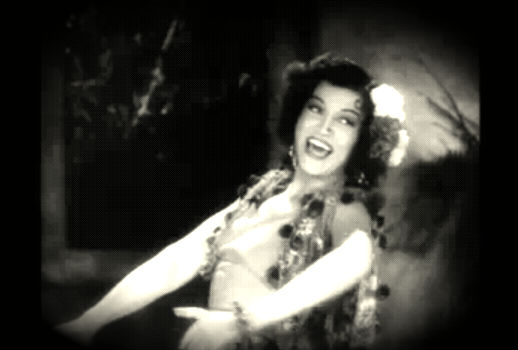
rosa_film“Unlike Ms. Garanca, Ponselle was among the many Carmens who have tried some real dancing.”
Why is La Cieca not surprised that one of the few intelligent and detailed surveys of the dramatic element of the Met’s new Carmen should be written by a dance critic? [NYT]

72 comments

  • pernille says:

    Bravo!
    What irony that it takes a dance critic to be aware of text. Although I enjoyed Hoffman, there were many things that didn’t quite “fit” and now I understand why.

  • The Vicar of John Wakefield says:

    Freddie Ashton got this sort of thing right.

  • Zerbinetta says:

    “But too often the house’s current stagings, new or old, lack those qualities of musically attentive action that can make operatic acting akin to great choreography.”

    YES.

  • dorion says:

    Sorry JJ the only unintelligent review of Carmen so far has been the one written by you. I’ve agreed with your reviews before (Tosca) but this one seemed penned by someone slightly intoxicated.

    • La Cieca says:

      Given the specific and clear objections you raise, I am sure JJ will be eager to debate you.

      • dorion says:

        Too late now, your review is what should’ve been more specific, the objections clearer. Maybe your well known hate of “brits” (poor Richard Eyre didn’t have a chance) poisoned your critique from the start.

        • Jack Jikes says:

          Why ‘too late’? BTW, Rob Howell is a – ‘fucking Brit’. His settings got a yea-say from JJ. I await your ‘specific and clear objections’ to JJ’s critique.

        • maddalenadicoigny says:

          Dorion-you are on crack.
          I do not think the La Cieca’s review was an anti-Brit stand. John Copley has one of the best stagings around and while many might find it basking in certain Carmen cliches, well, he makes all of the elements, including the fauxmenco work. La Cieca did not go far enough in criticizing this production.
          The pas de deux dance sequence is badly done in that the mode of the movement does not match the work- not earthy enough. Dancing in opera is great and frankly necessary, like in Carmen. The zapateo in the danse boheme is also badly conceived and distracts from Carmen as opposed to enhancing her, i.e. see van Otter in the MacVicar.
          Why is Manuelita now stomping at the fore?
          Did she patch things up and become Carmen’s BFF?
          Why are there Jewish/Greek dancing steps being done facing the audience?
          Why does Wheeldon do the oldest staging trick in the book and have everyone en ace to the audience? Is he auditioning for his Bway gig like Dou Dou Huang was for the Sher Bruce Lee musical?
          Why is there a tall cheerleader stading on a table clapping unlike a gypsy?
          Maybe Eyre didn’t get this because this is what opera number three for him but neither Eyre nor Wheeldon looked to these details when their assistants (read those who did the work)were right there. A Spaniard or experienced director, like Copley would have had the stuff down.
          All the girls out there can rag on Denyce Graves but the she spoils the viewer if not the listener. She plays the castanets, and works from the ground up. Garanca wouldn’t earthiness if you brought a wheelbarrow of it onstage. It s not country but the spirit of the performer/director/musician/dancer…
          Gelb thinks big name make the choreograpraphy-further proof he is a spinmeister and not a lover.

    • Jack Jikes says:

      I just reread JJ’s ‘Lacks Carmen sense’. It is fine work – grimly and appropriately
      focused. He has fashioned a genre – ‘booty-popping choreography’.
      JJ’s appraisal of the Sher-stupidity ‘Hoffmann’ was my favorite critical moment
      in 2010. JJ – keep on truckin’.

  • Dan says:

    What specific passage in Act II Scene 2 of Traviata is he talking about? Is it the passage immediately before

    Chorus: Alfredo!Voi!
    Alfredo: Si, amici!

    ???

    This is a great review.

    • iltenoredigrazia says:

      The action to follow the music and the text !
      Mon Dieu!

    • Zerbinetta says:

      No, I’m pretty sure he’s talking about Violetta’s entrance, right after that chorus, the fast strings part before the F-minor card-playing music starts.

      Page 144 here: http://www.dlib.indiana.edu/variations/scores/bhr7293/large/index.html

      Of course Violetta’s entrance is marked in the score after the card-playing music starts. But looking at the score this slightly earlier point seems to make the most sense for what he’s talking about.

      • daviddc says:

        Actually, I think he’s referring to a passage a little later at score page 154, where Violetta runs back in having asked Alfredo to follow her. The music becomes very agitated to accompany her reentry to the room where she frets briefly whether Alfredo will answer her summons before he enters the room.

        Javier, the act/scene division is often parsed as Act I (Violetta’s party); Act II, Scene 1 (in the country), Act II, Scene 2 (Flora’s party); Act III (Violetta’s bedroom). He’s talking about the scene at Flora’s party.

    • javier says:

      Act 2, scene 2 is just recitative between Alfredo and Annina (no strings for Violetta to come in on) and Act 2, scene 3 is “O mio rimorso!”. Conclusion: I think he gave the wrong act and scene.

      • Dan says:

        OK well that gets into the technical discussion of how you want to define acts and scenes in Traviata.

        I was just assuming he was doing the general Scene 1 = Violetta’s house, Scene 2 = Partaaaaaay.

        • javier says:

          At first I assumed it was the frantic string section before “Invitato a qui seguirmi” but then I looked a libretto for Traviata and it has really precise act/scene designations such that each act has about 15 scenes and this part doesn appear until act 2 scene 13 (!!). Anyway, everyone does that, not just Callas, because Violetta is already on stage at that point. So pointless.

        • javier says:

          Anyway, he could have just said Renee Fleming or some contemporary singer because we can actually see it, not this legendary Callas acting which no one who isn’t a complete fossil has actually seen.

        • Actually sweetheart, you do not have to be a fossil to see some of the Callas acting.There are clips on this thing called YouTube (unfortunately too little caught too late, but we just have to made do)

          There is also this invention called the DVD and you can find several things with Callas in it, the Paris debut, the Tosca act 2 and several concerts where she might nor might not be in the greatest voice, but they still show how committed she was to the text and the situation.

          You throwing stones at other singers at the expense of Renee is getting quite old.

        • javier says:

          Well, I said that every soprano does it, so it’s pointless to do back so far to pick out a vague example of something so common. Renee was just a perfect example because of the video.

        • Actually, not every soprano does it. It depends on whether the director has Violetta exit the stage or remain there waiting for Alfredo.

          I agree, Fleming does a version of it in this video and it is good for illustration purposes, but to throw stones at a singer just because you never saw her or her fans because they happen to dislike your flavor of the month IS getting old.

        • La Cieca says:

          You’re missing the point, javier, which is not “a Violetta run[ning] in on the music” but rather “her feet hitting the semiquavers ‘like a ballerina’.” What Macaulay is talking about is not the re-entrance (which, as you point out, most everyone does) but specifically how Callas was said to do, timed exquisitely to the music.

          As someone who’s directed and coached singers, I can say that there are some who really get the idea of acting with the rhythm of the music, and others who don’t get it at all: if you give them something to do that is meant to coordinate with a downbeat, they will always get there too early or too late.

        • Will says:

          OK, the fifteen scenes to an act situation is a system known as “French scenes” and are useful for rehearsal purposes only. In that system, a scene begins whenever some enters or leaves the stage. A director or stage manager can therefore call a particular actor or singer to rehearse Act 1, scenes 1,4,7, and 9 specifically as those scenes are the only ones (s)he is in.

          Now that’s great if all you are worried about is where on stage the characters go and not that the entire cast be invested in the entire story being told. In modern directing, building an act from beginning to end in terms of its arc of intensity and emotional involvement is the goal, and a scene or an act is looked at whole.

          For us, Traviata is in three acts and three scenes: Act I Violetta’s party; Act 2 scene 1 The Country House–scene 2 Flora’s party; Act 3
          Violetta’s Bedroom.

          The French gave many terms to theatrical practice including French Scenes, Green Room (from the color of the walls in the Comedie Francaise’s actors’lounge), and Wet Blanket (from the heavy cotton blankets in vats of water kept off stage for emergencies after the horrific on-stage fatal burning of Emma Livry whose tutu caught fire from an unguarded gas light while rehearsing for La Muette de Portici).

        • javier says:

          Initially I thought the reference was interesting, but when we confirmed what he’s actually referring to it just seemed so unremarkable to me. It’s okay if some believe Callas had the perfect timing of a ballerina, but I think it is just the kind of hyperbole we always read about when it comes to the legendary Maria Callas. Also, we can’t see her doing it. I have seen Callas videos on youtube and I actually like her more when I’m seeing her in action than just listening, but I don’t believe everything I read.

        • Javier, there you share a common mistake with many people not used to 18th century / early 19th century libretti / scores.

          Traditionally, up until the time when Verdi himself strated writing the stage instructions (I believe it was in Ballo?), scene changes were artificially notated whenever a character left the stage / entered it. So in Figaro , for example, Figaro’s accompagnato “Bravo signor padrone” is already scene 2, the Marcellina-Bartolo recitative is scene 3, when Susanna enters – scene 4, so on.
          Nowadays, when we speak about ‘scenes’, we mean, of course, locations. So Rigoletto act I has 2 scenes, act II one scene, and third act likewise. Traviata act 1 – one scene, act 2 – two scenes, act three – 1 scene. Modern printings of libretti avoid the traditional scene-changes, yet the scores have them.

        • Wow, Bill, thanks for further clarification.

        • La Cieca says:

          Okay, reading this again, what Macaulay seems to be saying (in quoting Scott) is that he imagines Callas to be taking small quick steps during the fast repeated eighth notes while she is singing “Invitato a qui seguirmi…” and apparently continuing until the “colla parte” indication on the words “Ei verrà.” In fact, I couldn’t find any soprano on YouTube who continues moving that long: most of them, in fact, stop moving altogether a couple of beats before the vocal line starts, presumably so they can get a good look at the conductor.

          What I think Macaulay is describing would be an amazing effect: Violetta moving nervously and repetitively with the strict ta-ta-ta-ta string figure, while singing the dotted rhythms. And, no, javier, in fact nobody (at least nobody I can find) actually does it.

        • daviddc says:

          Interesting, La Cieca. He does say “I have always hoped to see a Violetta run in on the music,” which to me suggests arriving on the scene rather than once she has started singing, but moving during “Invitato a qui seguirmi…” as you describe would be an incredible effect with a singer as rhythmically precise as Callas was.

  • scifisci says:

    If only someone at the Met were listening….unfortunately I think just about everyone of any influence there only pays attention to the hype.

  • figaroindy says:

    I’m confused….if people do tons of obscure research on whether blacks or some other minority has or has not played a role in the history of opera, or spends their time worrying about the social opinions of the people running opera houses, this is OK…but if someone, on an OPERA website, does the research to determine that a historic production of a historic singer (and I’m not even a huge Callas fan) enters a scene a certain way – that’s pointless and the researcher is a fossil. Yeah, that’s sensible!

    • figaroindy says:

      Not to mention, this site is FULL of catty griping about bad reviewers, reviewers who don’t do research, etc….but the reality is, once again, if we disagree, it’s a bad review, and we try to use piddly things (like whether he’s named the right scene, in an opera that has several variants in its structure) to discredit the reviewer so we can feel fulfilled in our personal opinions.

      Seriously, you can’t have your cake and eat it too – here we have a dance reviewer who has OBVIOUSLY done a great deal of research on this and other operas, and all we can do is gripe because he mentioned Callas instead of someone we might know (and only because we’re some little twink…who hasn’t done his own research, but holds himself forth as an expert)? Yeah, I’m not buying!

      • figaroindy says:

        Trust me, those of us who don’t live in NYC would be thrilled to see a reviewer who’d done that much research, whether we agreed with him or not! As a singer in a regional opera chorus, I can at least respect this as well-written, and thought out. It beats the “I don’t like vibrato” or “the story moved slow” that we get from our “so-called reviewers.”

      • mrmyster says:

        Figaro/Indy – are you saying that Parterre is full of complaining queens who just fuss and disagree for no good reason? Ummm…. that has to be thought about, especially if from someone young and fresh and not in NYC :)
        Meanwhile, what I’ve noted hereabouts, especially, is complaints about music critics, perhaps mainly in NYC, who make big fat mistakes – either in observation or judgment or critical acumen. I believe the Times used to be good at most critical matters as did the old Herald-Tribune and the New Yorker with people like Griffiths and Porter, and the magazine New York had Davis who knew a thing or two and how to write — and now we have very little of real interest from the Times and that leaves Mr Jorden at the Post carrying a heavy burden, which he does very well. I would, however, like to see his editors give him more space. I bet he would too!
        Some years before J.Jo at the Post they had Shirley Fleming who knew what to say and how to say it, though she was often cut short. There may be someone at the Post, old editors or whoever, who still know that it is valuable to have good arts criticism in your pages, as it surely is!
        So, how is the critical climate in central Indiana? Was the amazing Ray Leppard appreciated during his tenure? Is the relatively close proximity of the great IU music school, which offers many fully professional performances of all types of music, appreciated by cultural Indianapolis,
        and is all that covered by your press? I do hope so! Has the orchestra been well looked-after since the retirement of Ray L? I feel sure Parterre
        would be interested in your news.

  • pernille says:

    Actually, Muti made some remarks about music leading the stage direction in the interview with him in the most recent Opera News.
    So, while the Met ( powers that be) may not pay attention to dissenting voices in the press, perhaps “they” will pay attention if it comes from other quarters.

    • La Cieca says:

      Thanks for pointing that out! Muti talks about the portentous figure announcing Germont’s arrival in Act 2, Scene 1 of Traviata: that the tempo and rhythm of the music are meant by Verdi as an indication of exactly how he enters the room. While I think there is still room for debate about how that music translates into action, Muti is spot-on about how in Verdi this kind of “scena” figure is clearly intended to inform the stage movement.

      Macaulay makes a very fine point as well in discussing the Giulietta scene, i.e., that a distinctive musical figure should correlate with some strong movement, but various types of movement are possible, not only one prescribed or traditional bit of business.

    • scifisci says:

      ….assuming anyone there actually reads Opera News.

      Regardless, I think this article highlights a huge problem in opera today, not just at the Met, but everywhere: the idea that opera is something to be apologized for and, in the words of bart sher, is “strange”. Operating on that notion, the music is just something that gets in the way of direction and should be treated like the soundtrack to a movie–basically at the service of the director, rather than the other way around.

    • pernille says:

      Great things come from the New York Post, and great things come from Opera News. It’s not the publication, it’s the content that matters, isn’t it?

      • Will says:

        Mr. Macauley falls down on one major point, however. Don Jose is NOT an innocent country boy. He’s already a killer who had to flee his home province to get away from the law. He murdered a man over the result of a tennis match abnd has a hair-trigger temper. This changes things majorly for singers and director, because it means that in act one Carmen is attracted strongly and fatefully to the exact man who will be her death.

        Jose’s first flare-up comes in near the middle of act 2 when Carmen mentions dancing for his officers, and his second later in the act when he attacks Zuniga. This is no sweet country boy.

        • werther says:

          YES! i was waiting for the end of the thread to point exactly that out!!

          Anyway, I haven´t seen the production (and with so many added dance numbers i must say it doesn´t sound very exciting), but the level of ignorance displayed by this rewiewer (with or without research) is humongous!. And i´m sorry but the question of the staged ouverture (“which is how Bizet meant it” bla bla bla) ist sooooooooo incredibly outdated that the way he points it out, makes me wanna punch him in the face.

        • armerjacquino says:

          Well, that’s arguable. That background is in Merimee but not, as far as I remember, in Bizet. And a production should surely reflect the work as written, rather than the source material- otherwise you’d have to cut Iago’s ‘Credo’ for starters.

        • werther says:

          Well I´m sorry to disagree, but this information is in the original, longer dialogues of the opera as well (talk about being faithful to the piece). That they are usually cutted out, mostly in “traditional” stagings, is another thing.

        • werther says:

          Besides, even in the recitative version, where a lot of valuable information is left out, you can still easily spot the violent aspect of josé´s personality. Carmen might be the one who brings it to the surface, but it´s all there already.
          this doesn´t mean that his “development” as a character is less interesting. On the contary, i believe (and you don´t have to agree) that this is what makes josé the main character in the opera, not carmen.

        • La marquise de Merteuil says:

          Will this is true about Jose being no innocent.

          How much more interesting it would be to portray as this bastard from the beginning and Carmen being the victim and not the perp.

        • Jack Jikes says:

          I just read on OperaGlass the “text to the original version of the opera as intended for performance at the Opera-Comique. It includes all of the spoken dialogue, spoken melodrama, and vocal parts subsequently altered or cut…” Here is the dialogue from the first scene you describe:

          Jose: On voulait que je fusse d’eglise, et l’on m’a fait etudier.
          Mais je ne profitais, j’aimais trop jouer a la paume…
          Un jour que j’avais gagne, un gars de l’Alava me chercha querelle;
          j’eus encore l’advantage, mais cela m’obligera de quitter le pays.
          Je me fis soldat!

          Bizet’s Carmen has no murder recalled at this moment; Merimee’s novella does.
          The attack on Zuniga is after Jose has been corrupted by Carmen.
          Bizet’s Jose is, initially, a sweet country boy as the act one duet
          with Michaela so beautifully illustrates

        • And what does “j’eus encore l’advantage” mean? Literally, “I had the upper hand”, meaning that Jose had won the fight,
          “mais cela m’obligera de quitter le pays.
          Je me fis soldat!”
          “but this forced me to go away and enlist.”
          So, in all probability, Jose had indeed killed the man that had challenged him, and then had to flee and become a soldier.

          Jonas Kaufmann had some very interesting things to say about portraying Jose in the comique vs guiraud versions. The absence of this snippet of conversation from the guiraud makes Jose a sweet country boy, corrupted by Carmen. In the comique version he is much more complicated, he semi-admits to having killed a man before. He is dangerous and unpredictable from the start.

        • Jack Jikes says:

          You are interpolating a murder into dialogue purposely crafted so Jose would not be perceived as a killer in the manner of Merimee’s soldier.
          Carmen encountered severe difficulties with censors.
          The sweet-country-boy innocent defiled by the brazen gypsy was more to the mores of 19th century Paris. The dialogue DOES imply that Jose was a seminarian. A mere fist fight could have resulted in expulsion.
          Once again – this is Bizet’s Carmen

      • Krunoslav says:

        Meanwhile, TT in the Fro NYT tells us that Mariusz LOOKS ideal as Escamillo ( word one about the singing) and that the plot of BOCCANEGRA is impenetrable. When did the TIMES get this notion stuck in its collective brain cells, it’s untrue anyway. But they repeat it every season when teh work is given.

      • La Cieca says:

        CerquettiFarrell, I think you are misreading this bit of dialogue. It seems to me that the meaning is “To be sure, I won the fight, but that [i.e., starting the fight] got me kicked out of the seminary; therefore I had to leave the country [that is, I had to move to the city] to find work as a soldier.”

        This dialogue is not inconsistent with the idea that Don Jose is basically a good-natured fellow who is trying to work off a youthful indiscretion. For the sake of the argument, these lines can also be interpreted as foreshadowing of hair-trigger rage. But neither of the interpretations is the only way to play the character.

        • Jack Jikes says:

          Jonas Kaufmann is an artist of such astonishing quality that I would be absolutely sympathetic to his using that bit of dialogue as a hinge
          back to the Merimee in an effort bring dark undertones to the character of Don Jose. In like manner (albeit more extreme) I would have no objection to a stage director of ‘Figaro’ reaching out to ‘La Mere Coupable’ to make the response of the Countess to Cherubino’s advances more accommodating. I was pissed off at CerquittiFarrell’s scolding tone apropos of Macauley’s review (what fine work!) and the ‘he’s already a killer’ assertion.

        • I’m sorry, didn’t mean to sound scolding at all! Just wanted to point out the tension inherent in the repliques. IMHO Jose’s text is way too frugal, and frankly I think that he hardly says anything at all, which is pretty suspicious, one might think! :-)

  • Glancing at the music for a while, it’s impossible not to realize the magnitude of Verdi’s revolution in terms of music theatre. In Rigoletto the music inhabits Rigoletto’s (and sometimes Gilda’s) inner psyche. In Traviata he goes one stage further, the music actually BECOMING a tonal depiction of a mortally ill person. There you have it in the swirling 16th notes as Violetta hastily re-enteres the deserted main hall. And then the D flat eight-notes has the orchestra trying to regain a normal breathing pace. And finally the ‘duet’ music, practically a duel, where Violetta is musically pinned to the wall.

    • CL in DC says:

      I am not musically trained in the least so my thanks goes out to you all for such depth and insight into the scores, libretti, etc of operas. I learn so much here.

      • louannd says:

        Yes, and, the amazing thing is to watch how your brain has picked it all up when you get to your next opera!

    • Will says:

      Yes–pinned to the wall or backed into a corner, the sense of her being at bay is plainly in the music. The music for that scene, from Violetta’s entrance on Duphol’s arm right through to the end is actually scenic in its nature.

  • La marquise de Merteuil says:

    Most, if not all, composersin end for your musical and dramatic interpretation to be determined by the music.

    A simple example, is of the movement that Strauss intends at Salome’s entrance or the way Klytemnestra enters the courtyard. Or even the brooding, sinister atmosphere of the beginning of Act 2 of Lohengrin which to my mind needs very little movement.