

Headshot of La Cieca

Cher Public

  • armerjacquino: Oh, that's the wrong one, isn't it? Hang on.
  • Indiana Loiterer III: September 24 – Elisir 26 – Turandot September 27 – L’El...
  • oedipe: Let's not be reductionist ourselves: I don't believe the art...
  • armerjacquino: http://parterre.com/2011/08/08/rip-brad-wilbers-met-futures-...
  • grimoaldo: Has anybody posted the classical Grammy winners?Engineer...
  • almavivante: When I read an inspired extravaganza like DharmaBay's, I rea...
  • OpinionatedNeophyte: Is this the same Laquita Mitchell? Is she ready for prime ti...
  • Betsy_Ann_Bobolink: An interesting sidebar is that to be historically "accurate"...
  • grimoaldo: Yeah, I missed both of those too. Very good, very funny, con...
  • CruzSF: Congrats to DharmaBay and iltenoredigrazia. I don't know HOW...

blog advertising is good for you

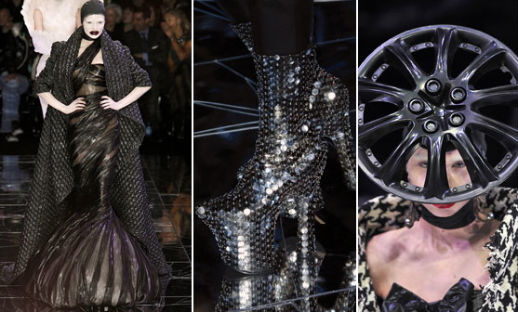
House of Atreus: Fall Collection

mcqueenElektra occupies a special place in the Met’s rep, in a cheap way. It’s no easier to cast than any number of things that inspire well-rehearsed refrains of “put it away for fifty years,”* and really over the last quarter century many a somber compromise has been made in casting. What sets it apart is that folks seem willing enough to lie back and think of Mycenae while Gabriele Schnaut humps the leg of Strauss’ towering score, content to soak in the piece under any conditions. 

Much is forgiven when one role is sung particularly well. Deborah Voigt‘s Chrysothemis, for a time, was unofficially the above-the-marquee draw, and if you ask me, it was maybe her finest role and an absolutely sufficient reason to go. Me, I don’t remember much at all about how Hannah Schwarz sounded that run through except that I was pretty sure I wouldn’t remember it in fifteen years. Sometimes you know.

Maybe it’s that the orchestra does so much of the work of characterization and the Met’s orchestra is ridiculously fluent in this particular idiom. But it’s more gratifying to think we Straussians who love his brief tragedy best, we the Elektoral college, if you will**, are just that hardcore that we leave the endless kvetching and melodramatic wilting to the bel cantist hothouse flowers.

Yeah I’m just trying to start a turf war there. I like Beatrice di Tenda as much as the next guy at the sports bar.

Elektra has also escaped another sort of pearl-clutching, on account of having existed at the Met since 1992 in an uncontroversially mopey production by Otto Schenk. (The angry slash of red on the curtain is, sorry to say, false advertising.) Not that Elektra, already considered rough going I guess, has been a lightning rod for radical reënvisionings as Southern Gothic or punk rock.

Thursday’s prima (at one point this week I found myself asking someone “is the first night of Hannukah the same as the Elektra prima?”*** which, I know there are supposed to be no original utterances but now I wonder) represents no big splashes, nothing to rock the boat. There’s no new production and in the marquee roles we have a mezzo well-established and well-loved in the house doing a role she’s sung the fuck out of elsewhere (at Tanglewood she pulled off the feat of unstaged dementia), an established if not exactly on-the-sides-of-buses soprano in a role she sang very solidly indeed in the much smaller house in Toronto, and… Voigt.

Some academic whose name I’m not going to google wrote a piece about how Ben Heppner‘s incessant cracking has affected our perception of his roles. (Right, in academia this is not called highly subjective bitching—it’s called a tenure dossier.) Surely much the same could be bloviated about where Ms. Voigt is concerned. The obvious topics of weight and black dresses consigned to Blogatory, there’s no reason to deny that the last five years have been vocally eventful ones that have raised many questions about the next fifteen. As someone wiser than me said, at the mention of one of her off nights, “she’s done too many years of good service to kick her to the curb, but opera companies may not know quite what to do with her.”

What I find confounding and at the same time reassuring is that what roles are going to work out in her voice and what roles aren’t isn’t easily divined. Gioconda, though not fully idiomatic, found her sounding healthy and on top of things, while Tosca has been a struggle, to say the least. The Siegfried Brunnhilde, on the evidence of the 125 gala, is a bit of a minefield; meanwhile, her Chrysothemis is as good as anything she’s ever sung.

Including her Chrysothemis. Yes, the sound is radically different from how she sang it in the 90′s. The plushness that used to go all the way up and all the way down is now largely gone, replaced by something harder and at times more strident, but whereas this stridency wrecked her gala Rosenkavalier trio, it is well-absorbed into Chrysothemis’ music, if anything adding urgency and making the girl a little less of a drag.

Effectively, Voigt now sings more like a dramatic soprano, which lent some air of Opposite Day to her pairing with Susan Bullock. Ms. Bullock, though equal to the role of Elektra, sings it with a certain lyric quality that gives to and takes from the role about what you’d expect: singing against orchestral fury gets lost at times, while a good deal of the recognition scene is sung with more tenderness than many have to lavish on it. There’s a vulnerability inherent to the sound that makes this unlike a Deborah Polaski Elektra (with her hypnotic fury verging on possession) and indeed more like a Hildegard Behrens Elektra, appropriately—fitting, as the production is dedicated to that artist.

And, like Behrens, there is some curdle to the voice that helps cut through the orchestra at times, but for listeners mostly looking for brute force in their Elektra, probably not enough. The scale of Ms. Bullock’s voice allowed, also, for a welcome degree of inflection (“Ich, Mutter? Ich?” rarely enough sounds incredulous or interrogatory, and I don’t think I’ve heard anyone slather as much venom on the words “Tochter meiner Mutter.”) The physical performance was a bit much for some, not least the nod to Elaine Benes in the Beilentanz, but I give the woman credit for aiming too high rather than too low.

Felicity Palmer, now safe to call a house favorite, was also, in her way, slightly, fruitfully miscast. In certain of Klytämnestra’s utterances (“sie redet wie an Aaaaaarzt!”) we expect an element of true grotesque available only to the contralto. Dame Palmer is not a contralto, and though she indulged in some appropriate barking on a few such lines, it was the role’s few mezzo-range money notes that she killed with. This made for a more patrician Klytämnestra than many (including some I adore) who find the Ethel Merman in the role and run with it. I’m never certain of her age, but she’s in fine form and, oh ok this just in from the internet, she’s 65.

As Miss Golightly was saying when she so rudely interrupted herself, the voice is in fine shape and the lady has no compunction about, say, lying on a big chunk of Schenkian detritus on an awkward incline, and so forth. It’s a game portrayal, even if not as forceful and menacing as some.

Fine support came from such as Evgeny Nikitin, a bass with the requisite Orest voice the color of regret, and a good loud set of maids with Wendy Bryn Harmer, compelling in the plummy role of IV (The Phantom Menace.) And the set looked really clean, so you could tell they were totally competent maids. Wolfgang Schmidt as Aegisth made some noises I’m pretty sure weren’t character-driven.

Fabio Luisi found much of the grandeur but little of the drive or brutality in the score, save perhaps for the last moments. And either he has a low strings fetish or I should try an odd numbered Balcony Box next time.

*to the tune of “Mademoiselle from Armentieres.
**but there’s really no reason to.
***no.
111 comments

  • CruzSF says:

    Does anyone have theories about how Felicity Palmer maintains her voice in great shape at the age of 65, when so many singers seem to be fraying before 45?

    I thought Debbie sounded pretty good on Sirius last night. After hearing a disastrous Tosca earlier this year (broadcast from LOC), I was pretty fearful about her vocal state.

    • Alto says:

      Well, for one thing La Palmer knew when to leave off the soprano roles and move to the mezzo ones. She is a treasure. I’ll never forget her in FILLE at the Met, which I went to four times and heard her play a different number each time in the lesson scene.

      • CruzSF says:

        Impressive! I saw the Met HD Fille so everything was locked for posterity. I’m sorry I wasn’t listening to the Met radio broadcasts then.

        Maybe Dame Felicity should impart some career advice to Mr Villazón, and soon. He was already in bad voice by the time I became a serious opera lover.

      • Straussmonster says:

        I was there the night she sang ‘Che faro’, and my little Gluckian heart swooned.

  • Gualtier M says:

    Just a friendly difference of opinion with Maury on Gabriele Schnaut – I was very fond of her when she first sang the part at the Met. Yes the voice was ugly and could get pitchy. But it had a kind of craggy dominating grandeur – it was big-scaled and she wasn’t frightened of the role and could always be heard. (Supposedly Schnaut started out as a very good mezzo in the seventies singing Bach cantatas where she sounded lovely and musical. I always felt that if she had stayed a mezzo she could have been a kind of German Zajick. Soprano parts always seemed one or two tones too high). Anyway, Schnaut had lots of energy and stamina and a certain treue deutsches kunst thing going on that I was a sucker for. (I saw Behrens on the night of her triumphant Met return and vindication where she was great and also a blazing Gwyneth Jones the same year – 1993?. Schnaut wasn’ that good but rather satisfying and authentic).

    I also vividly remember Hanna Schwarz’s Klytaemnestra. She played it much as Claire Bloom did on Broadway in the production with Zoe Wanamaker – as a ravaged aristocratic beauty. Kind of like Blanche du Bois mixed with Lady Macbeth. Remember that Klytaemnestra was the sister of Helen of Troy and a great beauty in her own right. Hideous cackling bellowing hags are not my idea of the part. Schwarz’s voice has a kind of spooky baleful hollowness that was problematic when facing Fricka and Die Amme at the point but was perfect for this role. The size of the contralto sounds she made were surprising from such a tiny, pretty woman despite the white-face pallor of her makeup. She never forgot that this woman was a queen and the evil sort of snuck up on you and wasn’t thrown in your face – subtle. I liked Schwarz better than Rysanek or Fassbaender in the part. Flame away.

  • Orlando Furioso says:

    Most entertaining, well-informed, and informative. Thank you!

    Now I have to descend to nitpicking, because I’m just that petty. Putting an extra H in Hanna Schwarz isn’t a big deal. But surely all we opera-obsessed folks are equally obsessed about using “Sir” and “Dame” correctly? They must be used with the given name (addition of surname optional). So the proper usage would be Dame Felicity, not Dame Palmer….

    Would be, but isn’t. Because as far as I can determine, Ms. Palmer has not received that honor. (The “other Felicity,” Lott, has.) So just the name will have to do. I’m surprised our Vicar didn’t beat me to this.

    • Alto says:

      But others did.

      • Orlando Furioso says:

        Others did (while I was typing — I get interrupted by a student) on the “Dame” usage, but not on the fact that she isn’t one.

        • Oh, see that’s embarrassing. I don’t mind not knowing the syntax–I’m a little Jewish boy from Kentucky, doesn’t get much less British than that–but why did I have it in my head she was a dame when she is nothing like one, nyuk nyuk. I shall now fabricate a reason: I did it in protest because she’s a far more interesting singer than Dame Felicity Whose Last Name is Lott. (Didn’t want to repeat my error and say Dame Lott, or come anywhere close.)

  • kashania says:

    “Dame Felicity Whose Last Name is Lott” sort rolls off the tongue. :)

    • La Cieca says:

      And Ms. Palmer may henceforth be known as “Felicity Who is Neither Dame Nor Lott.”

      And howsomever, she wouldn’t be the only one in that cast with a reputation as a dame palmer, if ya know what I mean.

    • Orlando Furioso says:

      (Hm, why am I not allowed to reply directly to Maury here? Special privileges? Or just “no more than 4 deep”?)

      Actually, Ms. Palmer is something like a Dame — the initials CBE (Commander of the British Empire) may properly be used after her name. But we Yanks don’t bother to acknowledge those lesser honours; only the Sir or Dame business impresses us.

      I might try to rouse myself to defend the reputation of Dame Felicity Lott (I love her to death, and have heard her in recital several times), but as the slur was admitted to be “fabricated,” I’ll let it go.

  • No Expert says:

    Let’s just stick with citizeness Lott, comrade.

  • squirrel says:

    I remember meeting Sir Edward Downes once and, waiting backstage, asked some Covent Garden Orchestra players what the heck one should call him. They told me “Sir Edward” but that “Sir” would do just fine.

    There is no punch line here -but it was fun to be the little American squirrel and amuse those nice brits. Ah memories.

    Lovely chap he was!

  • Orlando Furioso says:

    I took a class of voice students to a Lott recital a few years ago. I thoroughly indoctrinate them in class about correct usage of these titles, so (they told me afterwards) when we went backstage to meet her they were watching to see me address her as “Dame Felicity” before introducing her to them.

    And I started to say it, but… I just couldn’t make myself do it. However correct the usage is, my “you don’t address adults you don’t know by their first name” upbringing wouldn’t get out of the way. So I sort of mumbled my way into a sentence and got on with thanking her and introducing the students. She couldn’t have been friendlier or more gracious, by the way.

    • Gualtier M says:

      Dame Felicity has the nickname “Flott” and wouldn’t have cared if you had called her that! She has a wonderful sense of humor especially concerning herself – that British self-deprecation and refusal to put on airs. I have met her as well after a recital and she is a ray of English sunshine! Just a thoroughly delightful woman.

    • La Cieca says:

      La Cieca has always followed the advice given by Vera Galupe-Borszkh: “Please, vhy so formal? ‘Madame’ vill do!”

  • Krunoslav says:

    “I liked Schwarz better than Rysanek or Fassbaender in the part.”

    In that role Fassbaender (“Dyke, ya know”) gave one of the scariest exhibits of shameless hamming and vocal distortion this side of Patti LuPone. I wanted her to be great and she was appalling.

    Leonie varied from night to night, phrase to phrase. I thought she was more memorable than Schwarz, though Schwarz certainly vocalized it better.

    Other notable Klyts I have seen: Mignon Dunn, Christa Ludwig, Viorica Cortez (at SFO), Helga Dernesch (ditto).

    • Gualtier M says:

      Just a warning Kruno that our doyenne worships at the altar of the Sacred Lupone. Your words are heresy!! Expect flames to descend from heaven and consume your ample flesh. It will be put down to spontaneous combustion but those of us who read this blog will know better…

      When Leonie went into character roles I felt that Klytaemnestra was too low and went into the no-man’s land where pitch never set foot in her voice, lowered as it was. I worshiped her as Kostelnicka and the Countess in “Pique Dame”. Never equaled.

      What did you think of Schnaut?

      • Alto says:

        I too adore La Lupone. Are we all aware that her Christian name derives from her ancestress Adelina?

    • Slava, don’t tell me you didn’t watch the Great Podles emerge from that funny Monopoly house and sing this music in Toronto. I’ll be shocked, I say shocked if you didn’t.

      I heard Rysanek sing it in Houston and had the idea, though I was newish to Elektra myself, that she might be fudging some of it, but she was certainly terrifying in the best way. Only time I heard her.

    • La Cieca says:

      “Bassfinder, ya know.”

    • Jay says:

      Jean Madeira was a great Klytemnestra; her last Met performance was a broadcast, on Feb. 27, 1971. A week earlier Nilsson, the Elektra, sprained her ankle during an Elektra performance and there were doubts as to whether she’d be able to sing the broadcast.

      (Earlier in the same week as the Elektra broadcast, Christa Ludwig’s only Met Leonore was a last-minute substitute for one of the Nilsson Elektras. And don’t believe the 40,000 people who claim they were there. The house was at most 2/3s full for that Fidelio.)

      So, I’m sitting next to this huge guy at the Elektra matinee, a typical New Yorker, and I said, “I’ve been worried all week about Nilsson, whether she’d have to cancel today.”

      “What’s wid’ you, pal? Dis’ is a broadcast. She’da sung if her throat was cut,” the burly New Yorker replied.

      Madiera died at the age of 54 about 16 months after that matinee performance; I’ve forgotten what the cause of death was. Cancer maybe?

      But with Nilsson (who hobbled around a bit), Rysanek, Madiera, Tom Stewart, and Boheml conducting, that was an unforgettable Elektra.

      • Alto says:

        I never tire of telling the story — have I rehearsed it here? — of Zinka’s description of Madiera’s singing:

        “Za voice like za raynbow: every note a deeferent color.”

      • richard says:

        I saw one of Madeira’s Klytemnestras in Feb 1971. not sure if it was that final matinee or the one a week or two earlier.

        But she was very fine, like a couple other posters, I like a true low voice in this role (and Madeira was a real contralto). I’ve seen an awful lot of sopranos that have sung Kltemnestra (and other mezzo parts) to prolong their careers: Resnik, Rysanek, Dernesch, Varnay etc and they were all a lot of fun and very colorful, but give me a real contralto in the role. I think the campy romping works better as herodias anyway.

        Ha, ha. I saw the Ludwig Fidelio, I was one of the 40, 000 that was actually there. I had a ticket for a Sills recital for that evening and stopped at the Met before going over to ALice tully Hall. when I saw the opera change from elektra to Fidelio), I bought a ticket (very easy, there were a lot), and sold my Sills ticket. The elektra cover was Inge
        Borkh, a thrilling Elektra on record, but during that season she was a mess vocally and I’m guessing that while Bing was willing to let Borkh go onstage as the Dyer’s Wife, elektra was too much for her to carry and so he convinced Ludwig to try a Met Leonore (which was wonderful). I told Ludwig backstage after the performance how thrilling it was to hear her as Leonore but she yelled, “Ja, but the B!!!! Ach!”

        The other Met performance from that era that thousands claim to have attended was the sole Nilsson/Vickers Met tristan a few years later. I wasn’t at that one!

    • Sanford says:

      Other notable clits I have seen… wait, it’s pronounced differently, isn’t it.

    • Regina delle fate says:

      It’s odd that Fassbaender wasn’t a great Klytämnestra. You would have thought that it would have been a perfect fit with those dark contralto-ish notes. I’ve only seen the Vienna DVD and that may be the Kupfer production – I saw his Welsh version with Debria Browne and Kerstin Meyer and they were both WAY over the top, At Covent Garden in the old production Meyer was a regal, aristocratic old queen rather than some raddled ancient harridan. Whatever happened to Debria Browne? She was an impressive performer, I recall.

  • marshiemarkII says:

    Oh Gualtier,12, so you also were at the greatest night in Met history, January 6th, 1994. That was simply the most overwhelming night at the Met in my over thirty years of opera going. Behrens had everything at her command, vocally, theatrically, and the whole portrayal suffused with her unique humanity. She had finally liberated herself of all the ailments that had bedeviled her for the previous four years, since the dreadful accident, and of course recovered emotionally from the disastrous night of the new production premiere in 1992. And she was rearing to go at it in a big way. I remember she asked me “Jimmy says that I could hold the B a little longer”, referring to the “rings zum dein grab” in the Monologue, so imagine the answer from an opera queen, of course, and hold she did, it is so visceral the effect of that note just thrown out like a flame and held seemingly for ever, and shortly after the fiendish C in “keonig”, free and immense. She asked me whether I wanted to go to the first orchestra rehearsal, I dropped everything, and there it was the vast Met in its full immense splendor, and that orchestra roaring at full tilt, and Behrens always safely on top, the louder it got, the louder she got, such as in the huge B that crowns the Klytemnestra Confrontation on “freun”. And so it went till the most heartbreaking Recognition scene ever sung, she seems to have been born to sing that music, so sublimely beautifully. But my most vivid memory of those days was how she rose in the “ob ich nicht heore, ob ich die musik nicht hoere, sie kommt doch aus mir” she WAS Elektra. The glorious Behrens top notes never more firm, more gleaming or more gorgeous, arches of pure beauty……… and the glorious waves of sound, immense, always riding over an orchestra that was like a carpet underneath, she was truly unbelievable. And I was the only person in the entire auditorium for three entire days. Probably the happiest days of my life, and maybe hers too. It was very cold in New York, and we would cross Central Park in a yellow cab afterwards, and go shopping in the east side, and then I would drop her home for rest till the next day. Then a very quiet New Year’s Eve, and the final dress on Monday January 3rd, the fear of course that having sung those three orchestra rehearsals in full voice, maybe there would be nothing left, and the wagging tongues would start right away again. But the final dress was even grander, and now there were maybe 500 people who had witnessed what grandeur I had enjoyed in solitude the previous three days. But there still was the Opening Night to come, and the expectation was that she was finished as singer from 92, but oh God the stars were aligned, and there it was, the greatest night in the theater’s history. So many people who were there have described themselves as “unable to sleep afterwards”, “exhilarated”, “walking into walls”, and even “seeing God”. It was what we hope opera is every time, but it rarely is. It was a night for the history books and for legend. The Phoenix had risen from the ashes. The next day, she called me at 9AM, Joe Volpe had just called her to tell her that the telecast had been reinstated, and they would start taping the remaining performances. Glorious as the telecast is, it is but an approximation of that Opening Night, because the electricity that was in the air, the expectation, and her own concentration were probably never to be reproduced again. It is still a pretty magnificent testament of the glory that was Behrens.

    • Alto says:

      My god. I was there, too. I feel like an oaf after all that emoting. It hardly left any impression on me at all.

    • Cassandra says:

      Well I’m glad somebody enjoyed it.

      • marshiemarkII says:

        Well, sorry Alto that it left no impression on you at all, but while opera is a VERY subjective art, and a great performance to some may leave indifferent to others, there are incontrovertible facts that cannot be denied. That performance merited the largest ovation in history, according to some very senior Met officials who told me that at the party afterwards. By the time the telecast was done, it was January 22, 1994, and the ovation is not quite the same for the reasons I explained above, but it is not too bad :-) , what do you think of this audience; do you think they, 4000 strong, were left indifferent?

    • mrmyster says:

      MarshieMarkII; Welcome home! How very nice to see you back. It has been very boring and lonely here without you.
      So — where have you been, what is going on?
      I have heard that you are scheduled to appear as Buozo Danato
      and King Marke in future NYCO seasons — tell me this is true,
      oh, and the Emperor in the new NYCO Turandot. Tell us more.

      • marshiemarkII says:

        My darling gehmal, thank you for the warm welcome, but you can imagine where I was, not terribly happy days, them are. September was especially hard, as I was supposed to be in Vienna…….. Then in November I had to go to Washington, to see Goetterdaemmerung of all operas!!!, because a dear friend was singing in it. I handled the first two acts pretty well, a great performance especially from the orchestra, but the Immolation opening chords really did me in. And I went to the cast party afterwards at the Watergate, where I run into a number of old friends. While I did have a hotel reservation, my friends insisted I stayed with them in Georgetown, the next morning I realized I was one block away from HER majestic former home on 29th and P, another sad day. And so on……. I did see the fantastic From the House of the Dead. What gorgeous music!!! I’d love to say I am back in my usual form, rearing to go, but I am not quite there yet. There is a before and after, unfortunately. But I do enjoy being back here, Cara Cieca’s unending wit, old friends like you, and Cocky, Salomanda, and sharky, and the usual rude obsessives talking about performances they never heard, as fact, and assorted prophets of doom……. But I am attracted to camp like flies to you know what, so here I am.

  • Quanto Painy Fakor says:

    Do they still have that dead horse over on stage right?
    It must really stink by now.