Headshot of La Cieca

Cher Public

  • CruzSF: Congrats to DharmaBay and iltenoredigrazia. I don't know HOW...
  • OpinionatedNeophyte: *sigh* The far more interesting "racial edge" to the story i...
  • grimoaldo: There was an amazing production of Showboat by Ian Judge don...
  • OpinionatedNeophyte: Oh yes Monty, didn't you know? Its in the Opera-L bylaws tha...
  • grimoaldo: Searing finale of Luisa Miller with Taro Ichihara Eduard Tum...
  • whatever: any chance that very interesting and rather wilberesque cale...
  • Angelo Saccosta: Sorry, Signor Tenore. I thought I was still talking to Samir...
  • Angelo Saccosta: Yes, Samira. May Jane Phillips Matz first wrote about her in...
  • operacat: CAMILLE -- The Houston Opera website which is doing the Zamb...
  • Ercole Farnese: I had no idea la Traviata has a fourth act....

blog advertising is good for you

Les Papotages d’Hoffmann

3_womenHere’s the place for all your chatting needs, cher public, during tonight’s broadcast of Les Contes d’Hoffmann from the Met.
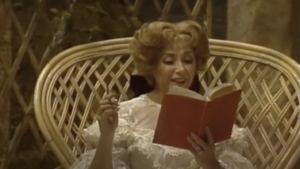
The official chat begins at 7:45 pm for an 8:00 curtain, and La Cieca invites Twitters and whatever other technological frontrunners to contribute their opinions and dish.

Following this performance with a score is going to be difficult, as the Met uses a mix-and-match edition, but if you’re interested, bad old Choudens can be found here.

83 comments

  • Donna Anna says:

    The dvd of the Carsen production is sheer brilliance. Don Giovanni and drama itself are subtexts. The Antonia act in the orchestra pit is indeed amazing…whew.
    Calleja was sounding very fine but the pitch is really wavering now. Take it easy, sweetie. I’m sorry I missed the J’ai des yeux trio. I much prefer that to Coppelius’s aria–
    Wowee zow–good for you, Anna!! Held sounds more like a tenor than a deep voiced villain.

  • BARONOCHS says:

    How wonderful it is to hear opera live and so often from my former home house. This generation of opera lovers is indeed fortunate in being exposed to so much that is good about today’s singers. And, in spite of what of my generation so often declares, the successful singers of today are technically often superior to one’s from our era. An important caveat: too often in this period the And, oh yes, I remember the heated arguments on the merits of Tebaldi and Callas in the 50′s and 60′s. One was in one camp or the other. But with the passage of time we realize how special both these sopranos were.
    And tonight I find Calleja’s voice intriguing, unique in its strange beauty. What a joy to be still here to savor such an exemplary evening.

    • BARONOCHS says:

      Sorry…deleted a sentence. Referring to ‘the caveat’ above is, that aside from technique, today’s singers are often lacking in a signature sound/defined personality/specialness. I know these qualities will be found again. In fact, I’m hearing much of it again tonight. How nice!

  • Nemorinopr says:

    Was that a trill or what???
    Guys, does anybody out there remembers Lucine Amara’s Antonia? How I miss her!!

    • mrmyster says:

      I also was just remembering Amara’s Antonia; in her day she owned the role, and she was a much better musician than Netrebka, and with quite adequate voice. Lucine completely commanded the role; every detail was gracefully under control — tonight’s Antonia is a bit clumsy by comparison, though she may well grow in the part. Amara’s slightly acid tone was comme il faut for French opera of this kind. Good for you Nemo — we surely agree!
      The tenor must do a lot more work, much much; but he’s got a future in this role from the sound of it tonight; he’s a work in progress.
      Bon chance! The hardest part is now over. By the Dec 19 moviecast all should move more easily. I am excited to be seeing it.

    • Alto says:

      And yet I can remember when she was reviled around the House — known as Obscene Lucine.

      Odd how these things change.

  • Lalala says:

    I think the squillo and point in Held’s voice is exccting. It really cuts through the orchestra. The roles of the Villains aren’t really that “bassy”—they are more bass-baritonish.

  • rysanekfreak says:

    Trill? Remember Sutherland’s final Antonia trill? I liked Netrebko tonight. Calleja showed just a little strain on the high notes, but that’s to be expected. I would suggest a little hot lemon-honey tea during intermission. I’m going to predict enthusiastic cheering for the production team. And the audience DOES love having Levine back on the podium.

  • Sanford says:

    Scintille, Diamant is fiendishly high, even for a baritone. It calls for a G# above the staff at the end. And I’m not sure it was even in the original score (which had a baritone Hoffmann. According to Wikipedia, it was added in 1908 by Andre Bloch, based on a tune from Offenbach’s Voyage de la Lune.

  • Pelleas says:

    I liked Netrebko a little better once she got the turtledove out of the way. I’m not a technique wonk so can’t really speak to that he way others might, but that aria didn’t please me much. She’s got this way of sounding like the voice is placed very far back, leaving it sounding very murky and gargles to my ear. And it sounds a bit like she’s singing Esperanto.
    Like I said, I don’t know what I’m talking about!
    There are the bells. Bye!

    • Dan says:

      Esperano. I’m ROTFLOLing as I write this. Not really, but I did laugh at that. Interestingly, in the rehearsal on Monday, Netrebko sang about three words in her first exchange with Hoffman. They sounded much different than the other stiff she was singing, and I sat up in my chair and thought carefully. What was it? I racked my brain. Then, it hit me like a shit ton of bricks. They sounded FRENCH.

  • Lalala says:

    I’m sure Held will sing the aria in the transposed key–very few, if any, bass-baritones singing all four villains sing the aria in the original key.

  • Lalala says:

    And if I remember right from hearing Held sing this before, he doesn’t take the high note at the end of the aria.

    • Nemorinopr says:

      My favorite Dappertutos are Bacquier and van Dam. Bacquier took that high note in Scintille once in a Saturday’s transmission. Van Dam never did. Bur who cares: he was brilliant in the role!

  • Sanford says:

    It’s a pretty boring aria to sing. And without the high note, it’s pretty pointless. Pelleas, you do fine describing how you feel about how she sounds. Don’t appologize for your opinion; it’s as valid as any of ours, whether we agree with you or not. I also think the voice is too far back. I had a teacher briefly (a former Chorus Master of the Met Chorus as a matter of fact), who kept saying “Cupo, more cupo”. And to me, she sounds as if she’s trying to make her voice more “cupo” than it naturally is.

    • wotanzeus says:

      What does cupo mean? Cupped, covered? Please?

      • wotanzeus says:

        hmm, darkness. Hillis with Chgo Sym Cho used to ask that we put a patina on our sound. Like that?

        • Sanford says:

          Yeah, I guess. I have a pretty lyric baritone but always wanted to sing Verdi and when I was with this particular teacher, he said I should make the sound darker, and yes, more covered.

      • mrmyster says:

        Cupo – Coupola or Cupola — dome, rounded high top.
        In voice usually means ‘more room at the top’ more room
        over the note. Subjective.

    • Pelleas says:

      Perhaps that’s it–too much cupo. Cupotissimo, even.
      I also always feel as though, had I no idea at all what it was she was singing about, I’d have a hard time telling whether it was a dirge or a love song. Not an overabundance of expressivity.
      Giulietta sounded and looked entirely too matronly. Unless this was intended to have it au courant with the whole cougar nightmare the country’s been having of late.