Headshot of La Cieca

Cher Public

  • Betsy_Ann_Bobolink: Is it all right to say "John Huston," "Angelica Huston," or ...
  • kashania: Extravaganza is the word, all right. What fun! Congratulatio...
  • brooklynpunk: thanks, S-conductor!..... a much more "up-beat" rig...
  • whatever: mille grazie, IL3!
  • armerjacquino: Oh, that's the wrong one, isn't it? Hang on.
  • Indiana Loiterer III: September 24 – Elisir 26 – Turandot September 27 – L’El...
  • oedipe: Let's not be reductionist ourselves: I don't believe the art...
  • armerjacquino: http://parterre.com/2011/08/08/rip-brad-wilbers-met-futures-...
  • grimoaldo: Has anybody posted the classical Grammy winners?Engineer...
  • almavivante: When I read an inspired extravaganza like DharmaBay's, I rea...

blog advertising is good for you

The rest is silence

studer_thumbOn Monday, a A solo recital by Cheryl Studer sold so few tickets that the organizers of the event didn’t even bother to show up at the venue on the night of the performance. [Tagesspiegel]
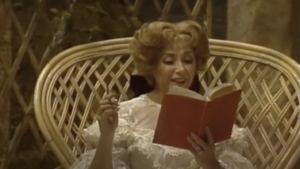
Here, in happier days.

100 comments

  • Funny that you all say well, there’s worse since Studer, be thankful when i see it as totally the opposite; Studer was the first in that awfully long line and all too prominent practice today of giving contracts to people who should not otherwise be allowed to sing outside of their showers (or their voice studios, for a long time).

    Studer started the trend, why would you make any excuses for her? That is quite unsettling that pepole would still make up excuses for her poor singing and her lack of support and the lack of body in her voice and her insistence of singui9ng repertoire that was completely wrong.

    • Cocky Kurwenal says:

      I don’t think this is right. As others have said, Studer was really rather good in some roles and it isn’t as if she was the first singer to launch herself on a big career without first having worked out every single technical issue. To say she ‘started the trend’ seems absurd when the history of opera is littered with people who burned out quickly owing to inappropriate repertoire choices and unstable underlying technique. Studer is just another example of this but one who nevertheless did some respectable work.

      • There were many flashes in the pan from Malibran on, but after Studer, Studio excects and people in recording labels have been a lot more aggressive with their casting and their insistence on producing the stars, rather than letting the audiences produce the stars. Thanks to Studer we have been inflicted names like Netrebko, Licitra, Bocelli, Paul Potts, Danielle Denise and the like.

        Meanwhile true artists like Ekaterina Suirina, who can sing circles around the sopranos mentioned have no recordings and remain largely unknown to the general public.

        • La Cieca says:

          How can you call Malibran a flash in the pan? She was at the height of her career when she died young, and we have no way of knowing what the rest of that career might have been if she had lived past the age of 30.

        • Feldmarschallin says:

          Suirina is sublime as Ilia in perhaps the finest DVD of Idomeneo. It’s available on Decca.

        • because i am an idiot. I meant Pasta. For some stupid reason i still get them confused.

        • Gualtier M says:

          Pasta makes less sense, Lindoro – for her time period she had a normal length career. Her voice was failing by the time she took on Norma at the age of 34 but she had been singing for a good 15 years before that. She was a supporting singer for Angelica Catalani when she was in her teens and was so mediocre she was hired by Catalani who didn’t want to be outshone. Pasta was the Cherubino to Catalani’s Susanna in London in 1817.

          Also most women retired from performing at about or before the age of 40 in the early 19th century. In fact we have more singers continuing into their fifties and sixties today (Domingo may be over 70 and not owning up to it) than was normal 25 years ago.

  • Theseus says:

    I knew Studer quite well and I must say that her vocal decline was due to personal issues more than an idequate repertory or a vocal crisis per se.
    Of course, Gilda, Lucia, Semiramide etc were not her best aces but throughout her career she was remarkable in many other roles.
    I assume, as it often happens, that the recital was poorly announced and no press were made to publicise the event. I am not saying that I would have been a sold-out concert but I am sure that more than 20 would have bought tickets!

  • Krunoslav says:

    21 Do the words “Elena Suliotis” mean anything to you, Lindoro? Or, maybe a better parallel, “Francisco Araiza”? The latter was flawless and superb when I heard him in your namesake role and as Fenton in 1980 in Vienna, deeply compromised by the time of a mid-80s San Fran MANON, and totally destroyed by tackling Canio, Chenier and Lohengrin. That does not mean he didn’t know how to sing in 1980.

    Did you ever hear Studer live? There were no support or vocal body problems in the Anna she sang at the Met. You may not like her recordings and of course it it’s true she should have stayed away from Lucia and Gilda but that does not justify your saying she could never sing, especially against the testimony of people that indeed actually did hear her “while it lasted”.

    • I have heard of all those people, unfortunately not all of them live.

      Studer was a technical mess from the start. The quality of the voice and the artistry are a matter of personal taste. Her voice never had much body because she never learned how to properly support it. She might have satisfied a lot of people, I am not disputing that. I am expressing the fact that her technique was a mess, and there is plenty of evidence to support that.

      • CruzSF says:

        Studer herself said that her technique was a mess in the early part of her career (in an Opera News interview from, I think, 2000). But she said she went out and found a proper coach after Solti gave her some frank advice.

        • A coach is not the same as a voice teacher. A coach will teach you the proper way to sing Mimi, or the difference between Mozart, Bellini, Donizetti and Rossini ornamentation. Not eery coach will teach you how to trill, breath properly, sing on the breath and with proper resonance etc.

        • CruzSF says:

          What can be left for Studer? Is there any way for her to go back to the drawing board? I read recently the story of Carol Neblett, whose voice was undone by alcoholism (by her own reports). She went back and rebuilt her voice well enough to be a voice teacher at a So Cal college. But the opera house offers dried up for good.

          Studer is before my time, but the 20-ticket-recital is just sooo sad, I feel for her.

        • warmke says:

          @Lindoro Almaviva : That’s your definition of coaching, based on the sometimes correct assumption of the coaches lack of knowledge of vocal technique. However, I could name at least 6 coaches who are better teachers than some well known pedagogues. Don’t forget that all human beings have vocal chords and can understand how they work, not just the blessed few.

  • richard says:

    I’m pretty much with the Krunoslav/CK/Regina crowd on Studer. I heard her Met debut as Micaela, I had heard a little about her but not too much. And she really was lovely. The Donna Anna at the Met was one of the best I’ve heard. At the time I didn’t have the impression at all that “this was too good to last”, she seemed to really know what she was doing and (for a time) was singing rep that seemed very suited to her.

    I really still like some of her early recordings, the Salome, the Frau. And in the Muti Requiem, she does a wonderful swell on the High C in the Libera Me; it’s really an impressive moment.

    Where I started to get concerned (yes, concerned, because I was quite a fan and thought she was one of the big hopes to lead the soprano ranks in the 90s) was when I heard her coloratura disc for EMI and then
    the terrible Lucia in Philly. those were my hints that she was really on a bad track.

    But for a while, she was pretty wonderful.

  • Alto says:

    I gave my host for Thanksgiving dinner her SUSANNAH. An American opera for an American feast. Figured it couldn’t be all that bad. Hope I wasn’t wrong.

    • Cassandra says:

      The Susannah IMO is bad. I’m sorry that was your gift to a host. Unless they are a major Studer fan, it’s not anything any collector would want.

      Studer’s career was very short lived. By the time her hype was peaking, she was all ready having serious problems. I recall one particularly ghastly live performance recording from Vienna or Munich or some house on the other side of the pond (does anyone know where I’m referring to, I can’t recall the exact place – the recording is somewhat notorious) in which Studer finished a particularly ghastly attempt at an aria, and the audience begins to actually fight each other. It’s amazing to listen to. A small cabal starts shouting, “Bravo,” followed by infuriated and loud catcalls and boos. When the boos begin to die down, the bravos begin again. This goes on in such a manner for at least five minutes. It’s terrible and amazing to hear. She clearly had fans present, but her voice was in such obviously bad shape that the audience that actually had an ability to hear refused to allow the fans to greet such dreadful singing with praise.

      I simply can’t recall a recording that I’ve listened to where she sounded competent. When she seemed to be the queen of the Met recordings, she was in terrible form. Its amazing they allowed her near a microphone. The Gilda in particular is just flat out embarrassing. She actually screams in several places throughout the recording. It’s astonishing to me that a producer would allow that to continue, and that not one single person, including anyone at the label or the conductor, stepped in to either stop her or replace her. She wasn’t that powerful or popular at the time, and she hadn’t sustained such a major career to warrant such treatment. How she even got to the point where she was asked to record one thing after another is a mystery to me.

      I think the fact that she can’t get arrested in the business now and has completely disappeared from the vocal scene is testament to the fact that a lot of good will was spent on her in the recording studio and hiring her, and when she turned in performance after performance that was terrible, the business turned its back.

      Comparisons to singers like Janice Watson and Suliotis aren’t really relevant because they were never as heavily promoted by major recording companies and houses as a huge star who was one of the most important singers of her generation. Most evidence I’ve heard of Studer points quite to the contrary.

  • CarlottaBorromeo says:

    Studer’s Elisabeth and Elsa in London in the late 80s were rather fine. What happened afterwards was very sad and, as Theseus said, I believe it had quite a lot to do with her personal life.

  • CarlottaBorromeo says:

    Btw, anyone remember Mechthild Gessendorf? Not a world star but a serious artist…

  • Lucky Pierre says:

    susan neves season:

    http://susanneves.com/season.asp

    she’s singing major roles elsewhere. at the met, she’s covering lina but will take over odabella later (from urmana, if i recall correctly, who’s in the A cast).

    it reminds me of willard white, singing wotan elsewhere, but only ferrando at the met some time ago.

  • Gualtier M says:

    BTW: Mechthild Gessendorf was hardly a kid when she was singing very fine Marschallins, Elisabeths, Sieglindes et al. at the Met. She is one of the grisettes in the Karajan “Die Lustige Witwe” with Elizabeth Harwood and Teresa Stratas. That was reoorded in the mid-70′s or earlier. Gessendorf must be over sixty by now.

    My question is what happened to the career of the very hyped and successful Alexandra von der Weth? She had a triumph in Henze’s “Boulevard Solitude” at the ROH, Covent Garden and debuted as Musetta at the Met for four performances in 2001. In 2003 sang a successful Violetta in Chicago. Looked her up on Operabase and she is the house soprano in Duisberg with occasional trips to Dusseldorf as Cleopatra, a Blumenmadchen and Giuletta in “Hoffmann”. Was ist das?

    • mrmyster says:

      It’s very sad about the talented German coloratura. She suffered mental illness and after her first big American engagements – Chicago, Santa Fe – she was institutionalized for several years in Germany. Over the past two or three years I heard she had been released and was trying for a vocal come-back, but nothing has been heard since. She was a very odd personality, that much I saw off stage at SFE, jumped fully clothed into the swimming pool, fellow German Mme Schwanewilms tried to be of comfort to her over that summer, but van de Weth was pretty unstable. She had quite a voice – I heard her Lucia that summer several times, but she seemed uneasy on stage and was very awkward at bows. I’d love to know what others may have heard about her.

      • Regina delle fate says:

        She was a few vouchers short of a pop-up toaster from the start as far as I have heard. I remember a Cosi at Glyndebourne where the rest of the cast looked as if they didn’t know what she was going to do next. She is a strange-looking woman, too, cross-eyed and a bit spooky. She sang a divine Daphne in concert at Covent Garden and she was mesmerising in Boulevard Solitude – Nikolaus Lehnhoff was a big fan and directed her in Lulu in her home house Düsseldorf. But with the big dates she seemed to get loopier and succumbed to acute Studeritis singing all different kinds of roles: Cleopatra, Donna Anna, Manon, Countess in Capriccio, Lucia and even Norma. It seems the latter was the killer and she lost confidence and started cancelling elsewhere: she was to have been the Anna in the first revival of Zambello’s Don Giovanni at Covent Garden and was replaced at the last minute by Nebs hot foot from her Salzburg triumph in the role. And she also pulled out of Christof Loy’s Lucia to be replaced by that Hungarian lady, much promoted by Muti and Peter Gelb at Sony, whose name I have momentarily forgotten – Andrea something, I think. Can anyone help my failing grey cells?

    • Regina delle fate says:

      Gualtier – the Duisburg and Düsseldorf opera companies are the constituents of the Deutsche Oper am Rhein, a unique pooling of resources in Germany, I think. They basically have the same repertoire and same ensemble of singers and the two theatres mean they have to double-cast almost everything, so there is usually a decent substitute when someone is off sick. In the 1970s, they had some fantastic singers there: I saw the pre-Karajan Behrens as Marie, Rusalka, Nella in Gianni Schicchi, Helmwige and Katya Kabanova, Karl Ridderbusch in all his Ring parts, the pre-Chereau Peter Hofmann as Siegmund, Ursula Schroeder-Feinen was on the books – the loudest Sieglinde I have ever heard – and I saw Martha Mödl twice, as Herodias and the Cleaning Lady in Vec Makropoulos. They were the first German company in modern times to do all of the great Janacek operas and they had a lovely Rossini comedies cycle staged by Jean-Pierre Ponelle – I saw Ugo Benelli in Cenerentola, Comte Ory and Italiana in one or other of the theatres. Alberto Erede had been the music director in the 1960s and he was still revered there in the Italian rep.

  • hndymn says:

    it amazes me that anyone who’s taken the time to actually listen to the clip our hostess has placed at the top of the post can fail to admit that it’s some mighty fine singing. The voice is completely under control, the pitches are perfectly on center, and there’s obvious intelligence behind it. She’s singing words, not just notes.

    • steveac10 says:

      I have to agree. If the marketing staff at DG (abetted by a greedy husband) hadn’t convinced her she was the second coming of Lilli Lehmann, we could have had ten or fifteen years of Elsa, Elisabeth and middle weight Strauss of that caliber. It was not a run of the mill voice, and she may have the distinction of being the one star that flamed out early because she tackled too many roles that were too light for her voice.

      • Regina delle fate says:

        Not only DG – all the recording companies were after her. Remember that scary Queen of the Night on Phillips with Marriner and the Konstanze for Sony? I think she dumped the greedy husband a while back. She has two daughters named Elsa and Senta! They must be thanking their lucky stars their mother never sang Kundry,

        • Buster says:

          Poor children. Petra Maria Schnitzer (ahum) and Peter Seiffert have two sons: Tristan and Florestan.