 Attached you will find the song lineup for last night’s Aprile Millo recital, though as the saying goes, there were some changes to the printed program.
The first half went more or less as planned, though after the R. Strauss a man exiting the auditorium tripped and fell in the aisle, hit his head on a railing, and was knocked unconscious. A doctor was in the house, so he started to tend to the injury while the house staff called 911.
Meanwhile, Aprile re-entered and started to introduce Lynn Harrell. The audience shouted out to her that there was a man down, so she announced we should remain in our seats to wait for instructions. They took a 30 minute intermission while the EMT were summoned, a stretcher brought in, etc. Then something like the final 2/3 of the recital followed.
My very favorite thing she did all night was the opening of “O sole mio,” that easy, liquid middle voice legato on “Che bella cosa na jurnata ‘e sole…” It’s not bel canto, strictly, because it’s so natural. It’s just simply beautiful singing.
Of the “among,” Aprile elected to sing Fanciulla, Mefistofele, the Zaza duet and the Trovatore duet. Explaining that she was still weak from dieting, she asked our indulgence — which was not necessary for the music sung (the “L’altra notte” in particular was just superb) but rather for the decision to quit while she was ahead in the operatic section and round out the evening with a few (more) parlor songs: “Danny Boy,” a sort of “Wedding of Jack and Jill” piece and then she closed with “Musica Prohibita.”
The middle voice is still lovely, and she needed only about a number and half to sound fully warmed up. She ended most numbers around F or G. She did sing both the written high C in the Fanciulla and the unwritten one in the Trovatore, took a huge if ungainly B-flat (I think it was) in the Zaza, and an absolutely sterling high B in the Boito.
She has indeed lost some weight, emphasized by the tight basque bodice, low sweetheart neckline and crinoline skirt of her concert dress. If you think of Elizabeth Taylor circa 1980 as Leonora in “Trovatore,” you have the effect. The coiffure was quite elaborate, with a big teased wave in the front, a braid embellished with jewels, and a silver lamé mesh snood.
I’ll leave it to the cher public to detail the names and deployment of the dozen or so assisting artists, which included Our Own squirrel’s boyfriend Michael Fabiano.
Latest on Parterre
Sponsored
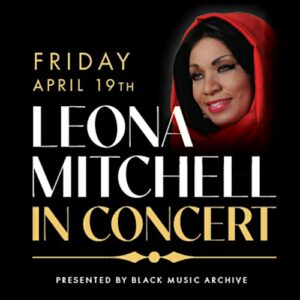
MET Opera Legend Leona Mitchell Live in Concert
Leona Mitchell, the MET Opera’s leading Verdi soprano for 18 seasons, is returning to the stage April 19th in New York City. Get Tickets →


parterre in your box?
Get our free weekly newsletter delivered to your email.



Comments