

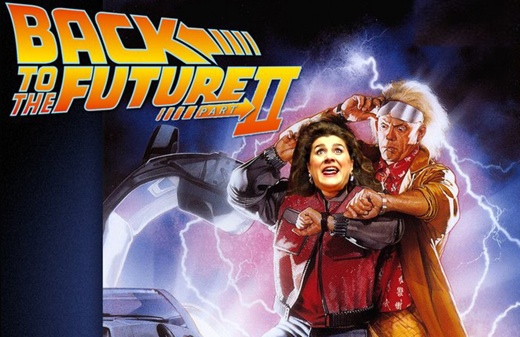
Future shock
La Cieca knows the cher public will be intrigued to hear that tomorrow night (Monday, November 16), NYC’s downtown classical music venue Le Poisson Rouge will offer a screening of Cecilia Bartoli in a live concert, filmed September 10, 2009.
Meanwhile, in honor of this cinematic event, your doyenne is launching a parterre competition for you. Details of both are after the jump.
According to the Poisson Rouge website,
This once-in-a-lifetime concert celebrates the launch of her newest album, Sacrificium
. Filmed in the private theater of the Royal Palace in Caserta, Italy just outside of Naples, the film features Bartoli performing a number of arias from the album with Il Giardino Armonico and Giovanni Antonini.
The Poisson Rouge event will also include the introduction of the “Castratini” cocktail, door prizes and “much more.”
And what of the competition, you ask? Well, La Cieca was just thinking that La Bartoli’s recording career began in 1989 with the release of her Rossini Arias disc, making her one of the first classical artists whose career has transpired entirely in the CD era. We’ve seen many changes in classical music recording over these past two decades, and what La Cieca would like for you to do, cher public, is to present your ideas (in the comments section below) on what classical music recording will be like another two decades hence, in the year 2029.
Your doyenne is looking for clear reasoning and entertaining, vibrant writing (as if she needs to tell you), and the commenter she judges best presents his or her ideas will win an autographed copy of Bartoli’s Sacrificium, provided by First Chair Promotion.
Deadline for eligible comments is midnight, Tuesday, November 17.
The album concept is already dying and the increasing acceptance of electronic distribution will only hasten its demise, at least as we have understood “albums” for the last 60-70 years. Classical music artists are already releasing short works via iTunes (e.g., Janine Jansen playing Bach’s Sonata for Violin and Harpsichord; Adès’s Violin Concerto) before the recordings are made available as albums. Sometimes, the recordings are never released as a compact disc but remain available exclusively as digital downloads. Consumers will retain the ability to “burn” their purchases to whatever tangible, portable medium replaces the CD. They will also be able to backup or archive their music on their own storage device like a hard drive.
Recital discs featuring full orchestral accompaniment will probably remain cost-prohibitive for a recording of just a handful of arias. If artists or labels go to the trouble and expense of engaging an orchestra, they will probably want to make the most of the event by recording as many arias as possible in the time allotted. But I imagine that singers who record with just a pianist, a quartet, or a chamber orchestra will be able to get their recordings into (onto?) the online stores. For them, it might make sense to keep up public interest by releasing one aria or three at a time. Such a release schedule could also make recording worthwhile between flights as they jet from country to country for in-person performances.
Digital downloads will enable listeners to create more flexible music collections, as it is becoming the case already. People will be able to buy just the tracks they like, enabling them to assemble operas featuring their favorite singers singing their favorite versions of the works. Like “Sempre Libera” from the Callas Lisbon Traviata but the “Ah, non più” from the 1955 Live La Scala recording? iTunes (or its equivalent) will be able to blend them together into one seamless listening experience.
Not only do I think that labels will offer this ability someday, I think they will HAVE to offer this or something like it to stay competitive. Software they don’t control already allows listeners to mix multiple songs into one track. To collect some of the money out there now going to others (or to no one), they will have to offer valued-added features. Like the old pirates and rumored tapes of notorious productions that have come out into the open for profit, labels will ultimately have to learn to get along to keep the interest of opera fans willing to pay. Eventually, consumers will be able to combine performances from artists who had recorded exclusively for different labels, creating their own individual dream casts. Before that day arrives, the ability to have a singer duet with herself in different roles from the same opera will become a reality.
Before that day arrives, the ability to have a singer duet with herself in different roles from the same opera will become a reality.
Kennedy Center honoree Grace Bumbry, bringing you the future…yesterday:
Grace rules — whether as princess or slave.
The future is now.
VIRTUAL OPERA THEATER
Welcome to Virtual Opera Theater, your digital opera source. You dream it, we deliver it.
[Disclaimer: the virtual version will be recreated using sampling technology. Our sampling technology is the most sophisticated yet offered commercially, including aural ambience of selected theatres. Where artists have multiple performances in our data base, the sampling with be more comprehensive. Your final price will reflect processing time and depends on the complexity of your request.]
Please enter the name of the opera:
[Once the name of the opera is entered, a list of the roles appears]
Please enter the name of the singer you wish in the Role Window and press select.
[After the singers are selected, another window appears:]
Please enter a conductor:
Once you have chosen your conductor you can select either Opera House or Orchestra.
[If you select by Opera House, you get their chorus. If you select an orchestra you must also select a chorus.]
The audio-only component ends here.
If you wish a DVD, please select continue.
Please select a stage director.
Once the Director is selected, you may opt for the director’s choice of sets and costumes, or select your own designers.
If you wish to select your own set and costume designers, press continue.
[In February this tree will go deeper, extending to make up and wigs]
When you have specified your virtual opera, press the CREATE button.
Please wait. Do not navigate away from this window while the processing is completed.
Your virtual opera is complete. Select CONTINUE for delivery options.
Finally, the Tudor Trilogy starring Sills and Horne!
Lindoro Almaviva (10#) I must correct a few points you make about the CD longevity issue.
I have closely followed the recording indudstry and its processes for nearly 5 decades. I was given the gift of my first opening gramophone at age six, so passionate that I was. The degrading or the ‘bronzing’ as it was termed of a very small number of CDs released at one period was caused by some out sourcing by major companies to small plants. (To some, here – do not confuse this problem ‘if you have some of those genuine ‘gold’ colored CD discs in your collection from some companies) In just one known classic instance the ‘bronzing from the silver’ problem was traced back to a company working not to laid down specification-instead of following through the normal CD processes – short cut and applied a similar looking, but entirely different coating to the label area surface. It degraded by oxidation, and ‘fractured’ allowing the laser beam to see ‘nothing’. Then there were also cases of air bubbles, traced in the finished product. It affected the released product of a few companies who had sub-let some of their work.. If a CD is thought faulty, hold the playing side up over the top of a light in a darkened room. If you see ‘starlight twinkles’ coming through the label side…possible trouble the CD player’s error mechanism cannot cope.
Since we are all into opera here, a word of special warning worth taking heed of;
Over the years the record companies took great trouble to present ‘de-luxe’ looking presentations. You can open the plastic multi disc CD boxes holding the actual CDs and find ‘cushions of sponge poly foam’ as well to protect them, packed.
GET THIS “SHIT” OUT OF THE BOXES NOW -if you want them to keep for many more years. It denatures over time. (A changing of its original color is a sure sign – usually from silvery white all the way to a sticky chocolate brown). It shrinks, goes ‘sticky to the touch’ in some cases and if left, can ADHERE to the CDs -everything from leaving a slight ‘print’ to ripping and damaging the label . If you have that ‘hand print type mark’ situation left on the label, leave well enough alone. I know of no safe CD solvent to remove it ….short of ruining the CD.
As for also worrying about the clutter of DVDs from collecting one day. already there are at least two new patented copyrights for very advanced forms of Blu-Ray type discs. One has the potential of at least 6 times the storage capacity of an existing (50mb) Blu Ray – that of a figure of 300mb.
As for scratching, just look at how ‘some clowns’ handle CDs and then ‘bang’ them into players??
I may have at least 7000 but I know of not one, that has a mark or scratch. And it would show up…I examine every one even for a speck of dust , before it enters a player? Broken ‘center sprockets’ holding a CD in its case, if found,; the CDs are immediately given a new case.
What’s so novel about this presentation / ‘or soiree type ‘having a ball’ -launch’ of Bartoli’s DVD., recorded in some vague ‘palace’? Nothing, except for the sound of munching! ! Reminds, of situations where one sees a lamp post poster for some coming live rock gig at some bar or pub of an unknown rock band celebrating the release of their own produced CD. They probably rehearsed for ‘the studio recording’ for months in some Dad’s backyard garage. Palace or pub…..same sales method. Except, one is not serving imaginary ‘ball floaters’.
Bartoli should take a leaf out of darling Marlena Dietrich’s book. At a hotel press conference once, where she was staying, whilst still performing…in the middle of this meeting, the hotel tried its own promotion. In, came some dame from the Hotel, with a new ice cream creation (shaped like an apple). She announced to all present :- made in honor of and for Marlena : as ‘Apple Marlena’. She then proceeded to go on with a spiel that ‘we know how Eve tempted Adam with an apple’. Ms Dietrich rather displeased- then grabbed it out of the woman’s hands and unceremoniously dumped it on the floor! The Press Conference then continued with the no-nonsense Marlena.
Harry–
I notice that happened to the foamy inserts in one of my Parsifals–is there any way to clean off what remains on the discs? It doesn’t seem to effect playing, but there’s definitely some stuff left there.
My other packaging peeve is the way the little center sprockets break off, leaving the disk to bang around in the case.
Pelleas, I have the same problem with a Gotterdammerung, i.e., the foam is encrusted on the CDs and I can’t get it off. If you know of a solution my email is loge44@aol.com. Thanks!
I think that we’ve been side-stepping the issue a little bit here. Technology changes. That’s a given. We know for a fact that while early recordings of Rosa Ponselle and Enrico Caruso can capture sensitive Italianate phrasing and certain aspects of quality musicianship, the sound quality is—how do I put it?—crap. We’ve gone from that to 45s and LPs and on to cassettes and CDs. Now, we can, if we choose—and I do choose—to listen to a lot of music on YouTube or download it with questionable legality and ethical justification from numerous Torrent programs
But the means of recording themselves are beside the point, because even the binary code-digital encryption of the human voice on a CD or hard drive does not begin to compare with the full-on sonic glory of a Deutsche Grammophon LP blasted through my speakers and reverberating off my drywall. What we really need to have a look at is how classical music is distributed, and how those changing means of distribution mediate our perceptions of, and relationship with, live performance.
Opera and classical music are not different from pop just because of musical style or the methods of production. Pop music itself is a phenomenon of recorded music, and exists because of it. Classical singing, on the other hand, exists, in many ways, in spite of recording. Even though Cecilia Bartoli’s career might exist because of recording, the sound of her voice is—theoretically—the same on record as it is in live performance. The same can almost never be said about pop music. In classical recording, what we listeners seek is a representation of what we would hear live, so that we can conjure up in our minds the experience of being in a concert hall and experience sound firsthand, not filtered through a digital recording mechanism. In pop music—which has given us the glories of the Beatles and Janis Joplin and Hendrix and the COMPLETELY kick@$$ Lady Gaga (holy shit she is insane but incredibly awesome)—the recording is often the gold standard by which we measure live performance.
The question, therefore, is not how sounds will change on record or whether or not we will have better or different recording technology, but what that technology allows us to do. And it lets us do a hell of a lot. Gone are the days—which I never lived—when one had to sit alone and listen to a recording, or actually be in the physical presence of people in order to share the experience. Blogs, YouTube, and other means of musical distribution and information dissemination have allowed us experiences of musical communion that would not be possible otherwise, and thank God for those experiences. We can have conversations in real time, can comment on videos and disagree. We can dissect the minutiae of Uchida’s Mozartean glory or revile Netrebko’s current attempts at Donizetti while being collectively captivated by her—hopefully increasingly frequent—returns to Russian repertoire.
What I’m trying to say is that changes in how recordings are distributed allow an amazing opportunity to teach and to learn as a community. We don’t have to do it alone. So, for my money, the advent of the record and the subsequent changes in its production and dissemination, while relegating the genre of “classical” music to the dustbins of history, at the same time presents the industry with an enormously pregnant opportunity for expansion and inclusion. The opera house or concert hall is simply inaccessible to many people, whereas pop music—the music, quite literally, of the record—offers easier and more affordable consumption. Our current technology should allow us to bring new people into the fold and teach them to understand things that are pretty damn hard to understand. I, therefore, am terribly excited to see what the recording industry has in store. We shouldn’t be grasping our LPs of the 1953 Callas/de Sabata Tosca, but uploading them and sending them out to the world. It’s an opportunity too good to waste, people.
(Trust me, it works. I’m 22, knew next to nothing about opera—although was a big fan of piano literature. But opera’s a whole different sport, and I learned a hell of a lot from blogs and YouTube, so that when I got to a live performance, I nearly shat myself with joy.).
I was lucky enough to find Moffo’s French Heroines and Verdi Arias albums on Ebay on vinyl and posted them to Youtube; they’ve never been released on CD that I’m aware of.
I think at some point even downloading will be obsolete and everything will exist in cloud computing. Instant access to all things at all time. Until, of course, the giant computer breaks down and all is lost.
Until Michael York and Jenny Agutter escape and find Peter Ustinov guarding an old library filled with opera recordings.
Wow! I just listened to her “Il est doux” from Herodiade. Simply gorgeous! (Coincidentally we were just posting about Fleming’s Salome the other day) Thanks for putting this on youtube. I’m going to listen to the rest now. How can this never have been released on CD?????
To Pellas (comments 15) & Jay (15.1.)…. regarding the broken sprockets in CD cases..always have on hand, spare case to suit the required number of Cd set boxes you make want to replace sometimes. If you have want to save ‘good trays’ with good spockets’ from such multi CD cases It is easy to retrieve without breaking.To get the actual CD trays easily out of cases: Be Careful: Get a box cutter blade and insert the blade down ‘beside each of the the 4 contact points ‘plongs’ and between the actual outer case that keep the CD trays in the transparent cases.
To make sure sliding and scrapping of CDs never happen always open the cases in a ‘flat position’. Sideways, or vertically, if they are not fixed on the sprockets, they move and can get ‘jammed between the opening between lid and the tray of a CD case., Before you sometimes could retrieve such a situation -the CD could be ‘crunched’ and surface scratched.
Now onto the ‘guck’ that has deposited on what is usually the label areas of CDs packed in those opera ‘de luxe’ multi disc plastic case boxes from corroding sponge foam packing inserts. Gently remove all the rubbish you can -without using hard objects or solvents. Remember the label side of a CD is nowhere near as durable, thick or tough’ as the playing side. That was part of the original Philips invention plan for the ‘CD Red Book Specifications’ for the CD as a ‘playing Medium’. As a backup before trying anything further, perhaps making a CD-R copy of the disc is in order as insurance ….as this could not be construed as ‘piracy’. Did you not also pay ‘a user’s copyright fee’ for the personal ( emphasise PERSONAL) use of the material when you purchased it. Yes, you certainly did!
Now the only possible ‘safe trial;’ where increased ‘damage’ to the disc will not take place, I know – is having a spare CD tray to lay down the CD at any time.. Then have a bowl of clean cold water, and use a few drops of liquid dishwashing detergent in the water. .Bathe and gently rub the disc with balls of the best quality cotton wool as ‘the rag’ , Then run the CD under cold water thoroughly, till it is rid of all trace of residual detergent. The Clue of cleanless: Bubbles of water settling all over the surface. Now dab the CD gently now with more clean dry cotton wool. Water drying patterns…. and dags of cotton wool tending to ‘stick’ to the surface….. That’s normal and natural – no panic. Then with more dry cotton wool and with your own breath – keep breathing on – and making a ‘fog’ on the CD surface whilst gently polishing away these water mark patterns that will have naturally formed. The cotton wool ‘dags’ release off the CD surface as well. It should be now a ‘done job’ and hopefully improved – if not- solved your problem. Then if so, (‘to just cover any possible legal issues) I should remark that then “you can then destroy the ‘for -personal insurance purpose only’ copy CD-R you made”!…. Happy cleaning attempts.