
Headshot of La Cieca

Cher Public

  • bobsnsane: Thank u Blue 4 the very detailed review… I loved this so much that I am driving (six hours total)... 3:04 AM
  • Camille: Caught in the shower, singing her Victory Cantata—La Divina CIECA!!!!!! httpv://www.you... 2:30 AM
  • CruzSF: Frighteningly plausible, APT. 2:02 AM
  • Baritenor: SAMSON ET DALILA 1. Ambelich and the Gran Pretre go all Gitmo on the Old Hebrew. 2. The High Priest has... 2:02 AM
  • A. Poggia Turra: Aside: The Tosca in the previous Regie quiz is the production in which a scenery wall collapsed... 1:39 AM
  • Camille: Parpignol–I& #8217;ve heard her simg Brünnehilde twice in Wallüre. It was a wonderful assumption of... 1:31 AM
  • Quanto Painy Fakor: DIE MEISTERSINGER 1:28 AM
  • La Cieca: httpv://www.youtub e.com/watch?v=OqbR cEulhos 1:24 AM

Peace offering

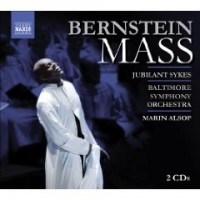
bernstein_mass_amazonI have to be honest, when I first got this CD from Cieca cara I thought, “What the fuck did I get myself into?”  My assignment was to review the new Naxos recording of Leonard Bernstein‘s Mass. I did this show 10 years ago in school and it was not a happy experience. So, at first I thought, how could I be completely impartial?

After the first 10 minutes of listening, I was so happy I got it.

In preparing for this review, I read about the hostile reception the Mass was given. After listening to this performance I have come to realize that Bernstein was a man ahead of his time. I think the piece had to simmer within us before we could actually accept it. When the piece was composed, hippies were still on the fringes, so were Vietnam protesters, Roe v. Wade was two years in the future and nobody dared to question the church or God (not openly, anyway.)

I think we needed to go through wars, AIDS, catastrophes and all the emotions, doubts and anger they brought with them before we could collectively open to this piece. Musically, we also needed to go though Jesus Christ Superstar, Glam Rock, Miss Saigon and Rent, before we could accept a (mostly) classical piece that did not conform with the norm. Maybe it was the fact that when that first audience saw the piece they were not able to recognize themselves in the cast.

There were no nicely coiffed diva singing, nor was a nice guy in a tux, clutching a score and running through scales. Instead they got a mass for the young, with the young and with all the brash, in-your-face attitude of the young. Let’s face it, just like Rent and Hip-Hop, Bernstein’s Mass was never meant for the elites, nor the conformists. It was always a work for the irreverent and non-conformists, and we now have a wider audience for the piece.

The new Naxos recording is a welcome addition to the discography of this work. What I liked the most about this recording is how unabashedly un-operatic it is. I was not prepared to how much I was going to like the performance, nor for the emotional impact the performance was going to have on me. I was also surprised at how easy to listen it was. Before I could even think about it, I was in track 19! Unlike the new “castration” effort from Decca, Listening to this performance didn’t feel like a chore. I happily went back for a second listening.

Leading the pack is Marin Alsop, who has crafted a balance of the serious and the profane that gives this recording a contemporary feel. How many pieces can you name that still feel fresh nearly 40 years after their premiere? It simply does not feel old; it sounds modern, relevant, fierce.

Honor place must go to the Baltimore Symphony for their excellent playing. The orchestral meditations are played beautifully, but so it the rest of the piece. They provide the singers with a fantastic cushion of sound to work their magic; and work their magic they do. The Mass is a bitch to learn and perform for the chorus. At the end of the performance you just want to sit on a bath and soak, ’cause you are sore as all hell.

Morgan State and their students should be very proud of their chorus. They not only sounded fabulous, but the music is performed with accuracy and spirit. Bravo to all the chorus members for their fabulous effort. Big bravo also to the Peabody Children’s Choir. Their work in appropriately described as angelic, specially in the Sanctus.

I think one of the issues that the earlier generation had with the Mass, besides the irreverent tone, is the fact that it is hard to classify. Is it classical? Is it Broadway? It certainly has elements of both and one of the ones that sticks like a sore thumb is the many small roles that call for singers to do everything their teachers told them not to do.

Naxos has outdone themselves in casting singers that fill these parts with fierce determination. What they might’ve lacked in vocal polish, they more than made up in creating an atmosphere. The one drawback is that while they are listed on the program, they are not named in the tracks they sing.  Shame, because they are fabulous and they deserve individual credit for their efforts.

In the center of this and any Mass is the priest, or the celebrant. I have come to realize that you need a good baritenor or a belter for the role– a Ted Neeley of sorts, someone who just sings without thinking of how this F is placed, or how am I going to hit this Ab here. This is a role that requires guts and the ability to leap into the abyss without much fear.

I think casting Jubilant Skyes as the celebrant was a stroke of genius on Naxos’ part. His singing is beautiful and polished. It is not a perfect performance, here and there are sings that he had to work hard to reach some of the higher notes in the score, but he does what many would expect: he leaves the “serious baritone” sound behind and delves into the character’s descent into doubt convincingly.

Let’s be honest here, the Celebrant is not a traditional baritone role, even less a serious one. Skyes is obviously a trained baritone, but his interest in jazz and his experience singing gospel makes him almost perfect for the role; you get the burnish sound of a baritone with the mind of someone who knows when to let go and use tricks from a different bag to create a portrayal that is convincing and that carries a huge emotional impact.

His “Simple Song” is, as needed, simple, beautifully vocalized. As the character is beset with doubts, Skyes proved how intelligent a singer he is by gradually leaving behind the operatic sound and using a more pop sound culminating in a riveting anger scene.

In summary, Naxos has brought together a fabulous performance that transcends whatever blemishes you might find along the way. I think this performance should be in any Bernstein’s fan’s library. I am glad it somehow made it into mine and I am sure this recording will bring me many hours of enjoyment.

Now, if we could get a producer to stage this piece on Broadway!
20 comments

  • CruzSF says:

    I thought the Salome was very good (I posted a review on a previous thread but I don’t remember which one now). Nadja Michael exuded youth in all its energetic fickleness. Her notes were more approximate than precise, but from where I sat, she wasn’t often flat. I was very pleasantly surprised. I was shocked at the amount of gore that can be portrayed onstage. All in all, a very satisfying introduction to the work.

  • CruzSF says:

    No Expert: I forgot to mention: I’ll miss this Saturday’s Turandot HD broadcast, but I plan to catch the Aida repeat on Wednesday evening.

  • No Expert says:

    Normally I’m not into masses (although my high school choir once sang Gounod’s Ste Cecile…which is weird since we were a public school) but Lindoro I think makes this one sound really exciting. It is so neat to be exposed to so many viewpoints.

  • Great review. By the way, #3 actfive, I had a similiar experience…I asked for some solid Italian opera to review from La Cieca…and I got Paisiello’s “Gli Astrologi Immaginari”! But, I love the work, I should send the review shortly…

  • Orlando Furioso says:

    Thanks, Lindoro, for the interesting review. It’s a tough piece to write about (I’ve tried).

    But I’d like to offer some alternative thoughts about initial impressions of the piece, not as argumentation, but to expand the discussion. As it happens, I was living in DC at the time of the premiere (alas, I saw almost every event of of the opening weeks of the Kennedy Center except this one; at the time, the Sills/Troyanos Ariodante was a bigger deal to me). True enough, there was some negative notice in the press, but also some more favorable (even if Paul Hume’s Washington Post positivity was suspect because his son was the alternate Celebrant, David Hamilton wrote a thoughtfully analytical and favorable feature review in High Fidelity).

    But the interesting thing is that I was part of the presumably ideal age group and attitude for the work; a number of my friends did see it and we all had the recording, and to a great extent we didn’t much care for it. Not, certainly, because it wasn’t high-art or respectable enough, but because it seemed to be false and inept in the pop veins it was trying to mine (the real groups clearly did it better), the scenario not convincingly brought to musical life, and the lyrics just not good enough.

    Time has a way of changing perspectives on this sort of thing of course, and I look forward to checking out my current reactions, decades later, by hearing this recording. Does it do anything toward clarifying the levels of ritual/interruption by varying the recorded sound (a la War Requiem)? That always seemed to me like a lost opportunity on the first recording, and something very much worth doing.

  • Does it do anything toward clarifying the levels of ritual/interruption by varying the recorded sound (a la War Requiem)?

    That is a very interesting point and one that I do have to say Naxos missed. The recording is clearly a studio effort (given the picture, I am sure some performances of the work were done in conjunction with the recording) and i guess that would have been ideal, but it being a regular CD and not a SACD, I am not sure many equipments would have picked up on the difference.

    Thank you all for the positive feedback.

  • Baritenor says:

    Cieca, I sent you an email, but never got a response or anything in the mail so far. Did you ever receive my bid for the job?

  • La Cieca says:

    baritenor, please check your email.

  • aloki miyeyi says:

    Some musings on the Bernstein and the review:

    “When the piece was composed, hippies were still on the fringes, so were Vietnam protesters.”
    The hippies and the Vietnam protesters are now the audience for PBS programs devoted to aged pop and r&b singers and groups.

    “Now, if we could get a producer to stage this piece on Broadway!”
    Why shoot so low? What a resource for the Met or for the modern, relevant, fierce NYCO al la Man of Steele this potential audience would be. A Rent or a Miss Saigon cast from the roster of the Met! I invite suggestions from the cher public, as I am somewhat less familiar with these works than some others. Of course we will need to import Martin Alsop to create that fantastic cushion of sound to work their magic. I am sure that the Met Chorus could discharge its obligations vis a vis the score with accuracy and spirit. And there should be no problem at all finding someone who just sings without thinking of how this F is placed, or how am I going to hit this Ab here, among the forces available to the Met. And as far as leaving the “serious baritone” sound behind, not a problem. And for insurance, it would be prudent to always include La Scoopenda in the cast, as her interest in jazz and experience singing gospel makes her almost perfect whatever the role; combined with the mind of someone who knows when to let go and use tricks from a different bag to create a portrayal that is convincing and that carries a huge emotional impact. Surely this would produce a fabulous performance that transcends whatever blemishes you might find along the way.

    Fabulous fabulous fabulous fabulous

  • Harry says:

    Catching my attention be chance , I picked up this new version of the Bernstein Mass in a shop last week I used to have the original recording. What struck me straightaway was the sheer State of the Art sound with its pin point perspective and huge dynamics.
    Marin Alsop once again as the conductor of it shows she is a conductor to be reckoned with, after giving many great performances of other composers on recordings.
    I think Bernstein’s Mass has become more ‘acceptable’… it needed time for reflection on its creation, in those past turbulent times.

    Back at the start of the 70′s, when the original first recording was released, some pompous English Gramophone reviewer had the temerity to call it (his words) as “petrol pump romanticism”. Those three words have always vividly stuck in my mind, for the reason what it objectified. That being, the general biased attitude of British critics against U.S composed music and performers. At the same time the British tried to promote and foist all manner of 5th and 6th rate singers and compositions at the rest of the World.