
The importance of bad art

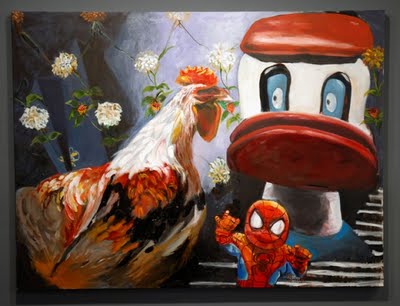
To cut to the chase: the creation of art is a risky business. There are few guarantees of quality, of profundity or of the longevity of the work’s appeal. The creation of any sort of art is therefore an experiment, and as with a scientific experiment, failure is a possible outcome.
Failure, then, is one source of bad art. But without the possibility of failure, success is at best limited to a narrow variation on what has already worked. But if we hope to see something original and news, we should realistically be prepared for the failed attempt.
More to to the point, we should not take the product of the failure to accomplish a goal as the intended goal itself. Artists do not set out to create bad art. It seems unlikely that an artist like Luc Bondy, who despite his relative obscurity in the United States, has been directing in the theater and the opera house for over 30 years, should continue in such a career if all he has to offer is shock value and disrespect. This is like a man who hates buildings dedicating his life to architecture; it just doesn’t make sense.
Similarly, even so reviled (by me, I mean) a singer as Renée Fleming surely doesn’t deliberately set out to annoy me or Bellini or Lerner and Loewe. Her conscious goal must surely be to sing expressively.
What is possible is for an artist to have poor taste, or for his talent to fail him when presented with a task that baffles him, or for that artist’s work simply not to appeal to a certain segment of the audience. But for some reason there seems to be a divide in the perception of the seriousness of creative artists like composers, as opposed to recreative artists, like singers or the dreaded stage directors. There are plenty of music lovers who, for whatever reasons, profess to detest the music of Wagner, and perhaps an equal group who cannot abide Puccini. But how many people say, “Wagner was deliberately smearing mud on music” or “Puccini had no talent, so he resorted to shock effects?”
Well, to tell the truth, out there on the interwebs you could probably find a few people who would endorse both these statements and more, but the only reaction I can offer to them is pity, because in their bitterness and prejudice they are missing out on some magnificent music. For the the larger group here and elsewhere who are ready, even eager, to condemn the work of an artist as “trash” sight unseen, again I can only feel pity, alloyed perhaps with a tinge of hope that one day they might have the scales fall from their eyes.
Though, admittedly, it’s perhaps harder to see good intentions when they’re not very well executed.
Thank you so, so much, la cieca. This says exactly what needs to be said about the whole issue of directors and opera.
It’s been said here many, many times by sensible people, but apparently still needs to be said- when people sit in the rehearsal room on the first day the instinct is not ‘how can we offend people?’ ‘how can we insult the composer?’ or even ‘how can we do something so controversial that it makes the news?’, it’s ‘how can we tell this story?’
The Zimmermanns, the Dessays, the Mattilas and the Bondys may not always succeed in their aims, and indeed may produce results which are unsuccessful. As such, the results of their efforts should of course be up for discussion. But so often, we don’t get serious discussion- we get talk of desecration and insult and all kinds of emotive terminology which disallows even the possibility that they might have been serious professionals who were attempting the best interpretation of the work that they could offer.
Bravo! This and the “5 Myths” post over at My Favorite Intermissions http://maurydannato.blogspot.com/2009/09/myths-of-traditionalists-or-being.html are the two best things I’ve read about the whole affair.
My favorite production I’ve seen at the Met is the Robert Carsen Eugene Onegin, which didn’t seem to get a good reaction or good reviews when it premiered. It seems like a pretty analogous situation — and I’m glad that they tried something different there. Probably this production will never find its legs in this same way, although I don’t think it is impossible, but I certainly think it was worth taking the risk over resurrecting the dusty old Zefferellis year after year or hiring someone to direct an inoffensive and slightly updated version.
There was definite booing the night of the Carsen premiere, but it’s definitely gained a lot of admirers since. My theory on that one is that a few small touchups to the direction made a big difference in user-friendliness. Also my impression was that Vladimir Chernov was very uncomfortable in this staging and that uneasiness communicated to the audience. He certainly had a very sour “they’re not paying me enough to do this” look on his face during the undressing/dressing setting of the Polonaise.
Are you referring, perhaps, to the ethically and professionally questionable unsigned AP article you posted earlier which referred to the Tosca premiere as “a failure” simply (it was implied) because people booed? If so then you seem to kowtow immediately to the significance and usefulness of this “failure” without arguing the preposterousness of someone making this characterization based purely on the response of a conservative public reaction.
In Paris they boo regularly. The audiences are the same as here. When TRSTAN was staged in rehearsal skirts before a huge Bill Viola video installation, the creators of the production were booed. Mind you, Wal-Trout Meier
was not booed though she caterwauled her way through the piece night after night.
Sure, bad art has a place. But to champion bad art in the service of good is misguided.
I’m reminded of a Hindemith quote which goes something like “this piece was performed, forgotten, and made no impression on anyone… I’ve written lots of bad music but at least it is of some obvious usefulness to other artists, which is the most any artist can really hope for.”
A meagre goal, I say.
“i know this may not sound good to some but is there a premier bel canto interpreter today?”
Michaels-Moore, natch.
Squirrel, that’s a very good question. Like any other work of art, the Bondy Tosca is going to be judged by history as good, bad or indifferent. “Posterity” might even disagree among themselves.
But the idea of experimentation is a good one in itself, whatever the judgment of the product of that experiment. What frightens me is the large number of voices insisting that opera, as an innately conservative art, should shun experimentation altogether for fear of failure.
Please, No. 5, do not try to continue the Gelbite spin that the only possible reason to cavil at the TOSCA of last week is a hidebound conservatism. This is not only insulting but inaccurate. There were many, many people there who patronize the most radical art we have. There were many grounds for disapproval from these that had nothing whatever to do with “conservatism.”
And, by the way, what is the opposite of this alleged conservatism? Any old thing somebody decides to slap up on the stage? Seriously. We keep hearing about the ignorant public. What do we call the enlightened deities who float above the mere public?
Alto, you’re tilting at a straw man here: a re-reading of comment #5 reveals no hint of this “only possible reason” you’re trying to refute.
Alto @ 18
“What do we call the enlightened deities who float above the mere public?”
Um, that’s us who post here on parterre.com