
fine al rito

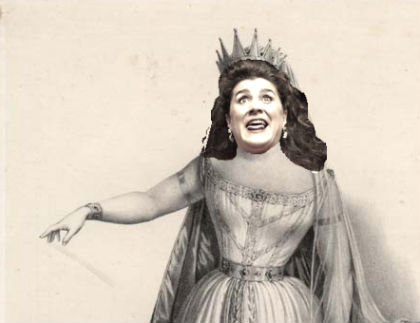
So, guess who’s going to sing Norma?
“Sie ist die unbestrittene, strahlende Königin des Koloratur-Mezzofachs: Cecilia Bartoli. In der kommenden Saison wird sie im KONZERTHAUS DORTMUND in einer der bedeutendsten und schwierigsten Partien der gesamten Opernliteratur zu erleben sein: als „Norma“ in Vincenzo Bellinis gleichnamiger Oper. Die musikalische Leitung dieser wichtigen konzertanten Produktion liegt in den Händen von Thomas Hengelbrock, der seine eigenen Klangkörper, das Balthasar-Neumann-Ensemble und den gleichnamigen Chor, dirigieren wird. Die Aufführungen sind für den 29. Juni und 1. Juli 2010 geplant.”
to lindoro almaviva…
i agree with what you said about zajick, young obratsova, perhaps even blythe attempting the role of norma. i would actually want zajick to sing norma!
I know it’s just a game of what if, but that is such a total exercise in futility (like a Jessye Norman Brunnhilde!) this talking about mezzos doing Norma, wasn’t the absolute, total, unmitigated disaster that Shirley Verrett had in 79 enough to make people stop these silly fantasies? I mean the poor girl had to cancel the prima, and at least two performances could not sing Act IV, she crucified herself, and then was immolated in the pyre of the burning criticism, and for what?
Now Ms Bartoli is a joke, bon voyage!
Hmmmmm OK, Bartoli as Norma, what next for her?
Oh, I know! Elektra. Besides her german is great (witnessed on her duet album with Terfel). This will be down by a third (Strauss prepared a reduced version for Gerhardt), 1909 Dresden pitch (a’=435), period strings (gut) period winds (french) and period brass (any 1960s russian instrument will do). And what a great cast they will have:
Emma Kirkby back from retirement as Chrisothemis.
Magdalena Kozena as Klytmenestra (problems with the low tessitura, but imagine the uproar of the two competing leading European light-mezzos as mother and daughter!)
David Thomas as Oreste (finally the right, noble sound, and such a care for the text!)
Rattle (of course) will conduct the Orchestra of the Age of Enlightenment. Well Gardiner can do it, too, with ORER.
I can also thing of a delightful echt Walkuere.
(Didnt you know Wagner prepared a Viardot version back in the 1850s?)
Bartoli – Brunnhilde
Bostridge – Siegmund
Miah Persson – Sieglinde (what a great O hehrstes Wunder)
Keenlyside as Wotan
Kozena (again!) as Fricka
Thomas (again) as Hunding
and we have such a great array of fine Bach singers for the Walkueres. Or soloists from the Monteverdi Choir can show their worth.
Out on Decca (first recording for the label by Sir John Eliot), this will sell and sell. Concert performances in Zurich. Wonderful L’oiseau-lyre and beautiful Deluxe packaging.
Besides, I wonder who will be considered fit for Bartoli’s Adalgisa. Maybe her older (and bigger) sister Daniella Barcellona. Florez will sing Pollione? great.
Bellini’s view on who should sing Norma: In a letter the maestro wrote to Giuditta Pasta, he stated: “you will have read how the poor (Giulia) Grisi performed Norma badly, and how all London showed displeasure at the thought of not having its favorite Pasta. I am most pleased that Grisi has now sung it in London because they wanted me to adapt it [in Paris] for her, Rubini, and Lablache. I was absolutely convinced that la Grisi never could be either Semiramide, nor Medea, nor Anna Bolena, nor Norma, and I refused the eight thousand francs they offered me: now after such an experience I hope they will not want to perform it, and thus I will be spared of seeing my poor and dear Norma torn to bits, or better stated, from a POWERFUL WOMAN, DIVINE, sublime in every aspect, become another Adalgisa, tneder and NAIVE.” Pasta did not consider Grisi in the same league as her favorite female singers: Malibran, Grassini, Catalani, Sontag, Cinti-Damereau and Pisaroni. She only had a single comment in her surviving correspondence about another artist singing Norma: Sabine Heinefetter, who created Adina for Donizetti. “Norma is too high for Mlle Heinefetter and so various times she was out of tune, but despite that was much applauded (in an 1840 Berlin performance) because she went through her part with much energy, and from time to time made beautiful [stage] pictures which even I would have applauded if art had not exceeded truth.” The soon to be published exhaustive biography of Pasta (over 600 pages) will expel many myths about this singer. A Bartoli Norma….well, who knows.
Well. I guess everyone else is having such a grand time ruining opera lately that Bartoli decided to get in on the fun. Hopefully someday we’ll have a truly talented, amazing dramatic coloratura around to sing the role WELL again.
And LOL to Sanford for his perfect parody of a Bartoli Casta Diva.
Maybe Andreas Scholl would consider Amneris.
Unless I’m mistaken, Norma has already been done on period instruments, with June Anderson in a North Italian house, I think Bologna, with Barcellona as Adalgisa. The results were pretty good from an orchestral point of view, and I suppose it worked with Anderson because she is probably a higher set, lighter voice than Callas, Sutherland or Caballe, whilst still being big enough to give a convincing performance. But I think that says something about this latest Bartoli project – Anderson pulled off a lightish Norma with a period band, but Bartoli makes Anderson sound like a total amazon. Bartoli’s real strength these days seems to be in delivering salon songs a la tyrolienne.
Cocky, for a moment I thought you were referring to Dame Joan’s second recording of the work …
Inquest – I’ve always given that one a wide birth. I have the Pollione/Adalgisa scene on a Caballe compilation and see no need to visit the rest of the set
Speaking of Sutherland and period instruments, I heard a bit of her late contribution to Athalia the other day – vile!
I have the said recording in my collection — it was a freebie. So was the Callas/Ludwig recording, which I sold a while ago, on the basis that clapped-out Joanie is less painful than clapped-out Maria. And I really could never understand the combo with Ludwig. Retsina mit Schlagsahne.