everybody wants to take a bow
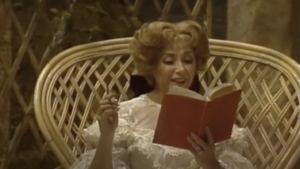
Some of the starry roster for the Rudolf Bing Farewell Gala accept the plaudits cher public. Ah, 1972, when opera and hair were at their respective peaks of style! Introducing the cavalcade of curtain calls is La Cieca’s role model Risë Stevens.
[kml_flashembed movie="http://www.youtube.com/v/2m6M9rPgAbs" width="425" height="350" wmode="transparent" /]
The video of Price’s gala performance is on YouTube. If only all Mozart singers sounded like that … And the feathers are quite something.
Best hair? La Bumbry – I swear that she and Nichelle Nichols must have been seperated at birth.
“I think it’s interesting that nearly everybody is fairly slim and good looking. Weird that this is thought of as a Gelb-era phenomenon.”
The contention that glamorous divas and hunky baritones are an invention of the 21st century, and that looks didn’t play a part in opera casting until recent years never ceases to amaze me. Many of the stars of that era were very attractive, normal sized people, and for lyric sopranos and lyric baritones what they looked like has almost always been a factor in their careers. Would Anna Moffo have attained the stardom she did if she had Jane Eaglen’s body? I seriously doubt it. How many genuinely chubby Octavians and Cherubinos has the Met ever hired? And when was the last time a Valentin, Silvio or Harlekin appeared on the Met’s stage with a prominant spare tire around his mid-section.
The current roster is also full of major stars who are decidedly not slender in any sense of the word: Blythe, Zajick, Borodina, Brewer, Ghuleghina and even Racette. Even a large number of the currently favored comprimaria could hardly be called glamourous (White, Zifchak, Check et.el). Sure there’s pretty young things warbling Frasquita, Giannetta and Barbarina, but there always has been.